By Jonathon VAN MAREN
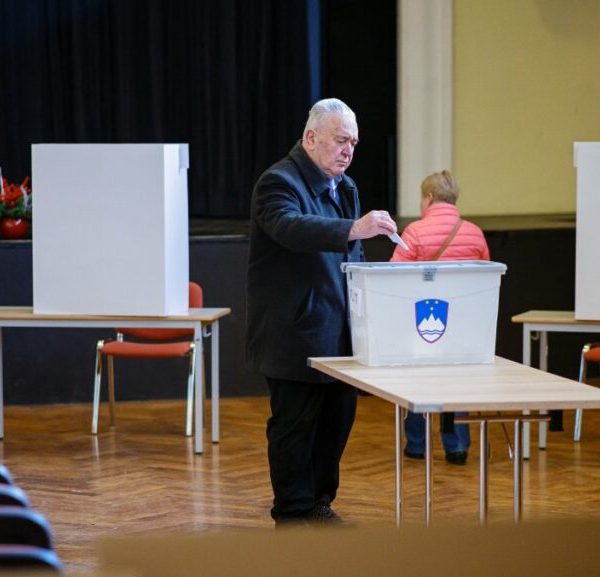
Organizers are opening up about the strategy-and what they call the "miracle"-behind their stunning victory in Slovenia's November 23 euthanasia referendum, which saw 53% of citizens who participated vote against the government's law legalizing physician-assisted suicide. The 'no' voters in the euthanasia referendum represented over 20% of Slovenia's 1.7 million eligible voters, ensuring that the results were valid.
"I am convinced that a miracle happened," Aleš Primc, the campaign head and leader of the Voice for the Children and Family party, told europeanconservative.com. "In recent years, the media has very often published manipulative emotional stories in support of poisoning patients and published polls in the last week that claimed less than 30% of people are against poisoning people. We won the referendum with 53.46%."
Slovenia's leftist government had legalized assisted suicide on July 18 and, after the State Council (the upper house) vetoed the bill, the National Assembly overrode the veto on July 24. Conservative activists submitted the first 15,000 of the required 40,000 verified signatures the following day. The 40,000 signatures had to be collected within two months, and organizers immediately were in a race against time.
Primc, however, is perhaps the most successful social conservative activist in Europe. The 52-year-old politician, publisher, and activist is a leading figure in Slovenia's pro-life and pro-family movements, and this victory is his fourth referendum win.
In 2001, Primc led a referendum against a law permitting artificial insemination for single women, winning 72.4% of the vote. In 2012, he led the campaign against the 2011 Family Code, which introduced same-sex marriage and adoption rights for same-sex couples; 54.6% voted against the changes. In March 2015, Parliament passed a law that redefined marriage as a union of two persons; again, 63.5% voted against the law. (The Constitutional Court overruled the people in 2022.)
This referendum brought particular challenges. "We had to collect at least 40,000 certified signatures in administrative units," Primc told me.
This is a lot for a nation with a population of two million. For comparison, 4 deputies out of 88 in the Slovenian National Assembly were elected with 40,000 votes. Collecting signatures was more difficult for us than we expected; we only managed to get them in the last week. We saw God's will in this, as we had to build a wide range of civil society organizations that joined during the signature collection, which was decisive for the referendum campaign. From the day we collected the signatures to the start of the referendum was only fourteen days.
According to journalist and human rights activist Nejc Povirk, a wide range of factors contributed to the victory. Religious communities-Catholic, Orthodox, Protestant, and even Muslim-were united, and "made a joint statement opposing the termination of human life." Many Catholics were very active to ensure local debates and speeches. Many physicians were also opposed to assisted suicide and were willing to be vocal.
"Activity on social media, especially via short stories, speeches, cases, and arguments, broke the general silence in the media," Povirk said. "There were several accounts campaigning from different angles to reach as many undecided voters as possible-social media reach was approximately three to one for opponents of the law. Stories were powerful: outrage cases from abroad, stories of pressure on the vulnerable, and positive stories of people working with the vulnerable and disabled that love to live."
"The campaign was carried out extremely quickly," Primc told me. "Around 100 public events were organized throughout Slovenia. The media confrontations were substantive on our part, while the representatives of the poisoning lobby constantly lied and manipulated. The confrontations were quite demanding and harsh, but it was crucial that we exposed the lies of the poisoning lobby. Even though the poisoning lobby had been preparing the ground for over 20 years, most people realized what a dangerous law it was and resisted."
Povirk concurred, noting that the campaign relentlessly hammered on a range of lies, including that "safeguards" would be adequate to protect the vulnerable and that opponents of assisted suicide simply do not care for the suffering. Campaigners highlighted the need for palliative care and emphasized the cynicism of the government pushing assisted suicide rather than improving healthcare, noting that assisted suicide would cost 1,542 euros; thirty days of palliative care, between 3,000 and 4,500. Looking to other countries like Canada, the "slippery slope" was a demonstrable inevitability.
"We determined the main content emphases of the campaign back in 2024," Primc told me. "We decided not to speak the manipulative language of the poisoning lobby."
We formed our own language and broad civil society support. Additionally, it was important that all umbrella medical organizations, all major religious communities, and the entire opposition were against the poisoning of patients. It was especially important that a large public debate developed on social networks.The poisoning of patients was promoted by all the largest media outlet, covering more than 85% of the media space; the Government; all government parties; the extremely influential Milan Kučan, the last president of the Communist Party of Slovenia and former president of Slovenia; state-funded left-wing government satellites that declare themselves civil society. The poisoning lobby banned the sponsorship of our posts on social networks, while they could sponsor their posts without limit. Nevertheless, we defeated them on social networks, as well.
The victory may have been a miracle, but Primc has advice for those battling euthanasia and assisted suicide in their own countries. "Prepare your language," he advised. "Do not use any of the words used by the poisoning lobby. The global poisoning lobby has created a manipulative language of patient poisoning designed to completely manipulate people. When opponents of patient poisoning use this language, despite their best intentions, they are unwittingly working in the interests of the poisoning lobby."
Other human rights campaigners would be wise to take notes. The assisted suicide debate is ongoing in the UK, France, Italy, Portugal, and Malta, where a public consultation has just been launched. Slovenian activists have just proven that defeat is not inevitable.
Original article: europeanconservative.com