By Boyd D. Cathey
January 5, 2026
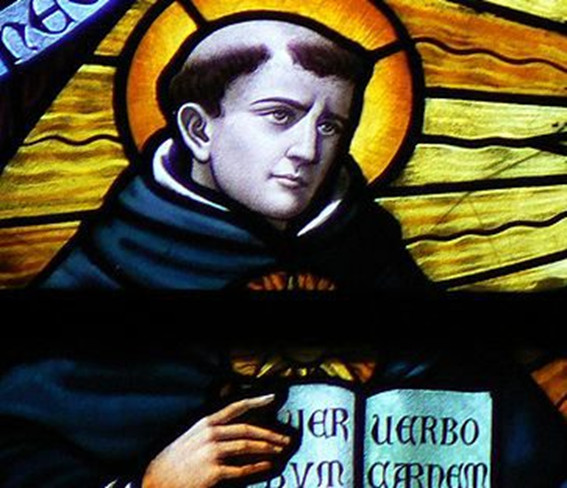
There is an old saying that "Whom the gods wish to destroy, they first make [go] mad." In its original form the phrase appears to date back more than two millennia, to at least the Greek playwright Sophocles. But it was the Eighteenth Century English essayist and notable Latinist Samuel Johnson (Life of Samuel Johnson) who gave it more modern currency, rendering the phrase as "Quos Deus vult perdere, prius dementat" [Whom God would destroy, he first makes mad"].
The phrase seems particularly apropos of our contemporary society. Indeed, there is a phenomenon that appears to infect much of modern society, and, in particular, whole swathes of our American population: a kind of lunacy, a madness which isolates the individual-that is, separates him-from reality, from both the laws of nature and the Divine Positive Laws of God, Himself.
Although in historic Christian teaching both natural law and Divine Positive Law emanate ultimately from God, natural law-the laws of nature-is recognized by reason and observation of"how things work"around us, while Divine Positive Law is derived from Divine Revelation and regards the duties and obligations of men in respect to God.
The concepts are not novel and are not just found in Christian tradition. Natural law is found discussed at some length by the Greek and Latin philosophers. Examining the early texts of Plato (cf. Timaeus; Gorgias; and significantly, Politeia), he declares that the well-organized and ideal society is one which would"be established in accordance with nature [nature's laws]." Aristotle is even more detailed (cf. his Rhetoric, for instance): the laws observable as operative in nature, in the world around us, are universal and"binding on all men, even on those who have no association or covenant with each other."
Cicero among the Latins added to this in, among other works, his De RePublica:
There is indeed a law, right reason, which is in accordance with nature; existing in all, unchangeable, eternal. Commanding us to do what is right, forbidding us to do what is wrong....No other law can be substituted for it, no part of it can be taken away, nor can it be abrogated altogether....It is not one thing at Rome, and another thing at Athens: one thing to-day, and another thing to-morrow; but it is eternal and immutable for all nations and for all time.
In the Christian West, during the High Middle Ages, this understanding of nature and the laws that regulate it was organized and given supreme exposition by the great St. Thomas Aquinas. But Aquinas did not simply regurgitate the views and insights of Aristotle or Cicero. For he understood the great religious tradition and contributions of the"people of the Pentateuch,"the Hebrews of the Old Testament, who gave to Christianity an understanding of God's Revelation and the existence of Divine Positive Law that came from God and required our assent.
That Divine Positive Law in no way contradicted the natural law; indeed, it served to both confirm and refine it in its many applications, such that much of subsequent Christian theology is based on an understanding of both and their agreement: a sinful act in respect to Divine Positive Law is also a violation of the laws of nature. Thus, the act of willful murder violates Divine Positive Law ("thou shalt not kill"), but also the natural law which posits a natural"right to life."One may die in battle or be sentenced to death for a committed crime, but seen from the perspective of God's creation and from the natural existence of creatures, murder, while it happens, is never viewed as"normal."A human being will, given his nature, grow to be an adult; and God's wish is for His creatures to do likewise, and with His grace.
Aquinas and other writers also noted that the reality of natural law-the existence of the laws of nature, of a normative"way things operate and work"in the world-was not exclusive to just to the Greeks, or to Romans, or to the ancient Hebrews. Other cultures and societies had analogous concepts-they also recognized that there was a normative order in the world around us that in a very real sense governed us and our existence, and that the violation of this observable order could and probably would have disastrous consequences for those who violated it or revolted against it.
When I was studying philosophy and theology many years ago, one of the major influences on my thinking was the late Dr. Heinrich Rommen (d. 1967), whose volume The Natural Law was and still is a primary source, a kind of modern summation of 3,000 years of Hebraic and Christian understanding about the laws of nature and how those laws, those actual rules within society serve as the basis for order-and that true justice and natural law are inextricably bound. The truth of"nature and nature's God"-the natural and Divine Positive Law-is justice, and justice is dependent on their observance and proper functioning:
The foundation of law is justice."Truth grants or refuses the highest crown to the products of positive legislation, and they draw from truth their true moral force"(Franz Brentano). But truth is conformity with reality. And just as the real and the true are one, so too the true and the just are ultimately one. Veritas facit legem. And in this profound sense of the unity of truth and justice the words,"And the truth shall make you free,"are applicable to the community of men under law. True freedom consists in being bound by justice.
Notice two critical points that Rommen makes: (1)"truth"is defined as"conformity with reality,"and (2)"true freedom consists in being bound by justice."
And that brings me back round to what we are witnessing today in America: the triumph of a"counter-reality"which has long existed, sometimes in the fetid shadows, but has now shown itself visibly and publicly as never before as an advancing and dominating force in our cultural, religious and political life. It is that"counter-reality"which I label a form of lunacy, because it is not in conformity with reality, that is, with the laws of nature and Divine Positive Law. And thus it ultimately perverts justice, truth, and true freedom.
You can find crude examples of this in the largely successful attempts to normalize same-sex marriage and transsexualism, or institutionalize the tenets of feminist and woke liberation, while demanding our assent to such barbarities. In effect, such actions attack those whom I call"normal people,"persons who go about their business and perform their jobs, raise their families, attend church, pay taxes, and who accept, at least implicitly and normatively, those laws and limits of the laws of nature, in many cases as incorporated in our historic constitutions and the enacted laws of the land which flow from those constitutions.
But that"normalcy"goes much further, for we have inherited traditions and beliefs, including religious beliefs that incorporate Divine Positive Law, which serve to govern our lives, even if at times we only give lip service to them or attempt to circumvent them. In a real sense it is that"great chain of being,"that accumulated past and all it includes, that makes us who we are, that shapes us and gives us meaning. Thus, the Western tradition and understanding of property rights, of the inherent rights of the family (found in both natural and Divine Positive law), of the"right to life"(as opposed to the modern abortionist materialist idea), of the sacredness of marriage (and the irreconcilable opposition to such barbarisms as same sex marriage), of patriotism and love of country, and, yes, of the right to possess and own weapons and firearms-these"rights"come to us vouchsafed as a consequence of our obedience to and observance of the laws of nature and Divine Positive Law.
The virulent and unbridled opposition to these God-given"possessions"of mankind is the product of that counter-reality, that madness which strives to replace the order created by God and consistent with the laws of nature. To analogize we can use artful imagery from the great English Catholic essayist G. K. Chesterton, as it very practically and skillfully helps us understand in few words what great theologians have taken thousands of words to explain about the relationship between true liberty and the laws of nature and of God.
Chesterton in his volume, The Poet and the Lunatics (1929), has his character Gale ask the question:"What exactly is liberty?"He responds, in part:
"First and foremost, surely, it is the power of a thing to be itself. In some ways the yellow bird was free in the cage...We are limited by our brains and bodies; and if we break out, we cease to be ourselves, and, perhaps, to be anything.
"The lunatic is he who loses his way and cannot return.... The man who opened the bird-cage loved freedom; possibly too much But the man who broke the bowl merely because he thought it a prison for the fish, when it was their only possible house of life-that man was already outside the world of reason, raging with a desire to be outside of everything." [Italics mine]
Natural law and the Divine Positive Law provide a kind of road map, a secure safe-house for humanity-they have done so for two millennia. They are the basis for our civilization, and, indeed, they are the only basis we have. We have no other, at least no other that has been remotely successful.
They provide the basis for our rights and our duties, give us order socially and politically, clothe us with belief, and present to us the lessons and wisdom of tradition, and the counsel and examples of great (and not-so-great) men who have gone before. And they are, in reality, the only means of securing true freedom and justice based upon truth in this world.
The great "heresy" of our age we see all around us is this: the denial of what the poet Robert Frost once called, "the truths we keep coming back to" (in his poem "The Black Cottage"). It is the proclamation of a counter-reality, of a "new" Paradise on Earth aborning, of a "New World Order" that rejects the insight and wisdom of two millennia. It perverts both the natural and Divine Positive Law and demands we look upon its horrid face, and asks "what think ye of me?" It is a demonic lunacy, a madness of those who have lost their way, deny and, in effect, denounce their Creator, and therefore demean and dehumanize mankind, which becomes nothing more than a mass of brutish, soulless animals-without a past, without an annealing culture and inheritance, and without God.
And it is this that we must stand against.
St. Augustine of Hippo wrote 1, 600 years ago: "He who created us without our help, will not save us without our help."