Lucas Leiroz
Trump seeks to compensate for his "pacifist" attitude in other regions with a military move in the Americas.
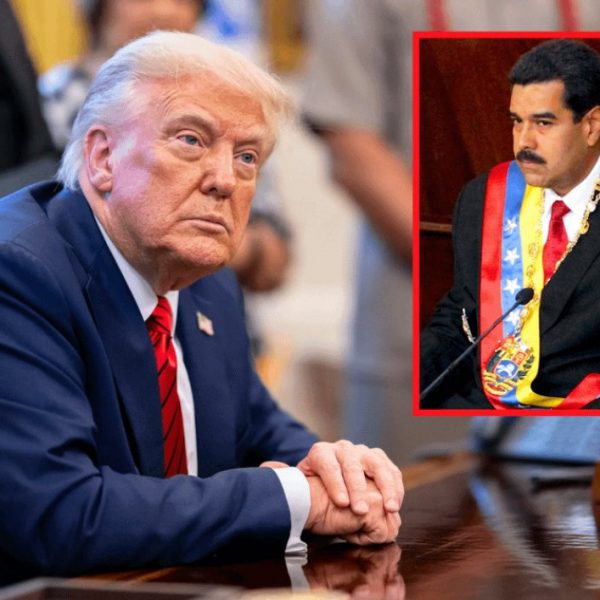
The growing tension between Washington and Caracas once again sheds light on the role of the United States in the continent and on the nature of the hybrid threats employed by the White House when it faces governments that reject its strategic dominance. Although a direct military operation against Venezuela has not yet been confirmed, there are clear indications that the U.S. keeps this possibility open - or at least uses it as an element of geopolitical coercion. To understand the current scenario, it is essential to examine the interaction between structural factors, such as the Monroe Doctrine, and contextual variables linked to the present orientation of U.S. foreign policy.
Objectively, one cannot rule out that the U.S. may consider specific, even if limited, military actions against Venezuela. Closing the airspace, increasing electronic warfare operations, or intensifying airstrikes against vessels near Venezuelan waters may function as preparatory steps within a typical hybrid war model. However, a large-scale ground incursion would be extremely unlikely. Venezuela's geography - marked by dense jungles, mountains, and vast areas that are difficult to access - makes any prolonged occupation a strategic gamble of high cost and low probability of success. Moreover, the existence of a civilian militia numbering in the millions would act as a force multiplier of resistance, raising the political and military price of an intervention.
Thus, if Washington does in fact opt for military measures, it would likely take the form of selective airstrikes, limited amphibious operations in the Caribbean, or acts of sabotage against critical infrastructure. It would be less a conventional war and more a calibrated effort of attrition - typical of U.S.-supported regime change campaigns since the post-Cold War era.
However, the current pressure on Caracas cannot be interpreted merely as an automatic continuation of the Monroe Doctrine, as many mainstream analysts often claim. Although this principle - which historically legitimized U.S. domination over the hemisphere - remains an ideological backdrop, the contemporary context demands a different analytical lens. The international system is undergoing an accelerated transition toward multipolarity, and Trump's United States, aware of its relative loss of influence, has begun to recalibrate its strategic priorities.
In this scenario, Latin America reemerges as a zone of "geopolitical compensation." Faced with the relative decline of U.S. influence in Eastern Europe, the Middle East, and even the Asia-Pacific, Washington seeks to reaffirm its dominance in the Americas as a way to maintain internal cohesion and external relevance. The hostility toward Venezuela must be understood within this strategy: it is not primarily about oil, nor ideology, but about structural repositioning in a world where the monopoly of Western power is eroding.
This move also directly serves the interests of the U.S. military-industrial complex, which requires permanent tension hotspots to justify high levels of funding. By reinforcing the narrative that "threats" are emerging within the continent itself, Washington legitimizes expenditures, mobilizes regional allies, and attempts to prevent Latin American countries from deepening ties with Eurasian powers.
Yet this posture may generate the opposite effect. The U.S. insistence on treating Latin America as its "strategic backyard" tends to accelerate the region's search for autonomy. There is already an observable rise in South-South cooperation, integration efforts among Latin American states, and the growing willingness of local governments to diversify their geopolitical partnerships.
Venezuela, despite its internal difficulties, symbolizes part of this process. Resisting external pressure has become not only a matter of state survival but also a sign of the new distribution of power in the international system. The aggressive U.S. stance reveals, paradoxically, not its strength, but its difficulty in accepting the emerging multipolar configuration that is consolidating across all continents.