Ian Proud
European foreign policy appears to rest almost entirely on a desire not to offend President Trump.
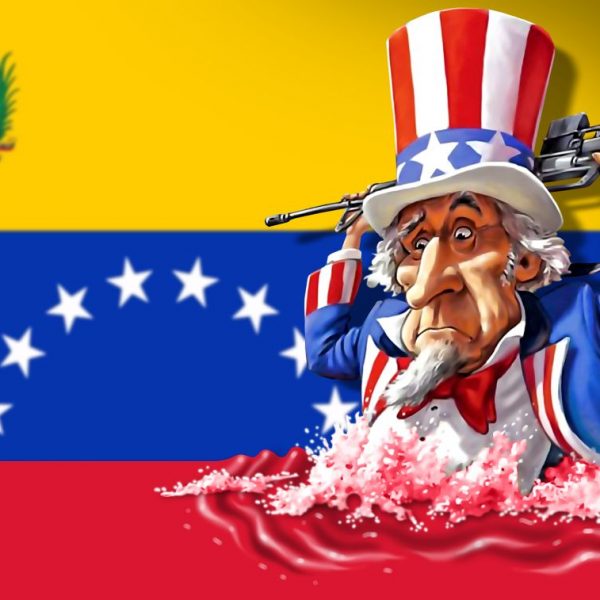
The U.S. attack on the Venezuelan capital of Caracas and kidnapping of President Maduro and his wife was illegal under international law. British and European leaders tacitly supporting U.S. actions through silence is weak and will damage further their reputations in the developing world.
The UN Charter was agreed in 1945 to ensure that countries no longer interfered in the sovereign affairs of other countries. Of course, that legal basis was built on shaky foundations, as the outline of post-war borders was complex and in many parts of the world disputed. The Second World War ended at a time when Britain and other European nations were accelerating their departure from colonialism, creating wholly new sovereign states based on former colonial boundaries.
The UN Charter didn't and does not try to rewrite the map of the world. Nor does it seek to impose a template for how countries are governed. The countries of the world continue to be led by a mix of monarchies, democracies and autocracies in many shapes and sizes.
No country has a right to impose its will or preferred mode of governance on another country, however dysfunctional that country may be. In the case of Venezuela, few would argue that it is a democracy in the purest sense, despite the holding of elections. That some countries consider prior Venezuelan elections to have been rigged is immaterial under the UN Charter. No third country can interfere violently in the affairs of another state, even if that state appears a violent dictatorship.
I personally do regard Nicolas Maduro as, at the very least, an authoritarian leader who is predisposed to undemocratic and repressive means to govern his people. But I could say the same about countless other countries, not only in Latin America but in Africa, the Middle East and Asia.
Europe itself, while governed by seemingly democratic systems, has stood accused by the U.S. in this past year of being anti-democratic by stifling free speech and choreographing the appearance of democracy with the help of a compliant media. The institutions of Europe are by design anti-democratic, as citizens do not have the opportunity directly to choose any of the six so-called Presidents in charge, nor their unelected aides-de-camp, however they are called.
So, love him or, in many liberal cases, loathe him, western leaders aren't given a say under international law about whether Nicolas Maduro is the rightful leader of Venezuela.
In the case of the U.S., that country has justifiable concerns about the flood of drugs channelled through Venezuela that reach its shores and ruin the lives of people addicted to substance misuse. This is undoubtedly a legitimate national security interest for the Americans and gives them the right to act to prevent these hostile acts, including, should they choose, through the use of force. Without getting into the wider debate about U.S. attacks on alleged drug boats, those actions, nevertheless, are governed by international human rights law.
They do not give the USA the right forcibly to depose a serving President, however unpalatable a character he may be.
That UK and European leaders have tacitly, though their silence of U.S. actions, come out in support of the overthrow of Maduro speaks more of international relations, not international law.
They have set themselves up as judge and jury from affair, on the basis that they agree with the U.S. assessment that Maduro is the wrong sort of leader for Venezuela.
This theatre played out vividly at the UN Security Council on Monday 5 January in which the various European states represented at the table, one by one, refused even to mention the actions of the U.S. in overthrowing Maduro in their statements. Echoing Prime Minister Keir Starmer's refusal to denounce U.S. actions, the UK's Representative at the table, James Kariuki, who unfortunately I know of old, stuck to remarking on the undemocratic nature of Nicolas Maduro, the need for a transition to democracy and to abide by international law. And nothing else.
No mention of the fact that U.S. actions were in breach of international law. No mention of the unilateral military attack by the U.S. on Venezuela's capital nor the kidnapping of Maduro. Simply, Maduro is bad, too bad, let's find someone new to replace him, of whom, implicitly, we approve.
Every other European state at the table, including Greece, France, Latvia and Denmark, offered a slightly longer-winded version of the same position. The Danes were a little more nuanced, given their not misplaced fear, that they may be next, if America decides to make a move to annex Greenland illegally.
And therein the root cause of the British and European positioning. European foreign policy appears to rest almost entirely on a desire not to offend President Trump.
In London, Riga, Paris and Copenhagen, leaders still cling to the hope that President Trump will, through flattery, still support their efforts to maintain a proxy war in Ukraine.
That if they refuse to denounce him over Venezuela, he might eventually come round again to the idea of regime change in Moscow, through a war in Ukraine that leaders continue to fantasise is winnable when all the evidence suggests otherwise.
So, the requirements of international law have become entirely incidental to the foreign policy imperative of defeating President Putin and, hopefully, perhaps, seeing him whisked off in a U.S. military helicopter to a kangaroo court in New York. Everything else, including the requirements of the UN Charter, is simply inconvenient detail.
Yet, ultimately, Britain and Europe remain weak and unable substantively to influence President Trump's actions, rendering them weak and as passengers on a runaway U.S. train.
Unfortunately, countries across the developing world - including the Latin American countries at the Security Council who to varying degrees denounced the U.S. move - will have been shocked by the position Britain and Europe has taken. That their leaders are clinging on vicariously to a western hegemon, in which the U.S. acts as global policemen, and they stand back, aghast, while offering obsequious applause.
The main beneficiary of this will, of course, be China and to some extent Russia who have progressively railed against western dominance through alternative global political fora for dialogue and mutually beneficial cooperation. I should think the queue of countries lining up to join BRICS will grow longer after this illegal U.S. attack on Venezuela.