Erkin Oncan
The new security architecture that Europe is constructing under the banner of "democracy" will shift attention toward the countries located at the intersection of all these developments.
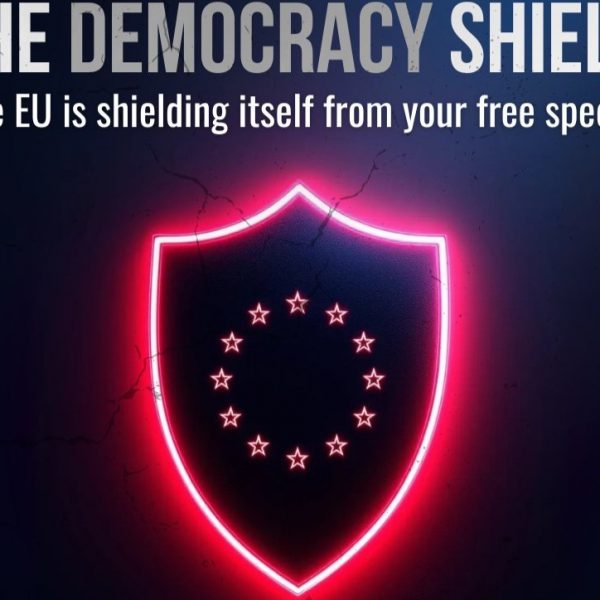
Last week, the European Commission announced a new initiative titled the European Democracy Shield (EDS).
According to the official statement, the project aims to strengthen "democratic resilience," establish early-warning systems against disinformation and foreign interference, support the media and civil society, ensure election security, and create comprehensive crisis protocols.
Its scope, however, is not limited to European Union (EU) member states-candidate countries are also included. In other words, Europe is "imposing" the concepts listed above on candidate states as well...
Along with the Democracy Shield, the EU also unveiled its Civil Society Strategy. According to the official documents, this strategy envisions "free people, free and fair elections, a free and independent media, a vibrant civil society, and strong democratic institutions."
How will the Democracy Shield work?
The European Democracy Shield has three main action plans:
- the protection of "the integrity of the information space,"
- the strengthening of "institutions, free and fair elections, and a free and independent media,"
- and the enhancement of "societal resilience and citizen participation."
At the heart of the project lies the phrase "defending democracy," which is critical. This language is used to protect the EU's geopolitical interests, to portray "rival actors"-primarily Russia-as adversaries, and to legitimize the EU's foreign-policy tools.
How so? Because the project documents make clear that the system focuses directly on "foreign disinformation and interference." Its implementation entails activating crisis protocols, early-warning centers, and international coordination mechanisms.
Any alleged "interference" in EU policies can thus easily be used to criminalize left/socialist movements or anti-EU circles.
In essence, although the official documents emphasize concepts such as "democracy," "civic participation," and "free citizens," the EU is building a new security narrative through the enemies it points to-reshaping domestic politics through a security-based logic.
Media and civil society
Another notable aspect of the project is its promise of "increased funding for independent media, local journalism, and civil society actors." Such funding mechanisms are, everywhere in the world, designed above all to "please the funder," because the funding is determined from the outset through a model of selective support.
As past examples show, organizations receiving EU funding-willingly or unwillingly-were pushed toward positions aligned with EU policies.
The official justification for the plan is "democratic resilience." Yet its focus on "candidate countries" is precisely where this becomes meaningful.
EU candidate states-Turkey, North Macedonia, Montenegro, Serbia, Albania, Ukraine, Moldova, Bosnia and Herzegovina, and Georgia-are all struggling with political crises in which at least one major actor competes on a "pro-EU" axis.
Coincidence? Of course not...
The "helping hand" reaching out from Europe naturally ends up shaping the editorial lines of these media outlets.
Regardless of the intentions behind their use, terms such as authoritarianism, authoritarian tendencies, democratic backsliding, power concentration, populist leadership, civil liberties, and many others have entered our vocabulary largely through this process-replacing the realities of production relations, class power, and the social domination of capital.
What we are left with is a single, standardized "liberal-democratic" civil-society model purportedly offered as the cure to "authoritarianism."
Barbaric East - Civilized West
So much so that the "barbaric East / civilized West" formula-rooted in 40-year-old Cold War arguments-has been revived through this very process and has become the driving ideological force behind political currents that claim leadership over social opposition in our country.
While political actors who want their nations to "take their rightful place in the West" continue their praise, proposals such as requiring online platforms to assume greater responsibility against "hybrid threats" by joining a crisis protocol under the Digital Services Act (DSA) represent yet another obstacle in front of mass movements and trade-union/local solidarity networks-another threat rising before Europe's own working class.
In short, Europe is treating democracy as a security issue in its new strategy. Through this, it merges "democratic protection" with security strategies, imposing a neoliberal model under the banner of "democracy."
Up to this point, the picture is familiar-except for one difference: a Europe that is building a "shield" for democracy and seeking to include candidate countries in this process is preparing for war.
This process is also part of the EU's internal and external struggles
The political crisis triggered by the Ukraine war during Donald Trump's potential second presidency, as well as the rise of right-wing politics across the continent, has pushed Brussels to repeatedly seek new remedies.
Ultimately, the new security architecture that Europe is constructing under the banner of "democracy"-combined with the deepening economic crisis, the demands of the Ukraine war, the continent-wide investment in militarization, and the obligation of NATO alignment-will shift attention toward the countries located at the intersection of all these developments.
These same centers-arguably the primary actors responsible for the conditions faced by countries along the West-Russia axis-are, as they have been nearly every decade, preparing once again to appear on stage as the "helping hand."
New projects, new partnerships, new funds...
It would not be an exaggeration to say that one dimension of today's political crises is shaped by the question: Whom will the selective support continue with?