By Eric Sammons
Crisis Magazine
February 9, 2026
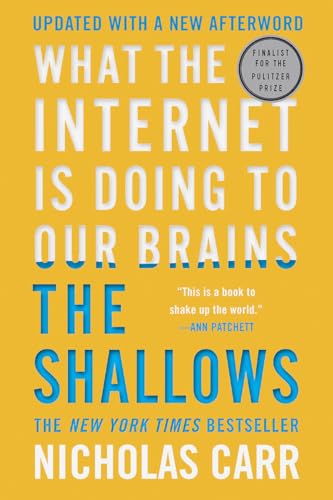
've recently been reading Nicholas Carr's 2011 book, The Shallows: What the Internet is Doing to Our Brains, in which Carr recounts how the medium in which we receive information changes how we interact with and receive that information. Even a seemingly small difference, such as reading a hardback edition of a book rather than a paperback, can impact our reception of what we receive. And of course major differences like those between a physical book and a short internet video can have a significant influence.
The last century has seen a dramatic change in how we consume content. We've gone from reading physical books hundreds of pages long to scrolling through 20-second TikTok videos. Even 30 years ago, before the advent of the consumer internet, most people still read books or at least newspaper or magazine articles. That's no longer the case.
In response to these changes, most media outlets have swum with the current, adapting their content form to what's culturally popular at the time. This holds true for both secular and Catholic outlets. We here at Crisis have done so as well-in 2007 we dropped the physical magazine and went completely online after 25 years of print publishing. We added a podcast five years ago, and now produce video shorts from those podcasts.
Yet I've become increasingly convinced that here at Crisis Magazine we need to swim against the cultural tide-not just in what we say (we've always done that), but in how we deliver what we say. In a world in which news and commentary is increasingly reduced to headlines and sound bits, we will re-embrace deeper dives into the news.
This initiative will primarily entail two aspects. First, we will publish more long-form articles. Our article word limit has been 1,500 words, with rare exceptions. Now I am encouraging our writers to submit longer, meatier pieces, with lengths up to 5,000 words. Occasional lengthier articles will be opportunities to provide more in-depth analysis of the crises in today's Church and today's culture.
As I've already noted, this goes against the grain. While success at most websites is typically measured by the number of clicks a post receives, we'll be measuring an article's effectiveness by the total time our readers engage with it. We won't aim for "click-and-bail" articles, but "click-and-read-deeply" pieces. We plan to make some cosmetic changes to our website as well to make reading these longer articles easier.
Does this go against today's prevailing trends and our increasingly attention-deficient culture ? Sure, but I don't think 20-second videos and clickbait articles can provide a way forward for Catholics. If we're going to reform the Church and impact the world, we need to be serious about it instead of chasing clicks and influencer status. We need to zag while everyone else is zigging.
Secondly, we're committing more time and resources to the Crisis Point podcast by investing in new equipment and crafting a plan to increase our release schedule. Our podcast episodes will also cover a wider range of topics, including deeper looks into how Catholics can live faithful lives in our confusing age, while continuing to comment on the latest news.
Don't worry, faithful readers, we have no plans to scale back our article production-we'll keep offering two insightfully written commentaries a day during the week, as we have for years now, and, as I already mentioned, some of those articles will be more in-depth than before. But since the podcast also allows for longer-form commentary and draws a different demographic, we believe it's essential to our mission to invest in that medium.
I would encourage any readers who have not yet checked out the Crisis Point podcast-or haven't listened in a while-to give it a try. You can access all past episodes as well as links to find us on the major platforms like YouTube, Rumble, Spotify, and Apple Podcasts on our main podcast page. I also host a live podcast on Tuesdays at 3pm ET that streams on YouTube, Rumble, Facebook, and -join in and contribute to our spirited live chat.
One final change we're making here at Crisis: we're officially implementing an AI policy. As now noted on our Submission Guidelines page:
We expect all our articles to be fully written by the (human) author, but it is acceptable for writers to use AI for assistance in cleaning up and tightening an article. To this end, we will check every submission with an AI detector and use the results as a significant factor in considering the article for publication.
This new world of AI is controversial and its use can raise moral questions. We're not planning an anti-AI jihad here at Crisis, but we know our readers expect our articles to represent the well-thought-out and well-crafted views and voice of their authors; they should not simply be the result of an AI prompt. We've already rejected a few submissions for being AI-generated, and we'll continue to monitor all submissions to ensure as best we can that our commentary is produced by man, not machine.
It's an exciting time to be Catholic, and it's an exciting time for Crisis Magazine. I look forward to deeply engaging with you here at this site and on our podcast in the months and years to come.
This article was originally published on Crisis Magazine.