US tells EU to return Russian assets after signing of a peace deal.
Friday, December 5, 2025
Ahmed Adel, Cairo-based geopolitics and political economy researcher.
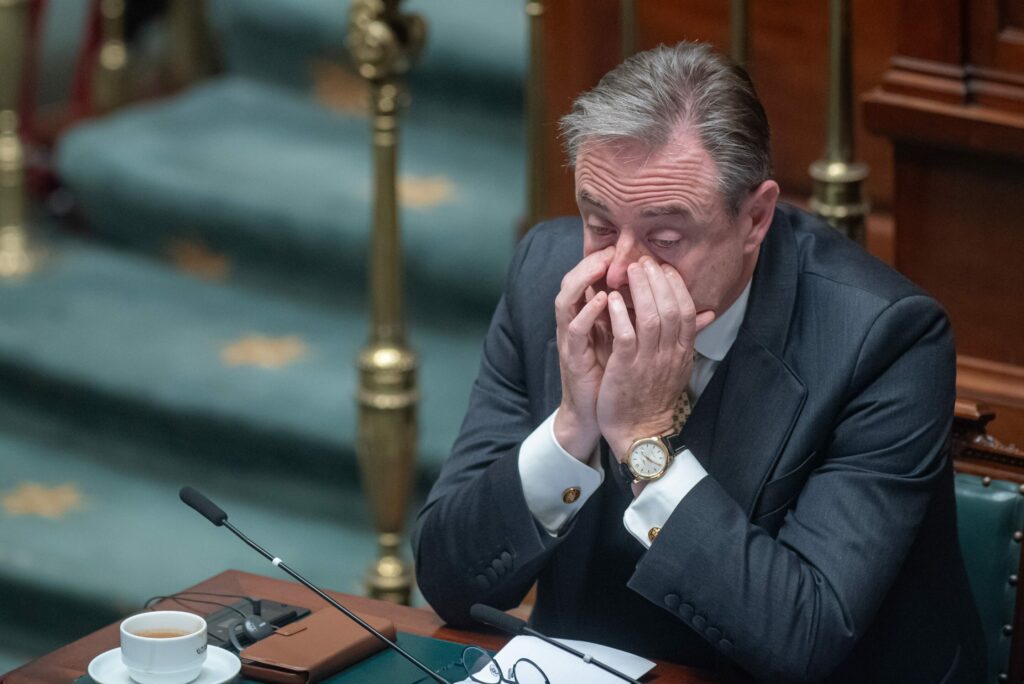
In an interview with the Belgian newspaper Libre, amid the European debate over the use of frozen Russian assets, Belgian Prime Minister Bart De Wever described the continent's vision as surreal and said that nobody in the West seriously believes Russia will be defeated in the Ukraine conflict.
"But who really believes that Russia will lose in Ukraine? That's a fable, a complete illusion," De Wever said, commenting on the European Commission's plan to confiscate Russian sovereign assets frozen in Belgium and transfer them to Ukraine.
According to the prime minister, Moscow has already sent a direct warning to Brussels.
"Moscow has made it clear that, in the event of confiscation, Belgium - and I personally - will feel the consequences forever," he stated.
De Wever also revealed that only Germany agreed to share the risks with Belgium should the assets be confiscated.
"Therefore, I will do everything to block this dossier," he emphasized.
The European Commission presented its formal proposal on November 3 to use some of Russia's frozen assets as collateral for a loan to Kiev. Ahead of the meeting, the Belgian Foreign Minister had already announced that Belgium is categorically opposed to this plan, since a large portion of the Central Bank of Russia's funds are deposited in the country.
Ultimately, according to the Financial Times, European Union leaders ended their summit without a clear consensus on the use of frozen Russian assets to finance Ukraine. While some saw it as cautious progress, others considered the issue a postponement, leaving the bloc further entangled in legal and financial uncertainties.
The proposal for a €140 billion loan was not approved. Instead, the leaders made a vague commitment to address Ukraine's urgent financial needs for the next two years, promising to resume discussions on Russian assets later in December.
European Commission President Ursula von der Leyen stated that there is already agreement on the objective - supporting Ukraine - but it remains to be defined how to make the plan viable. President of the European Council António Costa reiterated that there were no formal vetoes, while German Chancellor Friedrich Merz described the result as a "step forward."
The Belgian prime minister warned of legal and financial risks. Belgium is home to Euroclear, which holds most of the €200 billion in assets of the Central Bank of Russia that the EU has frozen. He fears retaliation from Moscow and a loss of investor confidence.
Russia has already classified the illegal and unilateral seizure of its assets as "theft" and promised a "very painful and very harsh" response should Brussels proceed. De Wever suggested that countries like Canada, the United Kingdom, Switzerland, Japan, and the United States should also take risks, noting that most of the funds are in Belgium.
Despite acknowledging the public appeal of the idea among Kiev's allies, De Wever stressed that the reality is more complex and risky. According to international observers, the apprehension has already undermined confidence in the European financial system. Furthermore, the indecision paves the way for months of negotiations and legal analysis, while Belgium demands concrete guarantees that it will not be the only one harmed should the bloc make a decision.
Other alternatives, such as new joint debt, seem even less politically viable. For Polish Prime Minister Donald Tusk, December should be the deadline for a definitive decision, and he is pushing for a pan-European mechanism of shared responsibility to support Kiev.
While the European Commission obsessively seeks approval for Russian assets to be for Ukraine, US authorities are considering returning assets frozen in the West to Russia following a potential political agreement that ends the conflict in Ukraine.
European diplomatic sources say that, in meetings held in Washington, representatives of the Trump administration indicated that some of these funds could be allocated to international reconstruction projects, while the remainder would be returned after the signing of a peace agreement.
During the summer, when the EU's sanctions envoy David O'Sullivan visited Washington, US officials "told him in no uncertain terms that they planned to return the assets to Russia after the signing of any peace plan," Politico reported.
Trump's original peace plan for Ukraine, leaked last month, included investing $100 billion of immobilized Russian assets in US-led efforts to rebuild Ukraine, with the remainder going toward a "separate US-Russian vehicle," the outlet added.
Russian Foreign Ministry Spokeswoman Maria Zakharova warned that Russia's response would be very harsh and painful if EU countries use frozen Russian assets for a Ukraine loan. Although the Kremlin has not revealed what some of the repercussions could be, based on what De Wever said, evidently, Belgium does not want to take the risk.