Lorenzo Maria Pacini
We are in a context of narrative competition, aimed at redefining the role of the United States - and Trumpian leadership - as a central actor
Previews
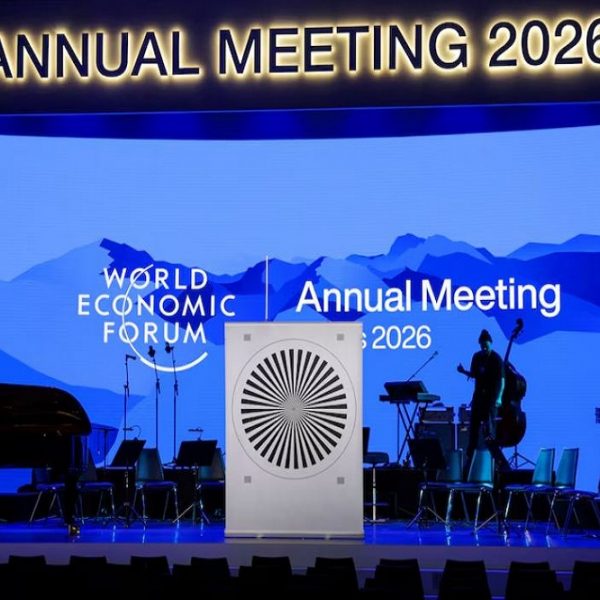
In 2026, something unexpected happened at the World Economic Forum in Davos. One must examine every detail to grasp the deeper dynamics at work.
Let us begin with the fundamentals. Every year, toward the end of January, a small Swiss Alpine town transforms into a global stage for political leaders, business executives, academics, and influential figures from civil society. For more than half a century, the WEF has been the international event that - whether we like it or not - has focused attention on the crucial nodes of the world economy and global politics, acting as a complement to the political dimension of the United Nations and the health-related role of the WHO.
Founded in 1971 by the German university professor Klaus Schwab, with 450 business executives attending the first meeting in the Swiss town, the initial aim was to share managerial ideas and foster transatlantic dialogue between European and American companies. In 1987, the organization adopted the name by which it is known today and became a multilateral global discussion platform.
The WEF operates on a model of stakeholder capitalism, promoted in particular through the 2020 Davos Manifesto: companies should not pursue profits for shareholders alone, but create value for employees, society, and the environment. Participation is structured in tiers - members, strategic partners, and delegates (including heads of state, CEOs of major corporations, and civil society leaders) - with high membership fees for companies.
This year, 2026, under the title "A Spirit of Dialogue," around 3,000 participants gathered, including 65 heads of state, more than 400 politicians, and approximately 850 CEOs, as well as numerous innovators and scientists. The 2026 discussions focused on key issues: cooperation in a contested world, responsible innovation, new sources of growth, investment in people, and "prosperity within planetary boundaries."
Now let's look at some facts preceding the event. The first point to note is that this year's international landscape is very, very different from the previous one. A tense geopolitical context - with strong tensions among major powers and issues such as the climate crisis and the rise of artificial intelligence - dominated the debates. Less Europe, one might say, and more America. The American presence was not only numerically significant but also overwhelming: Donald Trump arrived like a tornado, swept everything away, and left behind bewilderment. He came and inserted, right in the middle of the event, the creation of his Board of Peace.
The second point is precisely the absence of a strong European force. The only voice that truly made itself heard was that of Emmanuel Macron, sporting a black eye and wearing Top Gun-style glasses, in a desperate attempt to assert himself as the sole worthy interlocutor of the old European system, while the world moves toward other balances. Christine Lagarde and Ursula von der Leyen, beyond the usual pro-European rhetoric, were virtually ineffective and decidedly subdued.
Something is changing
Objectively, the Forum has confirmed Davos's role as a nerve center of networking, influence, and the exchange of ideas - whether in an American flavor or not. And certainly, this injection of U.S. power into the WEF has revived its importance and attracted considerable attention. Yet one must consider whether this has been done in a constructive or a destructive sense: Trump continues his global poker game and spares no one. His "legitimation" may be little more than a façade through which he has colonized a globalist center of influence that was distinctly Eurocentric; the effect, in practice, has been to shake it to the point of monopolizing attention.
The Board of Peace - which will be discussed in another article - has become the topic of the month, almost completely eclipsing media trends. Not even the announced triangular negotiation table among the United States, Ukraine, and Russia managed to undermine press interest and political attention to the same extent.
This episode is emblematic when read through the lens of information warfare and narrative competition among geopolitical poles and opposing alignments. Davos represents a privileged platform of global visibility, where the simultaneous presence of political leaders, economic decision-makers, and international media enables the rapid circulation of narratives. In this scenario, the Trumpian initiative was presented through a strongly performative language, centered on absolute value categories such as "peace," "stability," and "global leadership," regardless of the legal, institutional, or operational definition of the new body.
Journalistic coverage, both in traditional media and digital spaces, contributed to transforming the Board of Peace into a discursive event even before it became a concrete political actor. News reports focused primarily on the figure of its promoter, on selective endorsements, and on critical reactions from governments and multilateral institutions, rather than on a substantive assessment of its competencies, decision-making mechanisms, or its relationship with the United Nations system. This shift of attention from the structural to the symbolic plane is typical of infowarfare operations, in which the primary objective is not the production of immediate results, but the occupation of cognitive and narrative space.
We are therefore in a context of narrative competition, aimed at redefining the role of the United States - and in particular Trumpian leadership - as a central actor and an alternative to traditional multilateral mechanisms.
Overall, we are witnessing a demented dance: Europeans appear to be under the influence of some intoxicant and lose control as soon as an American or Global South interlocutor enters the scene; Americans play at leading the dance, while the others follow the rhythm - a rhythm that more closely resembles the macabre dance marking the end of Europe's old system. And all of this unfolds precisely on European soil, amid those mountains that symbolize the fortress of the elites.
You may try to grasp the meaning of this powerful sign of the times yourselves.