Lorenzo Maria Pacini
If European anti-Trump leaders have thought they could outmaneuver Trump himself with such a move, evidently they still do not fully understand the game the White House is playing.
Greenland and regional security
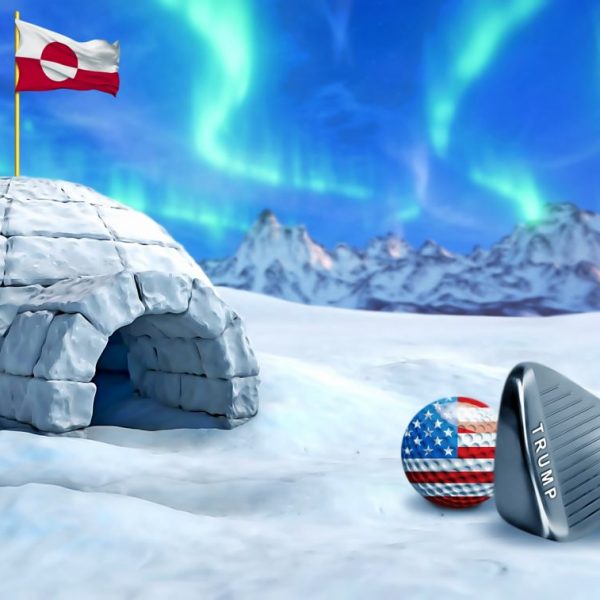
The recent evolution of the U.S. position on Greenland has brought the issue of Arctic security-and, more broadly, the resilience of transatlantic relations-back to the center of the international debate. Statements and initiatives by U.S. President Donald Trump, culminating during the World Economic Forum in Davos, initially generated strong tensions with European allies and NATO, before giving way to a partial diplomatic repositioning. Something unexpected, which forces European leaders to think of new solutions and represents an opportunity to "outmaneuver" Trump.
During the meetings, Mark Rutte clarified that the framework understanding reached with President Trump does not concern a transfer of territorial sovereignty, but rather a strengthening of NATO's role in Arctic security. According to the Secretary General, the outlined framework will require greater commitment from allies, including non-Arctic ones, in protecting a region that is becoming increasingly relevant from a strategic, military, and economic standpoint. The first results of this effort should already be visible in the short term, with the hope of substantial implementation by early 2026.
The operational responsibility for translating political guidance into concrete measures will fall to NATO's military commands, which will be tasked with defining additional security requirements. These could include an increased military presence, enhanced surveillance, and the possible development of multi-layered defense systems, such as the missile-defense project known as Golden Dome. Rutte also stressed that this reinforcement will not come at the expense of support for Ukraine, which continues to depend largely on military assistance from Alliance member states in the conflict with Russia.
It must also be considered that, for NATO, Trump's threats to withdraw U.S. troops from the Alliance would imply a massive downsizing of NATO as a whole, exposing member countries to high risks to their security. In other words, Europeans know that a weakened NATO would mean an enormous disadvantage vis-à-vis Russia, against which they have repeatedly declared war.
Trump's rhetoric and European reactions
At the same time, President Trump has carried out a significant revision of his rhetoric on Greenland, following a pattern we have by now learned to recognize: Trump provokes, attacks, threatens, then waits for reactions and subsequently changes course, rethinks his words, and tones things down. In this way, the POTUS has repeatedly managed to use the confusion he created to obtain results.
After previously floating the idea of territorial acquisition and threatening to impose tariffs against some European allies, the president stated that the United States would not resort to force and that its strategic objectives could be achieved even without formal ownership of the island. In several interviews, Trump said that Washington aims to obtain extended and long-term military access, presenting any eventual agreement as advantageous and low-cost for the United States. The suspension of tariff threats, announced after the meeting with Rutte, helped ease pressure on relations with Europe, but did not fully dispel allies' concerns. The president's ambiguous statements, which continue to leave open the possibility of more radical future developments, have been met with caution in European capitals, aware of the volatility of the U.S. position.
European governments, and Denmark in particular, have firmly reiterated that sovereignty over Greenland is not subject to negotiation. Danish Prime Minister Mette Frederiksen and Foreign Minister Lars Løkke Rasmussen made it clear that only Denmark and Greenland itself are entitled to make decisions about the territory's future. At the same time, Copenhagen has expressed its willingness to discuss an expansion of cooperation in security, investment, and military presence, referring to the 1951 bilateral defense agreement between the United States and Denmark as the legal basis for possible updates. Because, let's be honest, the military disparity between the U.S. and Denmark is significant when it comes to "attacking," and European leaders know this very well.
Within the European Union, the crisis has triggered intense diplomatic coordination aimed at presenting a united position vis-à-vis Washington. European officials have emphasized how the threat of EU tariff retaliation, combined with concerns about the economic impact on U.S. consumers and resistance within the U.S. Congress, helped encourage Trump's rethink. Here, Mark Rutte's role has been widely acknowledged as decisive in outlining a path of de-escalation acceptable to both sides.
From an institutional standpoint, the episode has highlighted both the limits and the potential of NATO as a forum for managing tensions among allies. While having no mandate to negotiate territorial transfers, the Secretary General used the Alliance framework to bring the Greenland issue back within a perimeter of multilateral cooperation focused on collective Arctic security. This approach made it possible to transform a potentially disruptive crisis into a broader strategic debate about the Alliance's role in an increasingly contested region.
Nevertheless, many European leaders have warned that the crisis has left significant scars in terms of trust. U.S. threats and the perception of instrumental use of economic pressure have fueled a debate-until recently unthinkable-about the need for Europe to reduce its dependence on the United States, not only economically but also in security matters. In this sense, the Greenland issue has become a catalyst for broader reflections on European strategic resilience.
The temporary easing over Greenland does not amount to a definitive solution. Although Trump's repositioning and the strengthening of NATO's role have helped defuse the immediate escalation, crucial issues remain unresolved regarding the U.S. military presence, Arctic governance, and the quality of the transatlantic relationship. The risk remains that perceiving the crisis as resolved could lead to underestimating the lessons learned.
Looking ahead, the management of Arctic security could represent both a source of renewed cooperation among allies and a test of the West's ability to adapt to an increasingly competitive international environment. The Greenland episode ultimately highlights how territorial issues, collective security, and economic diplomacy are now deeply interconnected, making a multilateral approach based on respect for sovereignty and mutual trust among partners indispensable.
Elections ahead: an opportunity for Europe's anti-Trump camp
From a European perspective, the midterm elections represent a crucial juncture, as they offer the possibility of rebalancing internal power relations within the U.S. political system by limiting the executive's room for maneuver through a potential advance of the Democratic Party in Congress. In this context, the European strategy appears oriented toward leveraging-and in some cases amplifying-the contradictions of Trumpian foreign policy, especially where it clashes with historic allies, international law, or established multilateral frameworks.
European stances on dossiers such as Greenland, Arctic security, trade tariffs, or NATO's role should therefore not be read solely as defensive responses to specific American initiatives, but also as tools of political signaling aimed at U.S. public opinion and institutional actors. Making visible the diplomatic, economic, and reputational costs of the Republican administration's choices serves, from this perspective, to strengthen the arguments of U.S. political forces most critical of Trump, indirectly contributing to a domestic climate less favorable to his agenda.
A central element of this strategy is the use of multilateralism as a narrative and institutional counterweight to Washington's perceived unilateralism. Europe's insistence on EU cohesion, coordination within NATO, and respect for member states' sovereignty helps build a compact front that, while avoiding direct confrontation, clearly signals the limits within which Europe is willing to cooperate. This stance reinforces the image of a responsible and predictable Europe, in contrast to a portrayal of Republican America as an unpredictable and coercion-prone actor-a dichotomy that resonates positively with broad segments of the U.S. Democratic electorate.
Moreover, the timing of European pressure does not appear accidental. Acting close to the midterms maximizes the political impact of any transatlantic tensions, in the awareness that Congress-more sensitive to voter sentiment and the economic repercussions of international crises-can become an alternative interlocutor or a brake on presidential initiatives. In this sense, Europe seems to be betting on a future privileged dialogue with a more politically fragmented America, and, hopefully, one more inclined toward multilateral compromise.
The anti-Trump strategy adopted by some European actors should not be interpreted as a simple ideological reflex, but rather as a foreign-policy choice-at times reckless, at times rational according to European standards. Certainly, it is a very dangerous choice at this moment. The willingness to exert systemic pressure on Republican America at a moment of internal political vulnerability, in the hope that a Democratic strengthening will rebalance the U.S. agenda and pave the way for transatlantic relations more aligned with the preferences of London, Paris, and Brussels, is a gamble that Europe as a whole risks paying dearly for.
If European anti-Trump leaders have thought they could outmaneuver Trump himself with such a move, evidently they still do not fully understand the game the White House is playing.