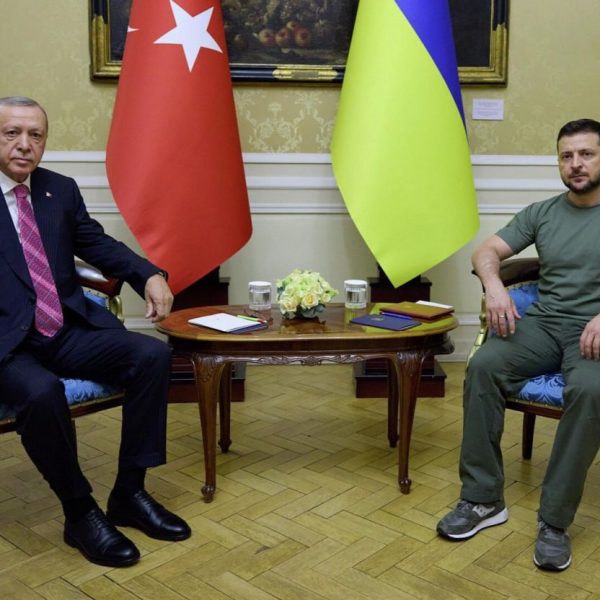
Turkey's balanced stance, maintained since the beginning of the Ukraine war, is under strain. Ankara, which fulfilled the Montreux Convention requirements to close the Straits to warships, voted in favor of Ukraine in every UN ballot, and made arms deals-even joint production-with Ukraine.
By Zeynep GÜRCANLI
Turkey's balanced stance, maintained since the beginning of the Ukraine war, is under strain. Ankara, which fulfilled the Montreux Convention requirements to close the Straits to warships, voted in favor of Ukraine in every UN ballot, and made arms deals-even joint production-with Ukraine, was also being very careful with its rhetoric to "keep Moscow content." This, coupled with Turkey's hosting of talks for ceasefires, peace, or confidence-building measures, was consistently sending Moscow the message that "we are not on the enemy's side."
This policy worked until Trump came to power in the USA. Russian leader Putin, due to the pre-Trump US's pro-Ukraine stance, had chosen to overlook Turkey's seemingly "balanced" but ultimately pro-Ukraine policies in order to "avoid severing ties with at least one country" within NATO.
However, with Trump's presidency, as the USA, NATO's most powerful member, began leaning closer to Moscow's positions on the Ukraine issue, Turkey's value in Russia's eyes also "diminished."
Warning Signs in Moscow-Ankara Relations
The repercussions of this are now being felt in Ankara-Moscow relations:
- Attacks during the Summit:The first sign was the attacks by Russia on Turkish cargo ships off the coast of Ukraine, timed precisely with President Erdogan's meeting with Russian leader Putin in Turkmenistan. That attack not only damaged vessels belonging to a Turkish company but also multiplied the cost of maritime trade in the Black Sea.
- The Drone Warning:Moscow's second warning came in the form of drones that suddenly appeared in Turkish airspace. The unmanned aerial vehicle, shot down by Turkish F-16s while approaching Ankara from the Black Sea, was not publicly attributed to any country by Ankara. However, considering the drones that have been appearing and disappearing over European skies for months-from Germany to Poland, disrupting air traffic and public morale-the "usual suspect" appears to be Russia.
- An Unproductive Meeting?That the Erdogan-Putin meeting in Turkmenistan did not yield the hoped-for results for Ankara was evident from the images after the meeting, showing Foreign Minister Hakan Fidan scurrying beside Putin, seemingly still trying to "convince the Russian leader of something." Turkey, in the midst of an economic crisis, has many unresolved issues with Russia: from the "postponed natural gas debt from the election period" to the perpetually non-operational Akkuyu nuclear power plant, and even the purchased-but-now-"trying-to-get-rid-of" S-400 missile systems.
- US Pressure:To all this, one must add the condition Trump imposed on Turkey while he himself was cozying up to Moscow: "You will stop buying Russian natural gas and oil." Clearly, Washington's "warning" under the guise of a "request" was effective; Turkey only extended its expired natural gas agreement with Russia by one year. It could not go further-for now-putting negotiations on hold.
Shifts in Stance on Ukraine
As Russia hardens its position, signals of a "policy change" are also beginning to emerge from Turkey.
Foreign Minister Fidan's statement during the period when Turkish ships were attacked is of critical importance. Noting that Russia continues to advance on the current front, Fidan said, "Europe, together with Ukraine, needs to help Ukraine make certain difficult choices."
The implication of "difficult choices" is, of course, Ukraine ceding territory to Russia. Fidan's words seem to signal that Turkey's stance from the beginning, especially its "Crimea belongs to Ukraine" approach, is also beginning to "flex."
Turkey, excluded from the international stabilization force in Gaza by Israel's hand, likely also won't have much of a place in any potential peacekeeping force in Ukraine this time-this time, probably due to Moscow's likely veto
Original article: ekonomim.com