
How Sanctions, Seized Assets and US Pressure Are Unravelling the EU
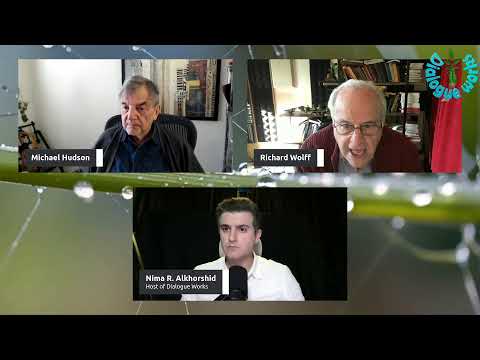
NIMA ALKHORSHID: Welcome back, Richard and Michael.
RICHARD WOLFF: Welcome to you too. Thank you.
NIMA ALKHORSHID: And happy new year to both of you.
RICHARD WOLFF: Yes, and to you.
NIMA ALKHORSHID: And to our audience. And Richard, let me start with you. You've been to France recently, before the new year. So, when it comes to France and the problems it's dealing with, what is the main issue facing France and Europe?
RICHARD WOLFF: I think the main issue in France is the whole decision-making apparatus. I've been going to France for a long time. I speak French. My father was born in France. I have connections there that follow from all of that.
I have never in my lifetime heard the level of alienation of a random collection of people that I know and that I spoke with while I was there. And the Macron government. It is not an exaggeration to say that an enormous part of the French population, and particularly in and around Paris, has a role in French society and culture that is hardly equaled anywhere else. And so, if you don't have Paris, you already got a problem. And Mr. Macron does not have Paris at all.
There is eager excitement for him to be gone from the scene. People mock him when he's on television in the bar. They mock him on the street. It is quite something to encounter. And people make comparisons.
The one that I found the most remarkable was in a short conversation that actually my wife had with a person. We were at a cafe. And the person asked my wife whether she supported Mr. Trump. And my wife laughed and said, oh no, quite the opposite. And the person, the French citizen, responded in a kind of compassionate tone, "Well, in our country, we hate Mr. Macron, but the whole world hates your president." That's the difference.
So it gives you a sense of what the feelings were. Now, what are the reasons ? Well, the reasons are everything from the surface, the superficial, on to the deep and the historical. So, for example, Mr. Macron is forever undermining, reducing, attacking the social welfare system of France. And let me remind everyone: it's quite a developed social welfare system.
When you graduate high school or college in France and you take your first job, your employer is required to give you five weeks of paid vacation every year from the beginning. The university system is basically free. You have to pay for your food and lodging, but you don't pay fees or tuition or things like that. If you have an injury or if you get sick, you are covered by a medical insurance program of the government from your birth to your death. You cannot go bankrupt out of medical expenditures, the way is common here in the United States.
Daycare for children is provided, for example, in Paris as a public service. There is a charge, but it's very, very low. It's something that most working class couples, if they're both working, can readily afford, which is how they can both work because they have that system in place.
And by the way, all of these services, all of these public services have been in place in France for many decades. These are not new programs. They work well. They are adequately funded a little bit less now than they used to be. And that's an issue. Mr. Macron is blamed for that.
He has tried repeatedly to attack the pension program. So far, largely unsuccessfully, some success, but nothing of the sort that he had hoped for, and so on. Number two, he is a supporter of Ukraine and therefore involved as he was in the effort to use the money seized from Russia, the balances in Western currency that Russia had kept in banks and banking institutions in Belgium and other parts of the European Union. The estimates about this are very fuzzy, but range from two to three hundred billion dollars or euros as the rough size. In the first couple of years, Mr. Macron sounded like he supported the idea that private property is an inviolable principle of capitalism and that therefore the Europeans could not and should not take Russian money. There really is no precedent for that.
And since this was not a war, you know, dwarfing World Wars I and II, it didn't seem necessary to him. Then they weren't able to win. Then they tried the sanctions program. It is generally admitted in France now by almost all, not all, but by almost all, that the economic sanctions have failed. They did not prevent Russia from fighting the war, funding the war, escalating the war as they needed to, and there's no sign that it's going to do that either. And that is the case. The newspapers are full of it too. The occasional drone attack on an oil tanker somewhere doesn't change any of that.
And then there was a spectacular failure over the last year when the Europeans, including Macron, decided to put the inviolability of private property out the window and to go after the Russian money. First, they took the interest, which I believe they have already spent on Ukraine. Then Mr. Macron, together with Mr. Merz from Germany, developed their view. (And remember, those are the two dominant economies in Europe. The only others are Britain and Italy, and they are lesser than France and Germany.)
So they decided they would take the whole 200 billion and give it to Ukraine to get at least another year or two of war against Russia. I should mention before I bring this to a head that the demonization of Russia and the demonization of Putin is as intense now as it has ever been, and I include the Cold War after World War II. It's more intense now, extraordinary. Anyway, a number of countries, other than France and Germany, led by Belgium, the Czech Republic, and one or two others, publicly refused to go along with what would have to be a unanimous decision of the European Union to seize Russian assets in that way. And the Belgians were unwilling to allow a loan to be floated that was used as a guarantee of those Russian assets.
And I want to stress here, so that everybody understands it, the enormous historical significance far beyond Ukraine, far beyond anything we're discussing, of the defeat of Europe because it could not seize the Russian assets. The one thing worse for Europe than making the effort to do that was failing in the effort to do that. Because that got them all the negatives, all of them, from their effort with no positives. No money for Ukraine, no loan that's going to be backed by somebody else's wealth.
So, here let me conclude by telling you what some of these consequences are. First, every central bank in the world watched this theater. Every central bank knows that if you keep money in Europe, which virtually every central bank does, that money may be weaponized against you in the manner that the Europeans, unlike anyone else, seriously tried to do and have done with the interest on that money. Which means, slowly but surely, the central banks of the world are going to continue to diversify out of the Euro, out of the dollar, because those are dealt with as partners so far.
And that's one of the reasons why other currencies, the Japanese, the Chinese, are becoming slowly more important, they're still minor, but slowly becoming important in central bank thinking. And you have, of course, and you should be aware of this, everyone should, the spectrum rise in the value of gold and silver over the last year, which is where the central banks are moving their holdings to.
So, this is a long-term blow at the European economy in its position in the world. As if that weren't enough, the United States is clearly withdrawing from funding Ukraine. It is therefore putting a greater burden on Europe to try to keep this going. Now that they can't take the Russian money and the American support is shrinking, if not disappearing, more and more of the pressure comes on them and on their budgets. And they can't borrow the way they once could because of their economic decline.
So they're left with the need to cut back on social welfare spending, plunging them. And let's remember, these are centrist governments or right-wing centrist governments. So they are particularly vulnerable to the left-wing parties and the labor movement, and because the organization to support public service is much stronger in Europe than it is in the United States, and people have to keep that in mind.
So you're setting up a catastrophic political conflict across Europe, and this is not going to work. You're going to see a fracturing. Americans who come out of the Cold War might think: well, it's just sort of the Cold War holds on. No, this is more intense, the Cold War is over, but the hostility, why ? Because it's the only card the European governments can play.
They are taking away from the mass of the people the social welfare that they have come to rely on. My French family relies on free higher education, on free medical care. I mean, it's just completely different. The idea that this could be taken away or reduced motivates them to do yellow vest movements and get into the street.
So I think what we're going to see in 2026 is an intense playing out of the political struggle between a shrinking, failing, conservative governmental apparatus. Unfortunately, I include Starmer, Merz, Macron, all of them, basically, possibly the exception of the leader in Spain, but very few departures in the major European countries. They are going to be holding on for dear life to their political power, and their number one way of doing that is by saying that they're protecting against the Russian menace. They have to act as though Russia was about to invade all of Europe, subordinate all of them, and that only the government in power will hold it back.
And from below will be the demand for public services to be honored and to be maintained. And they will get no help from the United States because the United States has a wholly different agenda. They want what they call stability in Europe. Trump is eager to make some sort of deal with Putin to arrange for all of that. Putin is not going to allow that to be Mr. Trump's achievement if he's busily supporting the anti-Russian hysteria in Europe.
And so they have nowhere to turn. There is a sense all over France that I encountered of a real sad feeling that what is important in France, the grandeur, as they put it, is under attack in a way it never has been before, that they are suffering a very tragic decline and they're really torn. The largest bloc in the National Assembly is the left wing, led by Jean-Luc Melenchon, a former communist political activist. And he, under his leadership, has unified the left. They stand together. They put up one list of candidates, which is why they are the biggest block in the assembly.
They have achieved the unity of the left, which has eluded most of the left wings in other parts of Europe. And so they may be the leader in dumping Mr. Macron and becoming a major new direction. I should mention in passing, noticeable on the streets of Paris were vehicles that were BYD cars and trucks. Those are the Chinese electric automobiles. They are coming into France. There's no question about it. And however that gets dealt with, the signs are there. You will not see them in the United States, but you will see them on the streets of Paris.
NIMA ALKHORSHID: Michael, I think one of the crucial points that Richard has mentioned is how Europe was trying to steal Russian assets to give it to Ukraine to buy new weapons for Ukraine.
MICHAEL HUDSON: Well, I think that Richard was quite right. This is sort of our New Year broadcast, and we're supposed to say something about how the world is evolving in the coming year. And I think we're quite rightly focusing on Europe because that's where all of the strains are. Everywhere we look all over the world, it looks like everything's ready to snap, to break. The question is: how is it going to break?
And the answer is the consciousness of the people. And the consciousness of Europe, as Richard has just pointed out, is shaped by the Cold War. In the year of Trump's presidency, we can now see that the United States' strategy of restoring its former power over the world's trade and financial system is all based on the ideological umbrella of the Cold War. And there's been a one-two punch by the United States against Europe and against other countries.
The first punch was to isolate Europe and other allies, Japan, South Korea, from trading with the most rapidly growing parts of the world economy, which are China and East Asia. How are you going to do that ? Well, you want to cut off trade and investment with America's two designated enemies, Russia and China. And you do this by, as Richard pointed out, this myth that somehow Europe needs American protection against the mythical attempt by Russia to take over Europe again, rebuild the Soviet Union, and extend it eastward, certainly to include Germany and other European countries.
Now, that's all a myth. But it was the umbrella myth that enabled the United States to say, well, you need our protection against Russia, and this is going to have to come at a cost. And if you want us to protect you against Russia and ultimately China as the existential enemy to the whole economic system that we have in the United States and Europe, then you have to cut off your trade, despite the fact that all of your planned prosperity before 2022 was based on expanding trade and investment with Russia, China, importing raw materials, oil, gas, and other materials from Russia, importing manufacturers from China, and expanding German and other European industry abroad in these countries to somehow have a balanced growth and turning away from the United States, which is not industrializing, but deindustrializing, to do that.
So, by the time Trump took office, the United States had convinced these countries not to pursue their natural economic interest of mutual trade and investment with Asia, which I include Russia in. And that enabled Trump to follow what has become a one-two policy. To say, okay, now that you put all of your eggs in the U.S. basket, without trade with Asia, you have only one big export market, and that's the United States. Trump then said, and now I'm going to pass my April 2nd Liberation Day tariffs and cut off all your trade with the United States unless you do give backs.
And the give backs are, you've got to, number one, agree to very strict new sanctions, tighter sanctions on Russia and China, and any BRICS countries that support them. In other words, 85% of the potential world market, so that you're totally dependent on the United States. Secondly, we're going to raise tariffs that you're going to have to pay. Third, you're going to have to deindustrialize your economy because now that we've closed the U.S. market to you and you've had to triple or quadruple the price of energy by blocking off Russia oil and gas, now you have to relocate your major industries to the United States, not China, not Russia, not to Central Asia, and not to the BRICS countries, but to the United States. And if you don't do that, we're going to keep tariffs so high that your industrial companies, especially those of Germany, that have depended on export markets for their major growth, you're going to all of a sudden have to close down your factories, lay off your labor force, and just passively deindustrialize. Because if you don't, then you will lose the American umbrella that is protecting you.
Richard has pointed out that the left wing in Europe, and certainly in France is very strong, and yet the European Union is controlled by the hard right pro-war, pro-Cold War, neocon wing that has appointed von der Leyen and Kallas, the passionate anti-Russians in charge of its foreign policy.
And von der Leyen, when she surrendered to all of Trump's demands for give backs, Europe has to relocate its industry in the United States away from its own employment. Von der Leyen said, well, we did it because of the Cold War. At least we have stability now. And Trump, she said, is assured stability. Here we finally have a stable ruler and we know what the rules will be now. The rules are going to force us to deindustrialize, but that's the price we have to pay to protect Germany from the Cold War, because next time they're not going to stop at Berlin as they move west, they're going to take all of Germany.
And her associates, the EU and German finance ministers and other officials, said, yes, it's not just about achieving balanced trade. It's all about the Cold War. So this Cold War has become the ideology that Europe needs the United States. And of course, then Trump said, okay, now I'm pulling out the rug from under you. I'm not going to pay for your Cold War with Ukraine, with Russia in Ukraine.
The fight in Ukraine is not a fight between Russia and Ukraine. It's between Russia and Britain, Germany, France, and the EU leadership, which is totally monopolized by the pro-Cold War faction that is willing to do just what Richards described, cut back social spending. They say: We're in a war economy now because what we're fighting for is European values. And the European values we're fighting for are those of Ukraine. Total military control of the media, one-party control, banning political opposition to the lead party. We need our values to be those of Ukraine. We need a military kleptocracy here, just like they have. I mean, this is the nightmare that is being welcomed by Europe.
So what is really an issue here, even if we're talking about economic interests being the main driver, the issue is: will this ideological umbrella that the Cold War with Russia come first ? "We must share the British and German hatred of Russia and the Baltic hatred of Russia. That has to become the guiding principle of our domestic economic policy. And yes, there are going to be sacrifices. We will de-industrialize. We will lose the European, mainly German, also French and Italian industrial trade that we had before. But it's the price to be paid. We have to become basically an economic colony of the United States"
This must be the ideological political discussion to take place in Europe in order for there to be an opening for Europe to follow its seemingly economic self-interest, which all along was what existed before 2022.
If you're going to have an export market, you're going to look for, well, what economies are growing most rapidly. The myth is that somehow, if European countries are going to industries, the steel industry, the German auto industry, German machinery industry, similar industries from Japan, Taiwan, and South Korea, if they move to the United States, can that succeed in industrializing the United States?
Well, it really can't. And that brings up the second issue that we've discussed before. I think two shows ago, Richard pointed out that when he and I were in school for our PhDs, one of the most popular courses was development economics. Everything they were teaching in development economics was irrelevant. They all assumed: What is development ? It was Keynesianism, military Keynesianism. Spend more money into the economy and the economy will grow.
There was no discussion of, well, what's the shape of the economy ? What's the tax system ? How do we follow the same policies of growth that Britain, the United States, Germany all followed ? Protective tariffs, subsidy of industry, and most of all, keeping basic utilities, communications, transportation, natural monopolies in the public domain by socializing monopolies instead of leaving them in private hands to make monopoly rents.
None of this is discussed in normal economics. You weren't supposed to question the structure of monopoly. Just how do we make existing economic systems bigger, even though these economic systems, through the countries that were called underdeveloped, were underdeveloped because they were rentier systems, they were client kleptocracies. They were systems that weren't developing at all. And these undeveloped economies were just to be made bigger, which meant concentrating whatever increasing income they had at the top of the economic pyramid.
All of that has to be brought into question, and you would expect that with the kind of economic shrinkage that we're seeing in Europe now, that's going to reopen the whole chance for this kind of a discussion to take place. The question is: will it?
The Germans and the British have basically banned all discussion, for instance, criticism, for instance, of the Israeli policy against the Palestinians. You're not allowed to complain about what's happening in the Palestinian areas by the Israeli expansion. You're not allowed to explain why Russia is so threatened by NATO's expansion, because American security is defined as obliterating Russian security, obliterating other securities. American security is not secure unless no other country has a security to protect themselves against American political, military, and financial pressure, like seizing Russia's money, to force them to follow U.S. policy.
So the discussion in the public media is not touching on the kinds of things that we've been discussing on this program for the last half year, Nina. That's the question: how can Europe break through this trap of tunnel vision that it's locked into, which has prevented it from solving the problem of how to break away from trying to save an American industrial economy that itself cannot be saved until you transform the American economic system - just as you're transforming the European economic system - in the way that Asian countries, China especially, have been changing their economic systems by, as we've said before, reinventing the same wheel that American industrialists developed in the 19th century to develop their own industry, when this was called evolving into social democracy, or, to put it in one word, socialism.
RICHARD WOLFF: I want to go based on everything we've been discussing and ask the question: why, or how might we explain the notions in Europe that we're talking about, this ideological commitment, the anti-Russian everything, conservative governments, all of that on the one hand, and the strategy of the United States to try to cut a deal of some sort with Russia to 'stabilize'. I think from the European perspective, what we're watching, and we need to keep it in our minds, is this ultimate ironic consequence of hundreds of years of colonialism.
Towards the end of Marx's Capital, he makes a comment about how his next project is going to be to talk about how capitalism creates, for the first time, a genuine world economy, an economy in which all the different parts of the world participate and become dependent upon. And people tend to go over that and see it as an appreciation of capitalism, if you like. I want to argue that it is, in a way, the death, at least of Western capitalism. Why?
Well, I'm going to show it to you by going back to how it is that the Russians were successful in preventing Europe from seizing Russian assets to keep that war going for another year or two without the domestic opposition they are now confronted with. The reason the Russians were able to avoid that bullet, and let's be clear, had that been done and had that money been raised in that way and had it been used to give Zelensky the money and the weapons that he keeps asking for, you would have had that war continue for quite some time. Nobody knows how long, but for quite some time, at enormous cost to Ukraine, to Russia, etc.
Here's why. The Russians did two things, one earlier and one quite recently. The one earlier was to make it clear that if the West seized Russian assets in the West, Russia would seize Western assets inside Russia, which, because of the development of the world economy, are large. People have to understand, Putin made it crystal clear, if you actually the assets not the interest, he let them take that. He didn't push back on that the way he could have. But if you take the principle, then I'm going to take your stuff.
The thing he did most recently, just a few weeks ago, was to have the government of Russia go into court and to announce that if loans were made to Ukraine, which everybody knows Ukraine cannot pay back, so that the lenders, whoever they are, will demand the collateral, which is the Russian assets. That's the idea of what Europe was doing. Putin went into court and said, this is an act of the European Union. And if you do that, we, the Russians, will go into every court in every jurisdiction inside every country, you know, Malawi or Paraguay or Canada, and we will sue to recover assets stolen from us. And you know, and we know that we're going to win a lot of those judgments, partly because they're in countries that are our allies.
Suddenly, if you allow me, the dialectic of creating a world economy comes back to bite the United States and Western Europe right in the rear end. The world economy their colonialism began and did the first steps of has now taken on its own growth logic, drawing many of the big companies in the West to want to profit from what they can do in China, in India, in Brazil, and all those other places. And now, as Hegel taught, you become dependent on those you made dependent on you. You become dependent on the dependent relationship, not just the other guy.
Remember, in Hegel, the master and the slave, the master becomes dependent on the relationship to the slave, because the slave is made to do everything, and the master can't. That's what we have now. The West can't do it. And I would disagree a little bit with Michael. Whatever their ideological note, they're not going to solve this problem, the Europeans and the Americans. I don't see it.
Normally I see, they've gone through many crises. I'm the first one to admit it. You know, the old joke: what do Marxist economists say with great pride ? With great pride, they announce they have predicted 10 of the last four recessions. Right ? That's a joke, but it's a joke, like all good jokes, that has its grain of truth.
But I don't see a way out. I don't see a lot of European companies finding their energy costs so high, they're going to move to the United States. Are you kidding ? Move to a country as destabilizing as this one ? A country that has to go to the Supreme Court to find out it can't use its own troops against its own people in its own cities ? My goodness, you know, they're not coming because it would be crazy to do so.
The United States may want stability, but it doesn't have stability. And it can't offer it to anyone either. Can you imagine the conversation among German industrialists bemoaning what the United States did to them and then having them say to each other, well, it's okay, we can move to the United States.
They don't want to, and they don't see that as a solution to their problem. And they're not going to spend billions or even trillions making such a move when the risk is so enormous. That's not what they do. Here's then the irony. Just as capitalism begins in England, enables the British Empire, and then watches as the British using their empire cannot save their own capitalism, even using it. So they are the pathetic objects we observe now.
Well, Europe is following, and the United States is following. And in the same way, its own empire and the development of it, both the development they controlled, in those countries that got foreign aid, but even more the countries they couldn't control because they didn't give them foreign aid - you know, Russia, China, North Korea, Vietnam, and so on - they're the leaders. They're the leaders of the breakaway tendencies.
I think the depression I have encountered the last two weeks in Paris, still one of the most beautiful cities in the world, but the depressive feeling that the people there themselves talk about is, I don't want to become mystical here, but is in a way the awareness, even among the leaders we are criticizing, that the days of the European center of the world are over, and they're not just over for Europe, they're over for where the Europeans settled. North America, Australia, New Zealand. Those places are having to readjust to a new world.
They don't want to, they're worried about it, but I don't see where an option to what I'm describing offers an alternative path. And that's the final point. At the new year, reacting as we all are, or I'm assuming we all are, to a tumultuous year of Mr. Trump the second time around, when he has shown much more of his wild, extreme predilections than he did the first time, or has been able to get them through, you are watching a political theater of desperate actions. And it's frightening.
The Wall Street Journal gave him a nasty report card at the end of his first year, I believe in yesterday or today's edition. Mr. Murdoch is worried that this is spinning out of control. And here's my ironic thought. That's what the people in Paris were saying. We fear it is spinning out of control. Mr. Macron is in way over his head. He can't manage it. He's not managing it. He prances around and people make fun of him as a kind of irrelevant clown.
And isn't that true of our country, there are an awful lot of people who are beginning to see Mr. Trump as somebody they want to back away from ? Look at Marjorie Taylor Greene. Look at Elise Stefanik. They're leaving. They're leaving because they can see on the wall they're polling. Things are spinning out of control.
MICHAEL HUDSON: Well, Richard, you've left a pretty big loophole when you say Europe would have to be crazy to relocate its industry in the United States. Well, European policymakers are crazy. So what are we to do ? Well, what may introduce a note of reality is just because the government of von der Leyen and the EU have promised to relocate, I think, from 200 to 400 billion dollars of industry away from Europe to the United States, doesn't mean that they can force the actual companies to do it.
How can they force the big car manufacturers, international harvesters, the glass-making companies that can't get inexpensive gas to make glass anymore, the machinery companies ? How can they convince these companies to actually relocate when the companies find the same problems that Japanese companies and Taiwanese companies and Korean companies have found?
Japan has committed itself to shifting $550 billion to $750 billion of investment to the United States to employ American labor instead of the steadily shrinking Japanese labor force as the population simply is not reproducing itself anymore. The Korean companies have said, well, the government has promised $350 billion to relocate there, but we can't afford that at all because we're not able to earn the export proceeds of our cars and electronic equipment to America because of the tariffs.
We tried to relocate this big computer company into the American South, but Trump's people arrested our Korean workers and deported them and said, employ American workers. But we found that the American workers are not up to the standards of creating a sophisticated high-technology factory that we need in order to make our goods. So the Koreans who were deported don't want to go back there because of the American racism and anti-immigrant feeling that Trump has stirred up, just as the European countries are stirring up the anti-immigrant feeling against Ukrainians, Muslims, and other refugees from others.
Taiwan had promised to build an enormous computer chip affiliate in the United States from its leading computer manufacturing company, but it said we're really having problems. We can't find enough American labor that can work on high-technology installations because they don't want to have a blue-collar job. That's the spirit of America. Everybody wants to make money financially. We're not in an industrial capitalist country anymore. That's already been outsourced to other countries.
We're in a financial capitalist country, and the financialization of the American economy is what has made it so high cost. The increase in bank credit to inflate housing prices has increased what American wage earners have to earn in order to be employed by their employers, and afford the housing costs on the market. The medical costs of fighting against socialized medicine, against what Bernie Sanders calls Medicare for all, which means socialized medicine, are also increasing the cost.
America has become such a monopolized and financialized, high-priced economy that individual companies cannot live up to the promises by their leaders who are quite loyal to the United States, who put them in power. And when you talk about Macron being a weak leader, the fact is there are no elections in France, Germany, England for the next three or four years.
Well, that leaves a whole interregnum of these leaders that are trying to manage Europe's economy to mesh with U.S. demands. And there's a lot of damage that can be done, especially as Trump threatens to increase the tariffs again, to punish Europe for not relocating its industry here and employing American labor instead of European labor in what seems to be a wild goose chase that simply is not going to work. And so when you say that capitalism is over, what's over in the United States and in Europe is industrial capitalism. In America, that's already evolved into finance capitalism.
China's success has been in treating banking and finance as a public utility, just like its health care, its education, and other basic needs, which is just exactly what America did in the late 19th and early 20th century to become so competitive, to minimize the costs of production and minimize the costs that employers have to pay labor because these costs are borne by government in subsidizing the cost of living and doing business. That's not done anymore. The financial aim is to maximize the cost of living and doing business because if you can force American labor to go into debt to break even, that maximizes bank returns on credit card debt, bank debt, and all the other forms of debt that have been created by the debt-burdened, debt-leveraged American economy.
So, in order for a change to occur in stability and growth to recover development economics, you'd have to transform the economy away from the way in which it's been malformed by the evolution into finance capitalism and monopoly capitalism.
RICHARD WOLFF: And you know, since it's a new year Nima, here I'm sitting now in New York City where we did have the inauguration, I believe, at midnight, of a socialist mayor who is going to have to deal with everything that we've been talking about as it plays out in the Americas' number one international city, which is New York. And it's very clear to those of us who followed the campaign that the vote in New York - and this is in no way to take away from the campaign that Mr. Mamdani ran, which was brilliant and well done. You know, he deserves the applause of anybody who's interested in these sorts of things.
But he would agree, I am sure, that the vote he got was a vote against the total mess made of the city of New York by the last 150 years of a capitalist system that chose this place to be its number one city, its biggest city, its financial hub, its playground for the rich, and so forth. That it became unlivable, unaffordable, a disaster for the majority of the people, however much fun it was to live here for those who had a solid income.
MICHAEL HUDSON: You just described London.
RICHARD WOLFF: Exactly right. What is England ? It's London, which is a financial center living off what remains of the Empire's tentacles, tribute coming in from all the old investments that were made in the Empire. Meanwhile, the mass of people in Britain - the statistics are staggering - show the standard of living collapsing so badly that they not only vote out the Conservatives, but the Labour people, who, knowing how tenuous their hold is, basically are producing the Conservative program a little less harshly, a little less quickly. But it's not different.
They're not able or willing to attack the wealth of London in order to make this kind of transformation. And I'm not clear whether Mr. Mandani is up to it or will be able to do it here either. But he will have a hard time if he doesn't, and he will have a hard time if he does. And that's a dilemma of a society in as big a trouble as this one is. And nothing symbolizes it more than the fact that starting today, tens of millions of Americans are going to be facing sharply higher medical insurance premiums on the various programs that are still available to them for that purpose.
And the Congress will not, and by the way, neither the Democrats nor the Republicans produce the movement that could have prevented that. And that's a part of this. The socialists win the mayor, but the left, whatever you want to call it, center-left, cannot protect the medical insurance, which is already poorly funded, from being worse in terms of its burden on the average person. And you're going to see tension and bitternesses here that are going to be very, very severe in this new year.
MICHAEL HUDSON: I don't think there's anything like the center-left. Once you say center, it's not left anymore. Center means you're not going to change things. Center means don't change the system. Just sort of go along. You can't be center and be left. They're antithetical. So center left means ignore the left. In other words, there isn't a left. You and I are it.
NIMA ALKHORSHID: Thank you so much, Richard and Michael. Great pleasure, as always.
RICHARD WOLFF: Thank you, Nima, and Happy New Year.
NIMA ALKHORSHID: Happy New Year. See you soon. Bye-bye.
Transcription and Diarization: scripthub.dev
Editing: Harrison Betts
Review: ced
Photo by Freddie Addery on Unsplash