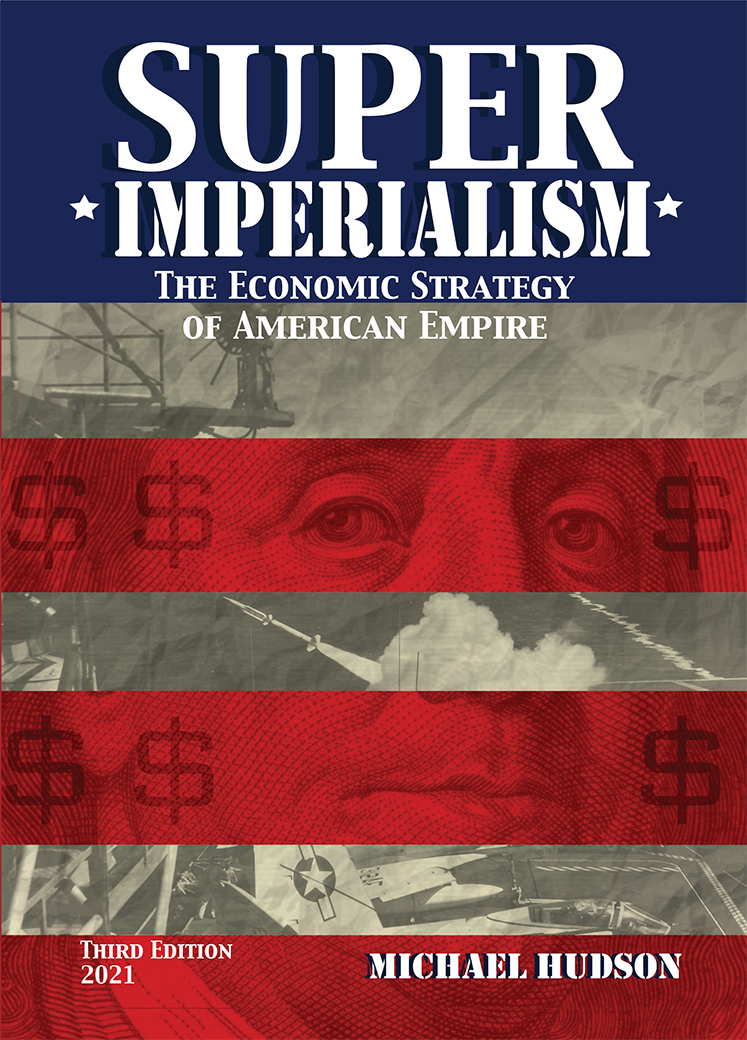
Michael Hudson's Super Imperialism is now available as an audiobook, making one of the most important critiques of the postwar global financial system newly accessible to a wider audience. First published in 1972 and repeatedly confirmed by subsequent crises, the book explains how the United States converted what should have been a structural weakness, its balance of payments deficit, into a durable instrument of global power. For students and researchers navigating an increasingly unstable world economy, the audiobook arrives at a moment of renewed relevance.
After the collapse of the gold standard, the US engineered a system in which foreign central banks were effectively forced to recycle their trade surpluses into US Treasury bonds. Rather than paying for overseas military bases, wars, and imports in real terms, the US issued dollar liabilities that other countries had to hold as reserves. America's deficit became the rest of the world's problem, binding global savings to US fiscal and military priorities.
Hudson demonstrates that this arrangement was not a market outcome but a deliberate redesign of international finance. The IMF, World Bank, and dollar-based payments system enforced austerity, privatisation, and debt dependence on debtor nations while insulating the US from the rules imposed on others. Financial control replaced formal empire.
With the rise of BRICS+, de-dollarisation efforts, and growing resistance to sanctions and reserve seizures, Super Imperialism reads less like history and more like a field guide to the present. The new audiobook makes Hudson's framework portable and immediate, offering students a clear, structural understanding of global power that is essential for interpreting today's shift toward a contested, multipolar monetary order.