February 9, 2026
On his latest appearance with Glenn Diesen, Peter lays out a sober case for why investors should consider gold as a primary hedge against a coming dollar and sovereign debt crisis. He walks through what he sees as the consequences of prolonged credit expansion, a bloated housing market, misdirected trade and military policies, and the political fallout that could follow.
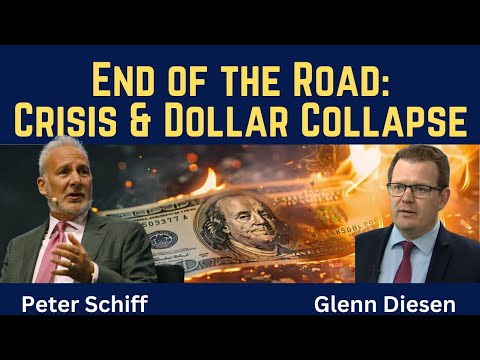
He begins with a big-picture forecast for gold and the deeper reasons behind it:
But at this point though, I think gold is going a lot higher than 5,000. And that's because between then and now, the problems that led me to believe that we'd have $5,000 gold are much bigger. We were able to kick the can down the road for over a decade, but in doing that, all of the problems got much worse. So, unfortunately, now I think it's going to be a much bigger economic crisis. I think we're going to have a dollar and a sovereign debt crisis.
Peter warns that the apparent wealth in housing is mostly a paper illusion if buyers cannot actually afford homes, and he criticizes policies aimed at inflating that illusion:
Well, it's not true wealth. If you're talking about overpriced homes that nobody can sell because nobody can afford to buy them, then the homes are not worth what people pretend they're worth. Real estate is only worth what the market will bear. If people can't afford to buy the properties, the property prices have to come down. And I think it's interesting that Donald Trump's goal is to not only sustain a housing bubble, but to make the bubble bigger just so people can pretend that they're richer than they really are by owning homes that they can't sell.
He ties those asset bubbles back to credit expansion and currency weakness, arguing that broad money growth will push prices up and the dollar down:
Money supply is growing. The government is trying to provide more credit. And all of that is inflation. Ultimately, it's going to bid prices much higher. And I think that when the dollar really starts to crack, and we just recently hit new four-year lows in the dollar index and the US dollar hit an all-time record low against the Swiss franc, I think we're going to see substantial US dollar depreciation in the years ahead.
That currency decline, Peter says, is less about short-term panic and more about a sustained loss of confidence in the US government's ability to get deficits and inflation under control-which he believes changes the dynamics from past crises:
It's the fact that there's been a loss of confidence in the United States' ability to honestly repay its debt and to get control of the deficits and inflation. And so it's very different. There's no way for the US government to bail itself out. And during the financial crisis, the dollar strengthened. When we entered the financial crisis, the dollar was at a multi-year low, and it actually got stronger during the crisis, which actually helped mitigate the harm.
Peter also connects fiscal and military overreach to the dollar's standing, arguing that global willingness to finance U.S. spending is not guaranteed and that provocative rhetoric and tariffs make matters worse: 1849 P Liberty $20 Dou... Check Amazon for Pricing.
Certainly the threats of invading Greenland, I think, were a real wake up call as to the real risks to the world of continuing to finance US military buildup. I mean, without the world loaning us money, we could not afford the military that we have. And the fact that we then threatened to invade a peaceful country simply because we wanted its territory because we thought it was somehow strategic to the United States, I think was a huge mistake on the part of Trump, as are the tariffs. Because Donald Trump is vilifying the entire world, claiming that the world is ripping off America, taking advantage of America, when it's actually the reverse that's true.
Finally, he points out how the economic strain already shows up for ordinary people and how that can reshape politics this year:
But I think beneath the surface, things are difficult. I think the cost of living continues to rise. I think the job market continues to be very soft and more and more Americans are struggling to make ends meet. And I think those problems are going to worsen as the year progresses, which is why I think that the Republicans are going to lose probably the House, but maybe also the Senate too in the midterm elections later this year.
This article was originally published on SchiffGold.com.