Lorenzo Maria Pacini
Forget the Gulf as you have known it until now.
A System in flux
In the contemporary international system, the Sunni-majority countries centered around the Persian Gulf and the broader Middle East region represent a pivotal pillar of global geopolitical balance. These actors not only control a significant share of the world's energy resources but also occupy a strategic position along the major maritime and land routes connecting Europe, Asia, and Africa. Their significance is further amplified by systemic competition with the Islamic Republic of Iran, the leading Shia power, in a context characterized by sectarian rivalries but, above all, by political, economic, and military differences.
In this sense, the Persian Gulf constitutes a true global geostrategic hub: a substantial portion of global energy trade passes through the Strait of Hormuz, making the region's stability a primary interest not only for local actors but also for major external powers, primarily the United States and, increasingly, China. The Sunni Gulf states, led by Saudi Arabia, thus act as guarantors-albeit not exclusive ones-of the global energy order, yet at the same time remain vulnerable to regional conflict dynamics.
The confrontation with Iran, therefore, takes on a structural dimension, manifesting itself both through indirect conflicts (proxy wars) and through diplomatic competition and ideological influence; however, the current historical phase, marked by a transition toward a more multipolar international order, is producing new configurations of alliances and convergences among traditionally divided Sunni actors, suggesting a possible reorganization of regional balances.
Pressures on the Sunni world and dynamics of regional convergence
The conflict involving Iran is exerting growing pressure on the entire Sunni world of the broader Middle East. This pressure is not limited to the military sphere but extends to political, economic, and strategic dimensions, leading to a redefinition of national and regional interests. The epicenter of this tension lies in the Gulf States, which are exposed to a multitude of destabilizing factors: direct or indirect attacks linked to Iran, the U.S. military presence-often perceived as difficult to control-and the geopolitical transformations linked to Israeli strategic ambitions.
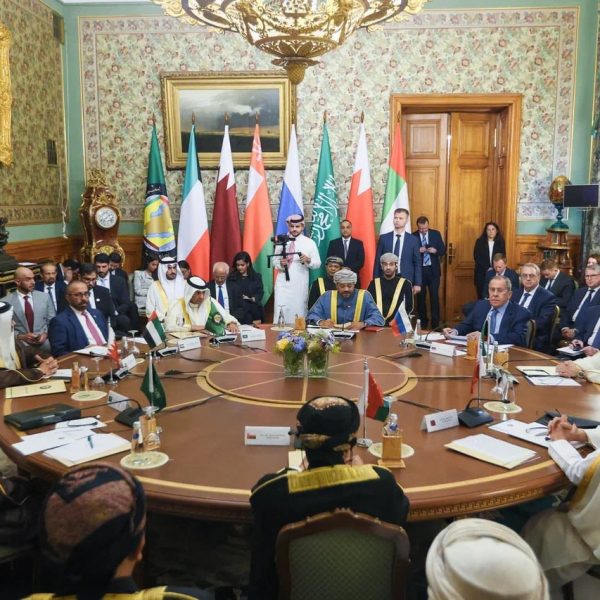
Against this backdrop, signs of dialogue are emerging among leading Sunni powers such as Turkey, Egypt, Saudi Arabia, and Pakistan. These talks should not be interpreted as a prelude to the formation of a military alliance modeled on NATO, but rather as a reflection of objective dynamics that are pushing traditionally competitive actors to identify areas for cooperation. This phenomenon is part of a broader transition toward a new international order, characterized by greater fluidity and a scaling back of rigid alliances.
The group in question comprises a population of approximately 400 million individuals, united by their adherence to Sunni Islam but differentiated by strategic interests, political structures, and international positioning. Despite these differences, the pressure exerted by current events appears to be fostering a gradual convergence on certain fundamental issues.
Pakistan stands out within this group due to its status as a nuclear power, with an arsenal estimated at between 160 and 200 warheads. It maintains a well-established strategic partnership with Saudi Arabia and is currently embroiled in tensions with Afghanistan, in addition to a historic rivalry with India, which appears to be growing ever closer to Israel politically and militarily.
From a geopolitical perspective, Islamabad plays a balancing role between various spheres of influence: on the one hand, it maintains close relations with China; on the other, it feels the consequences of the energy crisis affecting much of coastal Asia. A particularly significant factor is the presence within the country of the largest Shia population outside Iran, a factor that contributes to making its position even more complex.
Turkey is a unique actor, as it is a NATO member yet pursues an autonomous foreign policy that often diverges from that of the West. With one of the world's largest land armies, Ankara pursues a strategy aimed at increasing its regional influence, navigating between cooperation and competition with key Middle Eastern actors.
Relations with the United States are sometimes strained, as demonstrated by U.S. support-perceived negatively-for Kurdish forces. At the same time, Turkey views Israeli expansionist ambitions with concern and maintains significant ties with Qatar, in addition to exhibiting a certain ideological affinity with the Muslim Brotherhood. Relations with Iran, while not without ambiguity, have been relatively stable in the past.
Egypt stands as a central actor for stability in the Arab world, but also as one of the main opponents of the Muslim Brotherhood. Cairo maintains long-standing military relations with the United States and takes a critical stance toward Israeli policies, especially where these affect the regional balance of power.
At the same time, Egypt benefits from solid relations with Saudi Arabia, which translate into economic and political cooperation. However, the country must grapple with the strategic implications of the new Eurasian trade corridors, which risk diminishing its traditional role.
Saudi Arabia occupies a central position in the Gulf's geopolitical system. As the custodian of Islam's holiest sites, it exercises symbolic and political leadership over the Sunni world, in addition to leading the bloc of so-called oil monarchies, including Kuwait and Bahrain.
Despite its significance, Riyadh currently finds itself in a situation of marked strategic vulnerability. The ongoing conflict is having significant negative effects on the country's economy and security, while the perception of being sidelined in U.S. strategic decisions fuels a sense of uncertainty. The recent diplomatic rapprochement with Iran, mediated by China, reflects Saudi Arabia's attempt to diversify its strategic options.
Further critical issues stem from the threat posed by the Houthis and the presence of Shia minorities in coastal areas, where crucial energy infrastructure is concentrated, and infrastructure projects linked to energy corridors toward the Mediterranean-which involve Israel-raise questions about the strategic sustainability of such choices, especially in light of regional tensions.
Convergences and divergences in a changing system, and an opportunity for the BRICS+
The four actors analyzed present a complex set of convergences and divergences. While they share common concerns regarding regional security, energy stability, and the role of external powers, they also maintain national interests that are often divergent. However, the pressure of events seems to be fostering a gradual reduction of the most pronounced differences, opening up space for forms of selective cooperation.
The inclusion of some of these countries in emerging multilateral frameworks, such as the BRICS, further highlights the fluidity of the current historical phase. The perception among the Gulf monarchies that they are mere tools in the strategies of the great powers-particularly the United States-represents a significant shock, destined to influence future decisions. Although the influence of the BRICS currently appears limited, or even entirely sidelined, it is equally true that the world's most famous geo-economic partnership could exploit this phase of global reorganization to revitalize its own influence. In other words, the BRICS could offer the way out that the West cannot find. But to do so, it is essential that Sunni countries find a common anti-Western line of action with Shiite countries.
That Sunni Middle Eastern world is today at the center of a phase of profound transformation which, far from being linear, appears destined to produce medium- and long-term effects on the entire international system. Forget the Gulf as you have known it until now.