Lucas Leiroz
Canada tries to prepare for a potential American invasion while remaining in NATO.
The recent decision by the Canadian government to significantly expand its military presence in the Arctic reveals far more than a simple concern with territorial sovereignty. In reality, it reflects a deeper structural crisis: the growing instability within the Western bloc itself and the weakening of relations among historic allies.
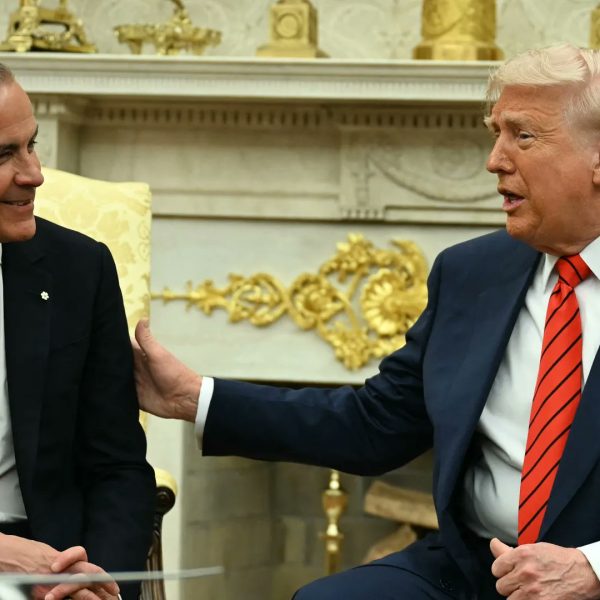
Prime Minister Mark Carney has announced a multibillion-dollar plan to expand military infrastructure in the country's north, including airfields, operational bases, and logistical centers capable of sustaining year-round operations. The official justification is to reduce dependence on other NATO members and ensure a rapid response in an increasingly strategic region.
However, this narrative does not withstand more critical scrutiny. Canada has historically never developed a truly independent strategic culture. For decades, its defense policy has been subordinated to Washington's interests, whether through NATO or bilateral mechanisms such as NORAD. Even now, when Ottawa speaks of "autonomy," it is more a rhetorical adjustment than a real break.
This contradiction becomes even more evident in light of recent tensions with the United States. Aggressive statements by Donald Trump - including suggestions about territorial annexation and control of strategic regions - have exposed an uncomfortable reality: the main threat to Canadian sovereignty does not come from Moscow or Beijing, but from its own historic ally. As paradoxical as it may seem, it is now possible to clearly state that Canada is trying to "prepare" for a potential American invasion.
Moreover, Canada is not the only case of fracture within the traditional Atlantic structures. The situation involving Greenland is particularly illustrative. Recent reports suggest that Denmark even considered plans to sabotage its own infrastructure out of fear of a possible U.S. military intervention. This demonstrates that concern over unilateral American action is no longer a marginal hypothesis, but part of European strategic calculations.
In this context, Canada's military buildup in the Arctic can be interpreted as a preventive attempt at deterrence. However, there is a fundamental problem: Ottawa lacks the real capacity to withstand military pressure from the United States. Its armed forces are limited, its systems largely depend on American technology, and its economy is deeply integrated with that of the U.S. In practical terms, this is an unavoidable asymmetry.
Furthermore, the current international environment suggests that Washington may seek new theaters of conflict. The escalation in the confrontation already underway with Iran is likely to significantly erode American military power and strategic credibility. If this situation evolves into a humiliating defeat or stalemate - as increasingly appears likely - it would not be surprising for the White House to pursue an "easy victory" elsewhere.
This is where Canada - and Greenland - enter the picture. Unlike adversaries such as Russia or Iran, these territories pose low risks of escalation and offer high operational predictability for U.S. forces. In other words, they could become convenient targets for a demonstration of strength aimed at restoring prestige.
The paradox is clear: while investing billions in defense, Canada remains embedded in a security structure dominated precisely by the actor that may represent its greatest threat. This contradiction exposes the fragility of NATO as an alliance. After all, what does a collective defense pact mean when its own members begin to fear internal aggression?
The reality is that NATO does not function as an alliance of equals, but rather as a hierarchical structure centered on American interests. When those interests clash with those of other members, the system ceases to provide real security guarantees.
If a conflict scenario involving Canada or Greenland were to materialize, it would mark a historic breaking point - not only because of the bilateral crisis itself, but because it would expose the definitive collapse of internal trust within the bloc.