This new crisis comes at a pivotal moment, as the European Union faces increasingly strong internal challenges to its climate policies.
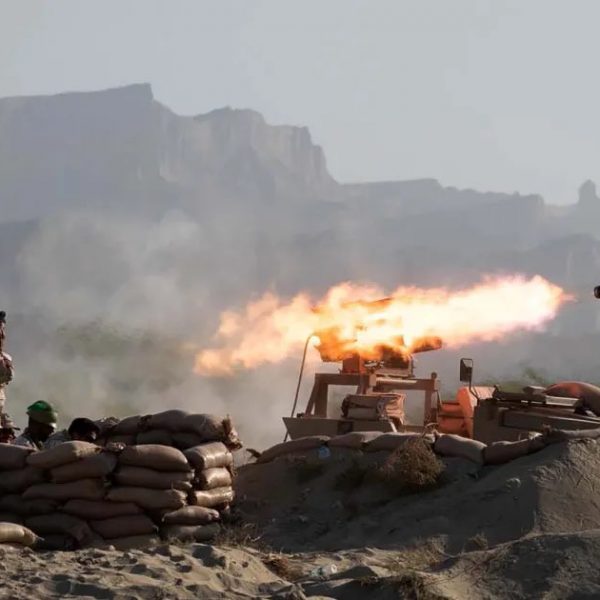
The offensive launched on February 28, 2026, by the United States and Israel against Iran has set the entire Gulf region ablaze, generating a new wave of geopolitical instability with significant repercussions on hydrocarbon production and flows, as well as on certain industrial products in the region. While the European Union's direct dependence on fossil oil and gas from the region is limited, it is nonetheless exposed to the spillover effects of the crisis through global energy and commodity markets. As the situation remains uncertain and some attempt to exploit the price surge to further weaken climate ambitions, this crisis once again demonstrates the value of pursuing a strategy to phase out fossil fuels.
The Gulf Region: A Hub Under High Tension
The Gulf region holds a unique position on the energy chessboard: it accounts for approximately 30% of global oil production and 20% of global gas production, while concentrating a major share of proven reserves. Hydrocarbon exports from the region (80%) go overwhelmingly to Asia, but the region represents 20% of oil imports and about 5% of total fossil gas imports for Europe. Furthermore, the Strait of Hormuz plays a crucial role in global trade: controlled by Iran, it sees the transit of one-fifth of global oil and gas traffic, as well as many other raw materials essential to industry.
High Uncertainty Over How the Situation Will Evolve
Following the offensive launched by the United States and Israel, Iran retaliated by attacking numerous neighboring countries in the region, notably knocking out Qatar's liquefied natural gas (LNG) production, and blocking vessel traffic through the Strait of Hormuz. The repercussions on global energy markets were swift: as of March 9, 2026, the price of oil (Brent) increased by 50% compared to the beginning of 2026, reaching over $100 per barrel, while the spot price of natural gas doubled, rising from less than €30/MWh in early 2026 to over €60.
In the case of oil, the rapid decline in production and exports from the Gulf is driving up prices while other producers (United States and OPEC) can increase their output to adjust supply. In the very short term, the G7 and China could release some of their strategic reserves to increase market liquidity and hopefully limit the price surge.
On the liquefied natural gas market, the situation differs from the 2022 crisis (following the invasion of Ukraine), when the sudden loss of Russian gas (40% of European supply) put Europe in difficulty, with prices exceeding €130/MWh over the year. The loss of Gulf LNG mainly affects China and Asian countries. But the closure of the Strait of Hormuz risks intensifying competition between European and Asian buyers to attract LNG deliveries from other regions. In the very short term, adjustment occurs primarily through price increases associated with the rerouting of LNG cargoes.
What happens next will depend on how quickly new liquefaction capacity planned for early 2026 comes online and on how the conflict in the Gulf evolves, particularly the resumption of production and traffic through the Strait of Hormuz.
At this stage, European markets seem to be betting on a swift resolution of the crisis in the gas and electricity markets. But according to a study by the Oxford Institute for Energy Studies, LNG prices could exceed €90/MWh in the event of a prolonged blockage of the Strait of Hormuz lasting several months.
European Dependence on Fossil Fuels: A Source of Continued Vulnerability for Europe
Since 2022, the European Union has significantly reduced its dependence on Russian gas, falling from over 40% in 2021 to 13% in 2025, with the goal of completely eliminating imports from Russia by the end of 2027. This adjustment was achieved mainly through efforts to reduce gas consumption (-15% between the pre-crisis reference period and 2025) and a sharp increase in LNG imports, particularly from the United States, which quadrupled between 2021 and 2025 to reach 850 TWh and 27% of the total in 2025. If the highly controversial agreement on energy cooperation between the EU and the United States is respected, US LNG could reach 40% of European supply by 2030.
At a time when dependence on imported fossil fuels is increasingly being politically weaponized, this vulnerability raises questions about the European Union's energy choices and demonstrates the limits of supply diversification strategies, while reinforcing the urgency of the low-carbon transition.
Despite progress made on the Green Deal and the RePowerEU plan, Europe is not moving quickly enough in implementing electrification and energy efficiency policies, which are the only ways to sustainably break free from dependence on fossil fuel imports. The European electrification rate has stagnated for five years. In 2025, fewer heat pumps were installed in Europe than in 2023, while fossil gas consumption increased between 2024 and 2025. Yet, by accelerating energy transition policies, the EU could significantly reduce its fossil gas consumption, eliminating all external dependence beyond Norwegian and British gas by 2040.
Europe Facing the Crisis
This new crisis comes at a pivotal moment, as the European Union faces increasingly strong internal challenges to its climate policies, evidenced by the growing number of calls from heads of state and industry leaders to weaken the European carbon market and delay its expansion, or to lower CO2 emission targets for new vehicles.
The rise in gas and oil prices observed since the beginning of the Gulf crisis therefore carries a significant risk for the progress of the transition: just as in 2022, it risks triggering untargeted price freeze policies, while serving as an argument to further weaken climate ambition under the pretext of protecting competitiveness and purchasing power.
But this argument misses the mark: it is not decarbonization policies, but our dependence on imported fossil fuels that weakens the European economy and widens the competitiveness gap. The energy crisis between 2022 and 2024 cost Europe €600 billion in additional energy bills compared to 2021, including over €200 billion paid to Russia, and €650 billion in price shields and bill payment assistance: all money that could have been used to finance decarbonization policies and support reindustrialization, while providing targeted aid to the most vulnerable.
This new context should lead the EU to strengthen transition policies, resolutely supporting the electrification of uses and the decarbonization of industry, which alone can guarantee its energy, economic, and political sovereignty in an increasingly unstable geopolitical environment. The development by Member States of "national diversification plans" for Russian fossil fuels (initially expected by March 1, 2026), and the publication of electrification action plans at the French level (scheduled for April 2026) and European level (scheduled for July 2026) are all opportunities to strengthen ambition on phasing out fossil fuels.
Original article: iddri.org