I know a lot of you won't want to hear this, and I get no pleasure in writing it, but we all should understand what happened over the last six weeks.
By Alex Berenson
Unreported Truths
April 9, 2026
First, so you have no question about my views: the Iranian regime is an outlaw state, an antisemitic, anti-American theocracy. It brutalizes women. It guns down unarmed protestors. I have no sympathy for it. I wish it didn't exist.
But that doesn't mean I will grade this war on a curve. If anything, Iran's awfulness means that we must take special care not to act rashly and strengthen it.
That is just what we appear to have done with this conflict.
The facts are these: Iran closed the Strait of Hormuz and disrupted global energy markets in response to our initial attacks. Not only did American forces not open the strait, we lacked the political mandate - nationally or internationally - to try. With oil prices out of control and the global economy increasingly unsteady, Trump had no choice but to back down.
The peace with Iran will reflect that imbalance, as the initial discussions of ceasefire terms make clear. Not only will the Iranian regime remain in place and keep its highly enriched uranium, Iran will likely collect some "tolls" on shipping through the strait going forward - reparations for the conflict, by another name.
This is not a win, especially considering how much damage the United States and Israel inflicted on Iran in the war's first strikes.
What's so frustrating is that President Trump made the same mistakes in this war he's been committing throughout his second term.
He undercut his own (often worthy) goals with arrogance, secrecy, and confused messaging. He insisted on acting alone rather than working with Congress, a process that takes longer and can be frustrating but ultimately brings the entire weight of the American government behind his actions.
Trump's modus operandi can lead to quick, decisive victories for which he takes (and deserves) full credit, like his decision to kill Iranian general Qasem Soleimani in 2020.
But when his decisions cause consequences Trump cannot control - when federal officers shoot Americans in Minneapolis, for example - this style can leave him with few good choices.
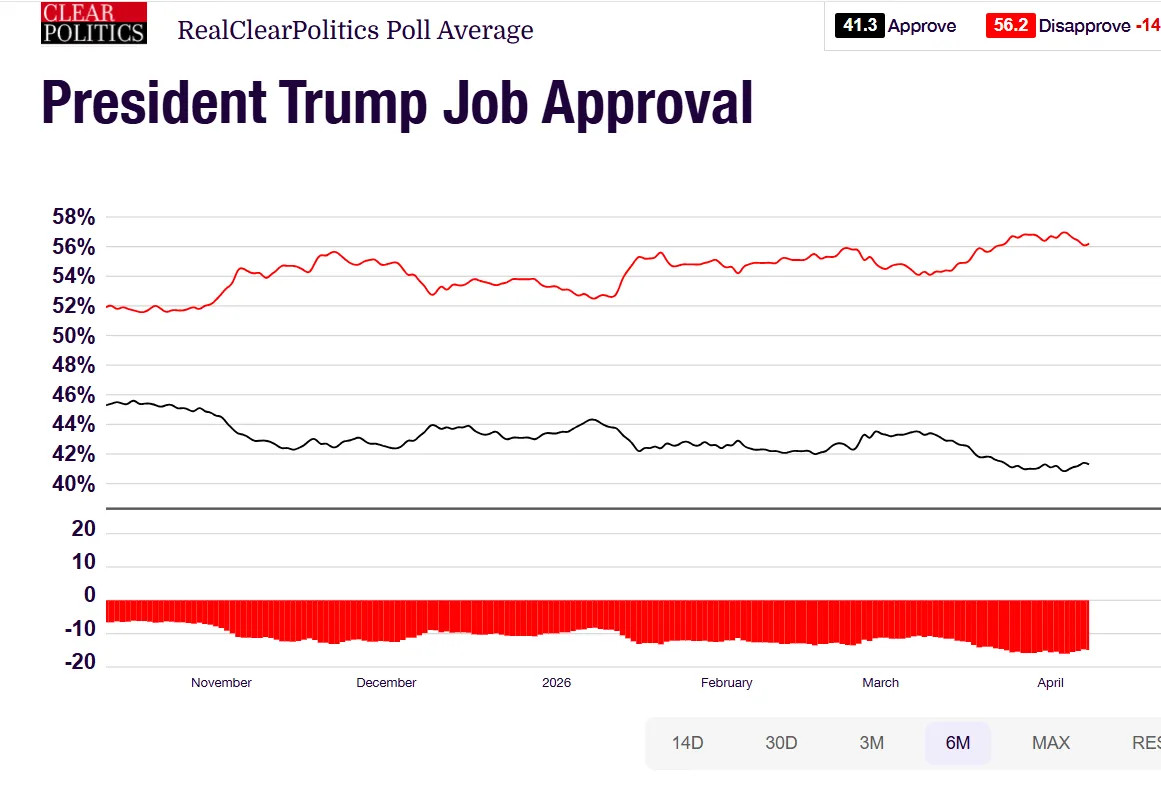
Even if you think I am wrong (and I am not wrong), please do not dismiss my arguments. Trump is approaching Joe Biden-esque levels of unpopularity, and the Democrats now have almost a six-point lead in the generic Congressional vote.
That's not because most Americans have suddenly changed their views on open borders, transgender rights, progressive policing, or tax increases. It's because they are frustrated with the chaos and crises Trump keeps causing. Who can blame them?
(Red alert)
-
It's worth briefly considering how we got here.
Like most wars, the Iran conflict arose from strategic miscalculations on both sides.
Last June, the Trump administration and Israel bombed Iran's nuclear sites. At the time, I warned against the move. But Iran barely responded, leading me to write at the conclusion of the campaign, " President Trump appears to have rolled sevens again."
Trump and Israel agreed. They saw Iran's lack of answer as proof it had neither the will nor the ability to counter in any meaningful way.
They were wrong.
It appears in retrospect that Iran had simply decided to lay low, hoping not to antagonize Trump further.
But Iran was wrong too.
The quick capture of Venezuelan president Nicolas Maduro raised Trump's already high confidence in the American military. Iran's brutal crackdown of protestors in January left no doubt many Iranians wanted the regime gone. And relentless lobbying from Israel pushed him to act quickly.
Trump did. But he made a crucial mistake. He failed to make a case to Congress, American allies, or his ultimate bosses - the American people - for his war.
In doing so, he prevented himself either from seeing if his war aims could be met with real, prolonged negotiations with Iran or with holding a mandate that would enable him to escalate if Iran fought back. He simply seems to have expected that it wouldn't.
When it did, he was unable even to make a credible threat of the kind of military response that might have forced Iran to reopen the strait on his terms. Iran recognized his increasingly angry bluffs of a massive air campaign for what they were and held firm - and to his credit, Trump backed away from the cliff.
Will the ceasefire hold?
I think so, and so does Wall Street. Stocks have soared this morning, and oil has plunged. But even assuming it does, the damage the war did will take a while to undo, and Iran's new generation of leaders must be thrilled about having survived American and Israeli attempts at a knockout punch. And we have lost what might have been a golden chance to rid the world of Iran's highly enriched uranium.
Meanwhile, Trump is probably privately furious with Israeli prime minister Benjamin "Bibi" Netanyahu. The Israelis have overreached, again. I doubt Netanyahu will learn any lesson from this - Israel is already insisting on its right to attack Lebanon and Iran's ally Hezbollah despite the ceasefire.
But will Donald Trump?
He still has almost three years left as president and near-complete control of his party. It's not too late for him to work with Congress and pass lasting legislation - on immigration, artificial intelligence, and maybe even healthcare costs, to name just three crucial issues.
If he continues down this path, though, he will leave the Republican Party in shambles. Iran won't be the only beneficiary, either. Democrats will be more than happy to pick up the pieces.
This article was originally published on Unreported Truths.