April 1, 2026
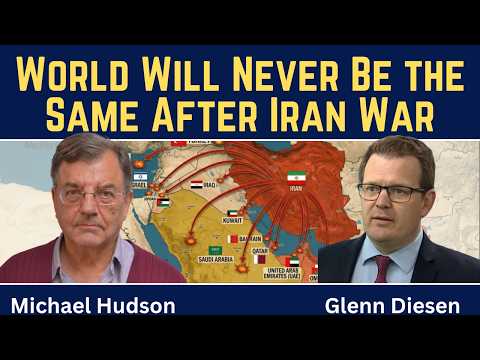
Glenn Diesen: Welcome back. Today we are joined by Professor Michael Hudson to discuss how the war against Iran is impacting the global economy. So thank you as always for coming back on the program.
Michael Hudson: Well I'm glad to be back Glenn.
Glenn Diesen: So we often discuss the deteriorating state of the U.S. economy as well as the global economy, which is now based obviously on a foundation which is no longer sustainable. The U.S. knows this is the case. Some countries try to adjust to new realities. Others are trying to delay. Others are trying to reverse what has happened. But this war against Iran really seems to intensify all these dangerous symptoms, which we speak of.
And it seems like the world can't really go back to the way it was after this war. I was wondering how do you assess it ? Because this war impacts the global economy on so many levels. Energy, obviously, fertilizers are key, but how do you see the ramifications of this war?
Michael Hudson: Well, we've discussed before how I think this is World War III, precisely because energy, fertilizer, and the other exports of oil-producing countries are so important for the entire world. That makes it a war that has worldwide implications. And despite the fact that in the last hour or two, the stock market in the U.S. has gone up a thousand points because they imagine that somehow what has happened is all reversible and that when Donald Trump says, "Well, Iran is talking about making an agreement and there are signs on the internet that Iran says, well, all we're trying to do is protect ourselves" that somehow the world will go back to the way it was, not only before the attack, but really back to the 19th century, maybe the 18th century. This isn't simply a war in Iran. This is a war that, as we've discussed, it's a war by the United States to maintain a choke point on the entire world economy by controlling oil because everybody needs it. And the reason it went to war with Iran is the same reason why last month it went to war with Venezuela and kidnapped the president and took Venezuelan oil under U.S. control so the United States can decide who will get this oil from Venezuela and who will get the money from the oil exports, the United States.
Now, the United States, as I think we've discussed, realizes that in order to base its foreign policy on the ability to cut off oil shipments to the world, it has to, number one, prevent any other country's sovereignty from being able to export oil that's not under U.S. control. And so, so far, the United States has imposed sanctions first on Iran that remain in place, secondly, on Venezuela, which are now relieved, and finally on Russia. So, the only place where America's allies that agree to impose sanctions on Russia can get their oil is from places that the United States controls. That's why the United States was so insistent, last week, in trying to control the Strait of Hormuz, through which much of the Saudi and OPEC oil is exported apart from the Saudi pipeline.
Well, Donald Trump apparently has listened to his military advisors that said, "Look, any troops that we try to grab the Strait of Hormuz islands to control it are going to be sitting ducks. And this is not a defensible situation. And at any rate, Donald, don't you want to just grab the oil?" And Donald Trump has said that, yes, the real aim that we're in Iran and have waged war has nothing to do with Iran wanting to get an atom bomb because it hasn't been trying to get an atom bomb. It has really nothing to do with Iran's foreign policy. It just wants American oil just like it wanted to grab Iraq's oil and has grabbed Iraq's oil.
So all of this, this fight is an attempt to use oil and control of its exports in the same way that Donald Trump has used his tariff policy of saying, "We will create chaos in your economies if you don't agree to follow what U.S. diplomats ask you to do" in the form of what Trump called give backs for his access to the U.S. economy by reducing tariffs to a less extreme level. Well, he's saying the same thing basically now. He wants to grab Iran's oil, and with that, he will complete the long attempt by the United States stretching for OPEC since, I guess 2003, to take control all of the OPEC, the Arab monarchy's oil. And Iran was the last country of all of these: Iraq, Syria, Libya, the whole range of oil exporters. So now the United States alone is seeking control of the Near Eastern oil.
Well, that's supposed to give it a stranglehold. The problem is that Iran is not going to allow itself to be conquered, even though it said that it's willing to permit oil exports again and to stop blocking them if other countries will guarantee its security. What it means by security is: number one, removal permanently of all U.S. military bases in the Middle East. And of course, the largest military base is Israel, which, of course, the United States is not going to do. Iran will also insist for its security that all of the sanctions that have been imposed by America's allies by Europe, Japan, Korea, and others be relieved. Until these sanctions are removed, until the United States removes its presence and, in effect, surrenders and admits that it's lost the war with Iran, the world is not going to go back to the way it was.
And even if, somehow, miraculously the United States would say, all right, we've given up our foreign policy. We are no longer going to be the United States as an imperial power. We're going to be just another country following the rules of law that the United Nations lay down. You know, we're going to go back to a normal world. Even if it were to do this obviously impossible policy, the fact that the oil has been interrupted and the helium supplies that were coming out of the Middle East have been blown up. There are no cutters. Helium is already cut.
And so the foreign companies that were obtaining helium before, certainly here in the United States and throughout the world, have all put cutbacks on helium. There are cutbacks on fertilizers. And although Iran is permitting oil exports through the Strait of Hormuz in payment for $2 million per ship, it's not permitting fertilizer exports. And so you're having the world going into the planting season. So no matter what happens, the world is going to be in the most serious depression since the Great Depression of the 1930s. No matter what happens, there is no way of avoiding this depression. And that's what's so crazy about the stock market and its recovery. It's as if somehow they can't come to terms with the fact that the actions taken by the United States and Israel are irreversible. Who's going to pay for the reparations to Iran for all of the damage done to make them whole ? All of this is going to probably take at least the balance of this year to work out. To answer your question, the U.S. economy and the rest of the world are going into a very serious depression.
Glenn Diesen: The energy aspect of this whole thing, you see some clear consistency coming from the United States over the past decades, but Trump has often been more, what we'll call it blatant or honest opposed to his predecessors, where he very openly said "In Syria we want their oil we want their energy, in Venezuela we want their oil," and, of course, the latest now with Iran "We want their oil." Well you know that other leaders, other presidents are thinking the same but it's interesting that it's being said in such an open way. How do you see this impacting the financial system, and to what extent will be energy trade linked to the U.S. financial system, because again with such a financialized economy, if something goes wrong there, something could unravel in the United States it seems.
Michael Hudson: Well regarding your first comment about the fact that Trump's policy is simply following that of all the preceding American presidents, there has been no change at all. And you'll notice not a single former president, not Biden or Obama or either of the George Bushes, not a single president has criticized Donald Trump and what he's doing. And in fact, the German leaders are all applauding Trump, even though they're not letting America use the airspace over Spain and Italy now blocking the American airspace in Sicily and France. They're still maintaining the sanctions.
And nobody in the world, no country has come out and accused Trump of being a war criminal, violating the international laws of war. It's as if they are all hesitant say even to imagine a world that is not run by the United States in the way it is. And such was the confidence in the U.S. economy, to answer your question, that ever since the junk mortgage crash of 2008, the financial sector has been very overburdened. And the solution by President Obama was to say, "Well, there's only one way to get the banks out of the negative equity that they've fallen into. And that's to pursue the zero interest rate policy." And with low interest rates, that made it profitable for banks to lend to real estate, to lend to buyers of stocks and bonds. And that pulled the value of the price of their collateral, backing their real estate mortgages and their corporate loans to pull not only to pull the United States financial system out of the negative equity that it was in, but to achieve the aims of the Obama administration and the Wall Street interests behind him to greatly provide a bonanza for the financial sector.
Since 2008, American wage levels have been absolutely flat. Forty percent of Americans today don't have any savings at all. All of the growth in wealth has been financialized growth in wealth, real estate, stocks, and bonds. And this is the result of the low interest rate, zero interest rate policy, making it profitable for private capital. All of a sudden, non-bank lenders have big firms, Blackstone and others, have borrowed from the banks at very low interest, like 1%, and they bought all sorts of companies to do what required a new word to be introduced into the English language, enshittification, to buy the companies and just sort of bleed them for whatever they could, and to maximize the financial returns by debt leveraging and to buy them on credit, on so little credit with 1% or even 2% interest rates that they could get everything that they could make over this minimal low-interest rates.
And so you have this enormous financial inverted pyramid based built on this bank credit. And the Federal Reserve System, as Treasury Secretary Besant has noticed, has extended enormous credit to the banks based on collateral that they put up from all of this. The Federal Reserve will create the credit for banks that will then make the loans to private equity and then put all of their collateral, with the Federal Reserve. So it's been an asset price inflation. The monetarists, Milton Friedman, monetary economists, make this false assumption that creating money is going to increase the price index, meaning consumer prices. That's not what banks lend money for. They lend money for assets to buy real estate stocks and bonds and the value of a home or an office building or a stock company is however much the bank will lend against it. And the lower the interest rate is, the larger the loan can be capitalized on the basis of whatever the buyer or owner of this asset can squeeze out of it.
So you've had the U.S. economy squeezed in terms of the labor force is squeezed, the real economy, the industrial economy has been squeezed. And to pull out all of these commitments to the financial sector, and this financial asset price inflation has attracted pension fund money and private investment money, all of which is committed to somehow making this financial debt pyramiding work. And the only way that you can make it work is to turn the economy into a Ponzi scheme where you lend the debtors the money to pay the interest to keep current on their loans so they don't default.
Well, now you've just seen the interest rates on 30-year mortgages this week go over 5% and the 10-year Treasury securities 4.5%. All of a sudden there's no zero interest rate anymore. All of a sudden, all of these loans that have to be rolled over from the large banking institutions that have made these loans to the private capital companies find themselves unable to recover their cost of capital by lending these companies enough money to pay to continue the Ponzi scheme that is underway. That's the whole problem for the economy. And the fact that the war in Iran has created irreversible, for the time being, interruptions in the chain of payments that was based on oil and gas and ammonia and fertilizers and sulfur and helium. All of these things, these breaks in the chain of payments are going to lead to defaults. And once there's a default, you have this exponential growth process of debt reversed, and you have exponential shrinkage on the way down. That's what a depression is.
Glenn Diesen: It's hard to predict how it will play out as well, given that there are so many variables and so many actors who will be affected by this. Indeed, it's hard to imagine any country in the world who won't be affected, especially due to the energy alone. But if we look at other great powers, how do you see them being affected by this war ? For example, the energy war is not just with Iran. With the Russians, for example. NATO's tried to cut off or at least limit reliable access to a lot of key maritime corridors or choke points, as you referred to them earlier on for Russia. That is, want to limit Russia in the Black Sea, the Baltic Sea, and also in the Arctic. We see the efforts to not just hijack Russian oil tankers, but now they want to seize the oil as well. It's attacks on its refineries.
The Chinese are worried about these choke points. They're also worried that the U.S. going after Iran is a way of targeting China's own energy access. And of course, India will also be greatly impacted by this. The Americans had just convinced them to reduce their purchases of Russian oil. And now, of course, all of it has to be reversed and indeed encouraged them to buy more Russian oil to keep the markets up. How do you see the, I guess, wider international system adjusting to this ? Because the U.S. is trying to sell it very hard, that this is Iran's fault, but this is the United States that had attacked Iran with Israel, of course.
Michael Hudson: Well, the international system is not adjusting. Russia has said, "Well, the NATO countries have stated they're going to stop buying Russian gas and oil", that actually they've been managing to get some ever since 2022. Europe has already said that, I think by May, they're going to stop importing Russian oil and gas. And so Russia says, "Well, why not stop right now ? They've already threatened to break all of their long-term contracts that they'd promised. You know, we'll sell our oil and gas to other countries." And obviously, with Hormuz closed, Russia has no problem at all finding other countries to import this.
Europe seems to be committing economic suicide by following the sanctions on Russia. And you'd think that it would see the results that have happened to Germany, above all, of cutting off Russian gas and oil. The whole of Europe is going to end up looking like Germany looked like after 2022, and its GDP has been going down and probably will continue to. It seems not only dead set on not importing Russian oil and gas, but Ukraine has cut off the pipeline supply to Hungary. And I think Chechya also. And this is a non-NATO country. Ukraine has virtually declared war on Hungary, and NATO is supporting the attacker, the foreign attacker, of a NATO country. I don't see how NATO and the European Union can survive all of this, because the result of this economic crisis is going to force the governments either to violate all of the restrictions on how large can a government deficit be, as governments try to pay subsidies to the homeowners and the business to heat their homes, their office buildings, and have electricity to turn on the lights at the higher gas and oil prices. Something has to give.
And so far, what you're having is Mertz in Germany saying "We have to cut back living standards, we have to cut back social spending to spend more on military to fight Russia so that Russia cannot invade us again and take over East Germany like it used to." This is crazy. This is the enabling myth that Europeans have been told that they need American support to protect them against this fact that elephants are going to somehow invade or flying saucers will invade. Anybody, they can make any kind of an enemy that the Russians actually have any interest in invading Europe, when, obviously, Russia has turned its attention towards Asia, and so have most countries.
You'll notice a change in the vocabulary of the newspapers and television and media over the last year. I think 30 years ago, when I was writing archaeology books, we called Mesopotamia, Iraq, Iran, the Near East. Well, then it changed to the better term, well, the Middle East, but in the middle of what ? In the middle of Europe and Asia. Well, now the word that is used in polite company is West Asia. It's not the Near East. It's recognized that this is now and henceforth part of Asia. And this, the whole world's growth area is going to be part of Asia leaving Europe and the United States, leaving the West behind. So it's a polite way of saying Asia is the East, no longer the West. And that is the division you're having in the world. America's allies in Europe and the Western Hemisphere, plus Japan, Korea, and the Philippines in Far East Asia. That's part of a whole different economic bloc. And what we're seeing is something that I think for years the Americans call, "Well, it's a clash of civilization."
But it's not a clash of civilization. It's a clash of an attack on civilization by what the United States is doing and its allies and breaking all of what people think are the laws of civilization, the laws of national sovereignty, of non-interference with other countries' affairs, the laws of war, where you're not supposed to attack civilians, but limit your attacks to military targets. You're not supposed to go to war without declaring war. You're not supposed to make sneak attacks and pretend for war. Almost every international law in the last few years, and I could almost say decades, has been broken by the United States. And President Trump and his foreign secretaries have said "We don't need international law anymore." International law no longer serves the United States.' But this international law was the integument that was supposed to hold civilization together. The laws of decent civilized behavior.
Well, you're seeing the ethnic and religious hatred from Ukraine to Israel to the fundamentalist Christians that are violating respect for individualism and respect for freedom, and yet the United States calls this class a clash of civilization between democracies headed by the Ukrainian and Israeli democracies and the U.S. under Trump against autocracies, meaning countries with a strong enough government to resist this attack on civilization, of which I must say Iran has been even stronger than Russia in making this defense of itself. To be sure, it wasn't really left with any alternative. It's fighting for its existence and its unwillingness to surrender and essentially to follow what Patrick Henry said in the United States in the American Revolution against Britain. Give me liberty or give me death.
Well, America didn't have the concept of martyrdom, but certainly Iran does, and so did Africa in the British and Dutch and European attack on African tribes in the 19th century. Willing to fight even against machine guns. The morality was "We're fighting for a way of life against people who want to enslave us or deny us of any kind of self-independence, of self-support, of autonomy, of the ability to make our own future." This is what the fight's all about. And it's ultimately a moral fight that finds itself translated into an economic fight and a trade fight, and is leading to this split.
And it looks like this: no matter what Iran may agree to regarding oil trade from through the Gulf and other countries, this split is going to continue because it's the last chance by America to hold on to a power that it can't hold by being a prosperous country, offering other countries a win-win scenario or any benefit from joining and subordinating their interests to American interests. American interests are now juxtaposed to those of every other country, quite explicitly in American foreign policy. And yet, other countries aren't realizing that in order to avoid being subordinated to American policy at the cost of being pushed into depression, closing down their major industries, unemploying much of their industrial labor, and actually deindustrializing while the rest of the world, West Asia to the rest of Asia, is growing, that this is the world's destiny. There's no attempt to say, "Well, what kind of institutional change, of structural change do we need?" This is not a marginal change.
And I think we need a new word for it. Remember the Great Depression ? When people had coined that word, what's the depression ? Well, you have the world going up, but it felt like a little bit of a downturn to go up. Depression was a euphemism, intended to be a euphemism, for just a slight interruption. But of course, as it became a plunge leading to World War II, it took on a bad word. So then a new euphemism was developed. Well, recession. Recession was supposed to be even less than a depression. Okay, a recession is only a slowing or a bit of a just you just tread water until you return to your growth path. But the growth path that the West has followed now has ended.
We're not only stabilizing it, not growing, but as you see in Germany and Europe, you're having the economies actually turn down and you're seeing a desperate downturn in the global south countries that cannot outbid the more the wealthier Asian countries from bidding from obtaining oil and gas and helium and other products, fertilizer, at higher prices. So something is going to have to give for all of these countries. And it's not only the U.S. market where you're going to have an inability of many companies to pay their debts to the banks because of the high price of energy, but you're going to have this same break in the chain of payment by countries with heavy foreign debts that all of a sudden also have to now pay heavy trade deficits to pay for the oil and the gas and the fertilizer and the other commodities whose distribution has been interrupted and whose price is going up to crisis levels.
And there's no way of using regression analysis, trend analysis to project this. It's off the charts everywhere. And if you look at how the stock market has done, even in today's recovery on Wall Street, what's up more than anything else are the high technology information sector monopolies. And yet all of the growth in these seven big companies that have been leading the whole NASDAQ average in the United States have been companies whose expansion requires energy. And there hasn't been very much increase in electric utility output at all in the United States. There's no energy for them.
So, what did they do ? Well, they begin to say, "Well, let's go to where the energy is. Let's go to Saudi Arabia and the Emirates, and let's go to Bahrain." Google and Amazon and other companies, Facebook. These other countries have been relocating in the OPEC countries. But now Iran has said, well, we will not be secure not only as long as their U.S. military base is there, but as long as the OPEC economies are in a symbiotic relationship with the United States, depending on the United States for all of their investment in this energy, and saving all of their oil revenues by investing in the United States. As long as that symbiosis exists, they're going to be a threat to our security by being part of the U.S. group that is encouraging war on us and destruction.
So, this whole attempt to somehow solve the expansion of the U.S. information technology sector by investing in the OPEC countries is being wiped out, as Iran has been bombing all of these centers to say, "We want you, other Arab emirates and monarchies or sheikhdoms, I hate to call them monarchies, that sort of elevates them in size, we want you to relocate along Asian lines because you can't remain as part of the U.S. or we won't feel secure because you're going to try to attack us again and again and again to follow your U.S. controllers." So this is part of the political system, how it is intertwined not only with the financial system in general, but specifically with the information technology sector that has been leading the whole stock market boom and all of the array of companies around this sector.
Glenn Diesen: What I find fascinating, though, is that for decades now, at least over the past 40, 50 years, there's been a lot of work in literature on what you more or less described as a benign hegemon. That is, you said the United States, you know, if it needs to restore this ability to dominate. And ideally, countries should see this as being a benefit. Well, we had all these ideas of a benign hegemon, but it was rooted very much in this concentration of power, which meant that there wasn't any competition. But making my point short is what's been argued since the 70s and 80s was essentially what happens over time when the U.S. power will begin to wane, when other countries will have rival technologies, when other countries will have their own navies, they will seek to not be dominated by the United States.
You have other rising currencies and economies. What happens overall when the hegemon is declining ? And the argument then would be, well, it wouldn't be possible for the U.S. to be a benign hegemon because a benign hegemon would then secure, it would have open access to maritime corridors, it would have free access to technologies, free access to the use of banks, currencies, and all of this. But once you have a declining hegemon, it has two problems. One, of course, it's less reliable because it's going bankrupt, and also likely it would use all of its economic instruments of power as an instrument to keep other great powers down. And essentially, what would the benign hegemon do if it's in decline ? It would have two options: either it could stop being a hegemon or it could stop being benign. So, this more aggressive approach to essentially restore control over international oil supply or cutting off tech for the Chinese, cutting off oil trade for the Russians. All of this was very much predicted by many people, yet it seems to come as a shock. My question was—
Michael Hudson: Let me say one thing before just on your vocabulary. We need a much better word than decline. The people who you mentioned, who forecast the decline, didn't have a clue as to what they were talking about. A decline is something, you know, it's like a business cycle. It goes up and down, then it always recovers, up and down. But there's never been any such thing statistically as a cycle. Here's what happened: there's certainly the upsweep of the cycle, and then a crash. It's a ratchet effect. There's no decline, it's a crash. A decline is sort of like the counterpart to an ascent. The ascent is slow, exponential, perhaps, growing, peaking, and then a crash. And that's what's happening now. And it would have been a decline if other countries would have thought of, yes, there will be a decline. We have to think of what's going to take the place of the system that we've been working in under U.S. leadership.
But they haven't. And so, we're seeing the ending of an era, not a decline, but an abrupt change. And this change is not stemming from without. The ending of the American power did not result from any foreign civil war or other war against American dominance. The end came from the United States itself in trying to juxtapose its interest to every other country, thinking, "We're going to put sanctions against everyone who doesn't agree with this. We hate China because they're more prosperous than us. We hate Russia because Russia is supporting China. We hate Iran because we don't control its oil. We hate Iraq and Syria because we don't control its oil." And now Trump in the last few days has said "We're really angry with Europe because Europe didn't send its navy to commit suicide and all be killed by joining us in opening the Persian Gulf." He said "Hey, Europe, if you want oil, why don't you send your navy to open up the Persian Gulf and go and come and get it ? We don't need it. It's our war, but your problem."
Well, if it's the United States, all the way from the Bushes through Obama, through Trump, that has closed off the United States from the rest of the world and virtually declared war on the rest of the world, leaving the whole rest of the world with no option except to join Iran. That's what's so amazing in all of this, that it's the U.S. has ended its own empire. Well, many of the people talking about decline say there are slow processes that change all of this, but they didn't, they've never acknowledged the inherently hostile position of the U.S. to other countries, saying "We will not join any institution internationally in which we do not have veto power." And any country wanting the sovereignty to pursue its own interest, we will treat as an enemy and call it an autocracy. An autocracy is a country with the strength to say we will go our own way and not submit to the U.S. democracy, Ukraine and Israel style. I mean, this is what it is.
So we're seeing a systemic change. And a systemic change is a changeover. The world is no longer part of the past trends. Those trends and the connections that have created this trend as a matrix are all ended now. And you're having a new world trying to structure itself. And there's been so little thought about it. The guests that you've had on your show talk about it, but we're pretty much in a minority. And other people haven't thought "Well, in order to have an alternative to the U.S.-run International Monetary Fund, World Bank, United Nations, and World Court and Army, we need our own international organization and ultimately our own military force to defend ourselves so that what has happened to Iran and the rest of the Middle East and the other countries that America has gone to war with again and so often since the 1950s, so this will never occur again, certainly not in the way it has."
And so that we can have a world that indeed is supposed to have a body of international law and rules of war, so we're never plunged into this kind of crisis again. Nobody's talking about what kind of a monetary system, a financial system, a trade system, a new body of international law, and meetings to replace the United Nations, which is now as obsolete as the League of Nations had become by World War II time.
Glenn Diesen: No, this is a great point. I mean, it's easy to point out the mistakes and the decline of the existing system, but what should come next ? Yeah, you would hope there would be more debates around this, but that's an excellent point. Just my last question was more specific. When you see this shortage of energy and fertilizers to focus on these two, how can we essentially trace the ripple effects through the five years ? It's a very vague and wide question.
Michael Hudson: Everybody's answer is going to be the same. Without fertilizer, crop yields fall. And when crop yields fall, prices go up. The way markets work is the people with the most money get to buy the crops that are left available when they fall. That's what happens in a crisis. Farmers make more money when there's a crash of output, when the harvests fail and the prices go up than they make when the harvests are fine. Well, in America, you're still having the agricultural system give subsidies to farmers to grow corn to make gasohol from. That's crazy. I mean, you'd think that in a logical society, these American farmers making gasohol would be growing food crops to feed the population. That's not happening.
I'm not sure what other countries are going to do. There's going to probably be some countries that will shift from plantation export crops to food crops to feed themselves. There's going to be, throughout the world, a recognition that you need food self-sufficiency to save yourself from the U.S. weaponization of foreign trade in food, in oil, in fertilizer, in just about anything that the United States can create a choke point for and weaponize. You have to stop foreign trade from being weaponized in the first place.
So, obviously, there's going to be a lot of people, the warnings, especially for Africa and parts of starvation. For the big countries in Latin America, Brazil, Argentina, they're going to be okay in terms of agriculture because people can eat soybeans. Westerners may not like them as much as Asians, but soybeans are very good for you. They're high in protein. There are all sorts of solutions. Brazil and Latin America can probably do okay, but Africa is a real problem because of the distorted monoculture economies that Europe, backed by the World Bank, have created there, especially since World War II, where they've gave up the self-sufficiency that World War II forced them to do. And now they're back in a wartime situation where the only way of survival is to become self-sufficient. And that self-sufficiency is probably going to last longer than a return to the kind of international specialization of labor that you had between the trade surplus countries and the trade and payments deficit countries. All of that's going to be changed. The whole philosophy of economic growth is going to be changed to reject the World Bank's emphasis on plantation agriculture and U.S. foreign ownership of raw materials, land, and basic rent yielding resources.
Glenn Diesen: It's funny how the world is flipped on its head in this way, because ever since World War II, the countries who allied with the United States have had reliable access to international trade. They could afford to make themselves dependent on these trade networks and they could essentially take Ricardo's comparative advantage to the extreme. They don't have to make their own food, or have to develop their own fertilizers. They can become completely dependent on energy. But now, meanwhile, the countries who are adversaries of the United States, they have to develop self-sufficiency in many ways. The technology across the board now that the U.S. is struggling, let's say, this and the system is breaking down. We see that the lack of strategic autonomy of some of its allies is quite shocking. And Europe, I think, is a great case. So, I'm not sure if you have any final thoughts before we wrap up?
Michael Hudson: Yes, let's look at Britain. Britain has access to foreign trade, certainly, but how is it going to trade ? What does it have to pay for its imports ? It's been deindustrialized by the combination of Margaret Thatcher and Tony Blair, and the Conservative and Labor parties together have deindustrialized it. So, how on earth is Britain going to survive ? What does it have to offer the world for food and essentials and energy and the other things that it needs ? It doesn't have the North Sea oil anymore, or rather, it's dwindled way down. I guess Norway is also finding that its reserves in the North Sea are getting sort of low. What are these countries going to do now that they followed neoliberal economics and deindustrialized?
Glenn Diesen: We'll find out shortly, I guess. It's surprising, though, how quickly everything changed from the 90s. You know, it was more or less consensus around the end of history that this was it, until now this massive crisis. And well, many people did warn that the war on Iran would just exacerbate all these poor fundamentals, but yet here we are. So, thank you, as always, for taking some time and to share insights on these issues.
Michael Hudson: Well, I'm glad you've given me a chance to talk about the big questions.
Transcription and Diarization: scripthub.dev
Editing: JC
Review: ced
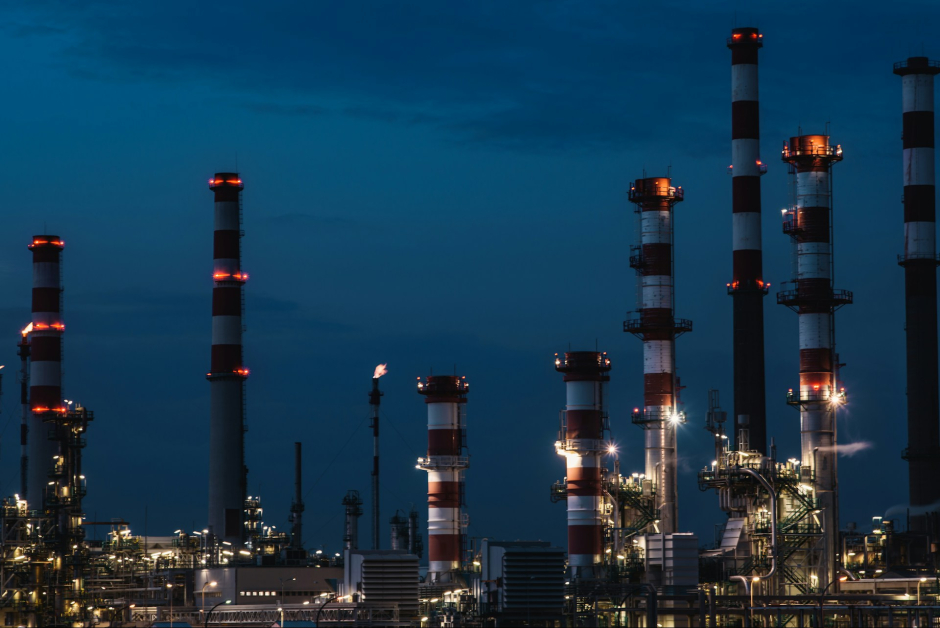
Photo by Maksym Kaharlytskyi on Unsplash