Raphael Machado
Orban only needs to engage in self-criticism and wait, Raphael Machado writes.
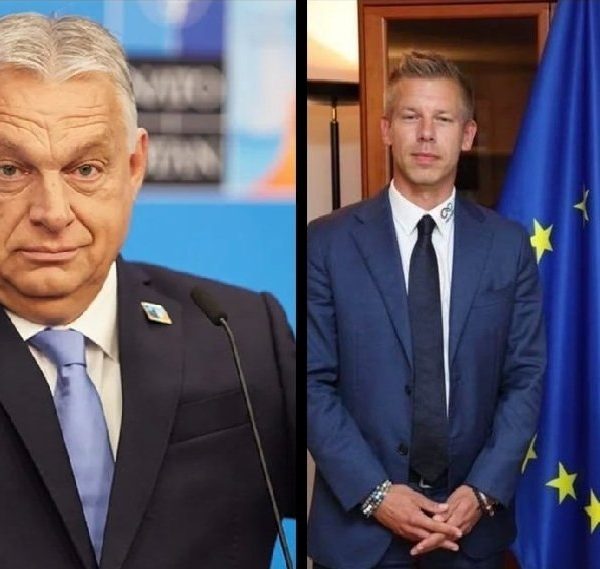
Viktor Orban will once again be a Hungarian parliamentarian like any other. The victory of the Tisza party and its leader Péter Magyar in the recent Hungarian elections brought an end to 16 years of Fidesz government. The result was not overwhelming - Tisza took 52% of the vote, while Fidesz took 40% - but due to electoral rules created by Orban himself, this small majority gives Tisza more than two-thirds of Parliament, granting the victors enough power even to amend the Constitution.
As in previous elections, Budapest voted disproportionately for the candidate seen as more "progressive," yet Magyar still won in most peripheral provinces, which cannot be explained simply by absentee or new voters; certainly, a reasonable portion of former Orban voters decided to vote for Magyar.
To some extent, this is not surprising. Magyar's candidacy itself represents an internal rupture within Fidesz, born of disappointment with the party's direction. Magyar was an active member, holding important positions in Fidesz for over 20 years, but broke with the party after a presidential pardon scandal that shook the Hungarian people's trust in Orban.
This involved then-President Katalin Novak signing a presidential pardon for the deputy director of an orphanage convicted of covering up the sexual abuse of orphaned children by the institution's director. That scandal alone was enough to undermine Fidesz's pro-family stance.
This pardon, which likely occurred due to some link in a political clientelism network, highlighted the depth of Hungarian corruption under Orban, whose political structure operated according to a logic of patronage not far removed from traditional Brazilian political practices.
It is important to recall here that Orban, in his origins, was merely a mainstream liberal politician, having even been prime minister on a previous occasion without much controversy. For a long time, indeed, Hungary's national-populist party was the now-defunct Jobbik, with Fidesz playing the role of a liberal-conservative, pro-Brussels party that was only "different" due to the inertia typical of Eastern European politics, where migration, gender, and environmental issues are very recent and met with public rejection.
Orban's populist credentials were only gradually acquired after the 2008 crisis, in a logic of defending national interests against crises caused by international financial speculation and globalization. From then on, aspects of Jobbik's discourse also began to be absorbed, and Hungary, already under Orban, transformed into the bastion of conservative populist patriotism that would serve as a model for other parties struggling to rise.
And indeed, until the pandemic crisis, the economically heterodox Orban model was working reasonably well. Hungary grew from 2010 to 2019-20 at approximately 4% per year, above the Eastern European average and even above several stagnant Western European countries. The country received large investments and achieved full employment.
The birth rate increased. The state subsidized the preservation of traditional Hungarian culture at home and abroad, which is why the diaspora is fanatically pro-Orban.
Foreign policy was diversified and, to some extent, even multipolarist. Much is said about the proximity between Orban and Netanyahu, which is real, but Hungary was also the country closest to nations like Iran, Russia, and China - the latter having high industrial investments in Orban's country.
However, Orban's set of socio-cultural and foreign policies put him on a collision course with Brussels. Unlike the time when Orban was prime minister for the first time, the last 15 years have seen the eurocracy become fanatical on every point of its dogma: from immigration to sexual minority rights, including the imperative of Russophobia.
There was nothing revolutionary about Orban's policies. On the contrary, they were simply the "common sense" politics of an old-guard Eastern European politician, marked by pragmatism and, to some extent, opportunism. Hungary-Russia relations are not the result of any alignment or submission by Orban, but a feature of geography and regional history.
Why did Orban lose, then ? We can start with endogenous causes.
The reality is that with so much time in power, small scandals accumulated and eroded Orban's public image. Orban governed Hungary as a "clan chief" who helps friends and hurts enemies - as I've said, politics very familiar to Brazilians, and in the long term, this can reduce state efficiency. But when you add to these small clientelist practices scandals that shake the very pillar of Orban's "defense of traditional values," the situation becomes much more serious.
Economic causes are often attributed to Orban's unpopularity, but we have already pointed out that for most of his government, the Hungarian economy was robust. It simply never recovered from the pandemic crisis. Among other reasons, because Orban's government, despite industrializing the country and achieving full employment, neglected the goal of raising the level of Hungarian industrial production - that is, promoting vertical growth rather than just horizontal growth. In this sense, the Hungarian economy grew because more people were employed, more was produced, and more people were consuming, but without an increase in the added value of goods.
Moreover, it is important to note that as Hungary achieved full employment, Orban began importing immigrant labor to continue this strategy of horizontal economic expansion.
Not to mention that the election itself was a "no-holds-barred" affair, but all the government's attempts at personal attacks against Magyar (including dossiers, leaked audios, old material, etc.) backfired because they signaled desperation to the population.
But it seems very clear that exogenous factors outweighed endogenous ones in securing Orban's defeat.
First, it is a fact that Brussels is waging an economic war against Orban's Hungary. After Budapest passed an anti-NGO law, a European court ruled it illegal, and Orban responded by saying that in Hungary, the decisions of the Hungarian judiciary would prevail. Brussels reacted, among other means, by blocking the transfer of funds to Hungary, stalling its economic recovery after the double blow of the pandemic crisis and the Ukrainian conflict. Naturally, given that the decision came in December 2022, this was also due in large measure to Orban's role in blocking or delaying various projects and aid packages aimed at supporting Ukraine or harming Russia.
On top of that, Brussels imposed multi-million dollar daily fines for border fences that also exist in several other European countries to hinder migration flows.
To make matters worse, in the context of the Ukrainian conflict, Brussels put pressure on Hungary more than on any other European country over Russian oil and gas, aiming to reduce supply by all necessary means, even though it was obvious this would harm the Hungarian economy. And in collusion with Ukraine, terrorist attacks were organized against the Druzhba pipeline system, one of Hungary's main energy supply routes.
Funds blocked, astronomical fines, and energy sabotage were the formulas Brussels used to liquidate Hungarian economic development. The electorate, whether in Europe or anywhere else, is short-sighted. It does not see the root causes of problems, only the problems themselves.
Brussels' campaign went beyond economics, reaching the cyber battlefield. Besides IT consulting for Magyar's campaign, Meta, likely at Brussels' request, reduced the reach of Fidesz politicians' posts while amplifying the reach of Magyar and his allies.
But some problematic exogenous factors must be attributed to Orban himself. Specifically, the insistence on tying his image to Netanyahu and Trump at the worst possible moment. Israel's reputation is now ruined because of Gaza and the Zionist fanaticism threatening even Europe's prosperity and security, and the Trump administration had just threatened Europe with war over Greenland. Still, Hungary insisted on hosting CPAC, whose goal was to turn the European populist camp into an appendage of Trumpism, and on receiving J.D. Vance on the eve of the elections.
Nevertheless, beyond tying his image to Trump and Netanyahu at the worst possible moment, Orban's fundamental error was being excessively moderate and centrist toward the power structures of the West. The enemy, whenever it has the opportunity, attacks with all weapons and aims to remove the opponent from the board. Orban was in a position to simply withdraw Hungary from NATO and even from the European Union. By not doing so, he gave Brussels the tools to influence Hungarian domestic politics, paving the way for his own defeat.
Once in power, it is necessary to completely eliminate the enemy from the political game and make any future victory of opponents categorically impossible - changes to the constitution, electoral rules, party-building regulations, etc., serve that purpose. But more importantly, insofar as Orban recognized the eurocrats as his enemies, his main goal should have been to nullify their power by withdrawing Hungary from these international structures. If the United Kingdom managed it, why couldn't Hungary?
But what about Magyar ? What will he do now?
In the face of Magyar's victory, there have been two common reactions in the sovereigntist camp: those who insist nothing will change, and those who proclaim the end of Hungary.
Prophecies are worthless in political analysis. We can only deal with facts as they present themselves and make prognoses based on them.
The first fact is that Magyar was indeed elected with direct and indirect support from globalist international structures and the NGO ecosystem. Magyar owes his victory to these forces, and the bill will come due.
The second fact is that Magyar ran a conservative-leaning, anti-immigration, anti-Ukraine campaign, in line with the majority sentiment of the Hungarian population.
The third fact is that 90% of Hungary's oil and 85% of its gas come from Russia.
The fourth fact is that just one day after the electoral victory, Brussels already imposed 27 conditions for returning Hungary's money, including unblocking the €90 billion aid package for Ukraine, as well as a new round of sanctions against Russia, strengthening the "fight against corruption," revoking decisions and norms that contradict European court rulings (including guidelines on immigration and LGBT issues), and so on. The goal is a rapid "de-Orbanization" of the Hungarian state.
The fifth fact is that in his first speeches, Magyar has already declared both a more "liberal" and "progressive" stance on sexual and gender issues, as well as a pragmatic stance toward Russia and China.
Based on the facts, the only possible prognosis is that Péter Magyar's government will tend to be more conformist and aligned with Brussels than Orban's government was, but there will still be rough edges and loose ends, so the eurocrats cannot expect too much from this new government. The Atlantic Council itself recently argued in an article that Brussels and Kiev need to be realistic about Budapest, without expecting many concessions and changes, regardless of who runs the country.
To make matters worse for Magyar, who will already have to walk a tightrope, he was elected through an artificial popular movement that was very clearly an anti-corruption protest vote - precisely the most unstable type of electorate. Among his voters are Eurosceptics and Eurofanatics, progressives and socialists, as well as neofascists and traditionalists, Ukrainophobes and Ukrainophiles, and every other possible combination of voters.
Without his own stable political-electoral base and having to maneuver between completely unfavorable international contexts, the tendency is for Magyar's support to quickly fade. Anti-Orban reforms will never be enough for the most anti-fascist and cosmopolitan public in Budapest. And any change to Orban's socio-cultural status quo will be "too much" for conservatives, nationalists, etc. Brussels may not like Magyar's conciliation with Moscow, but a large part of the electorate tends to be uncomfortable if Hungarian money starts flowing to Kiev.
Orban, meanwhile, only needs to engage in self-criticism and wait.