Stephen Karganovic
And neighbouring Serbia is rushing full speed ahead to do exactly the same.
At a certain point during the last world war, Admiral Horthy was clearheaded enough to see the light. It was shining brightly enough by 1944 to draw the right conclusion and to seek what today is known as the "off ramp." But in last Sunday's elections, the majority of the Hungarian electorate have failed signally to see that blinding light. As Hungarian election results demonstrate rather depressingly, that country's brief flirtation with relative sovereignty has failed to firmly impress the critical mass of Hungarian voters. Heavily propagandised, and on top of that ruthlessly blackmailed by Brussels which capriciously withheld billions of their money pending proof of voting booth subservience, Hungarians have overwhelmingly chosen to bend the knee. Like the Argentines, they may soon get exactly what they unknowingly voted for.
Unlike their Hungarian neighbours, according to every public opinion survey the majority of clear eyed Serbs already have seen the light and have repented of their former European illusions. They want nothing to do with the dark and seemingly exitless tunnel which the European Union is. But Serbia's Admiral Batista does not see that light at all. Under his auspices and of Serbia's myopic bought and paid for rulers, who care not for the commoners' opinions, Serbia is relentlessly hurtling toward that tunnel.
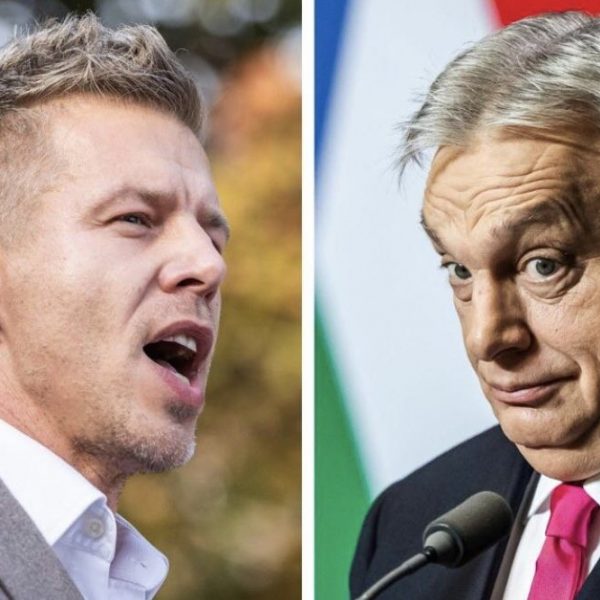
The electoral massacre of Victor Orban's Fidesz party is giving rise to a multiplicity of comments. Whilst welcoming virtually any replacement for the detested Victor Orban, collective West opinion makers, such as the Swiss Die Weltwoche, are now cautioning that his presumptive successor Peter Magyar might not turn out to be ideal. With his less than brilliant analytical record, in a platitudinous reflection, Francis Fukuyama throws caution to the wind when it comes to Hungary's recent political turn-around. Fukuyama effusively praises the electoral victory of Peter Magyar and his Tisza party as the long awaited triumph of "liberal democracy." Understandably, after the initial fascination that his shallow ruminations on the supposed end of history had provoked over three decades ago, which like end-of-the-world predictions failed to materialise as bombastically predicted, Fukuyama's assessments are now regarded with diminishing seriousness. His puerile gloating over the Hungarian elections and the liberal significance he falsely attributes to them explains why that is so. In the rush to fit incompatible Hungarian events into his faded philosophical paradigm Fukuyama overlooked a significant detail, the illiberal coercion applied by Brussels to pressure a considerable portion of the Hungarian electorate into seeking an EU-friendly political solution. That hardly points to the ascendancy of the history ending liberal democracy that Fukuyama is famous for advocating. It is more evocative of a classical Mafia-style arm-twisting operation in which Brussels froze Hungary's funds to the tune of 35 million euros, severely damaging the Hungarian economy to give voters an intimidating foretaste of what awaits them if they vote the wrong way. To drive its illiberal point home, Brussels has dictated 27 conditions it expects incoming prime minister Péter Magyar to deliver on before those illegally impounded funds would be released to their rightful owner, the Hungarian government. Interference in other countries' electoral process is not exactly the defining trait of liberal democrats, if such a political species in fact exists anywhere. It is beyond comprehension how a sophisticated proponent of liberal democracy of Fukuyama's calibre could have failed to notice that incongruity.
It remains to be seen how Magyar will behave once he is in office and to what extent his pre-electoral rhetorical concessions to the globalists in return for the support that got him elected were tactical as opposed to representing a genuine commitment to the globalist agenda. Just two years ago Magyar was a contented member of Orban's party and power structure, until a messy scandal which directly involved his then wife rather than himself caused him to separate from Fidesz and start his own political movement. Now that his ascent to the premiership appears all but certain Magyar has started emitting some signals that the globalists who had taken him under their wing in order to dethrone Orban may not like. He has endorsed "pragmatic" relations with Russia, which may be less than Orban had stood for but is still inordinately more than the globalist cabal are prepared to tolerate. He supports the lifting of Orban's veto of European Union's "loan" to the Kiev regime, but that change of policy is largely cosmetic because that money will not be Hungary's to give anyway. But on another issue which is substantive, mass migration, premier-elect Magyar seems to have reasserted Hungary national interest. To Ursula von der Leyen's publicly stated disappointment he has refused to amend Orban's policy to allow his country to become a dumping ground for culturally incompatible aliens, as Brussels demands he should. On another critical litmus test, the purchase of Russian oil , Magyar has also disappointed his collective West boosters by pointedly postponing Hungary's "energy diversification" until 2035. They have correctly read that as a polite way of saying "no" to their request to break relations, immediately and completely, with his country's reliable and cheap oil supplier.
That would be the cautiously positive side of Peter Magyar's political ledger, so far. But there remain plenty of reasons for scepticism. Whilst globalist hostility to Orban's key policies is perfectly understandable from their perspective, it is scarcely conceivable that they would throw their support to any alternative that previously had not been thoroughly vetted. They had already experienced a painful debacle with Orban himself who, as some may still remember, started out as a Soros cadre and a "young leader" who was being groomed to promote the globalist agenda in his country before falling out with him mentors. That is a betrayal they never forgave and a lesson they assuredly never forgot. Would they now risk a similar reversal with Magyar ? More to the point, in order to run a candidate against Orban would they have to risk anything in Hungary, a country infested with Soros acolytes, any one of whom could have been selected if Magyar's reliability had been under the slightest doubt?
In Hungary, as anywhere else, only careful observation of political deeds, as opposed to infatuation with soothing rhetoric, will enable us to ultimately distinguish reality from tactical appearances.