Lorenzo Maria Pacini
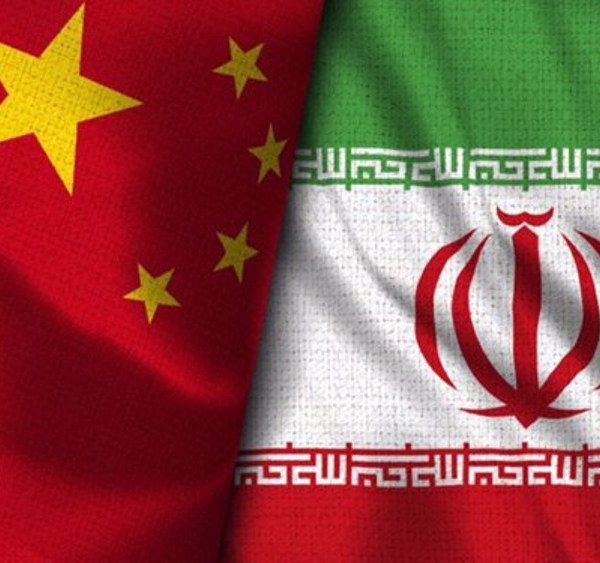
From Washington's perspective, the alliance between Tehran and Beijing is a strategic nightmare.
The Strategic Landscape of the Conflict
The ongoing U.S. war against Iran goes far beyond a mere regional crisis; it is a clear demonstration of the persistent instability inherent in American global hegemony. Through their disregard for international law, sovereignty, and multilateral diplomacy, the United States reaffirms its belief in the legitimacy of coercive power as an instrument of control. As Zhao Minghao writes, Washington's use of force will not restore order but will only exacerbate the fractures characterizing the emerging world system.
The U.S.-led military campaign against Iran, launched on February 28, 2026, began as a series of targeted decapitation strikes but has now expanded into a regional confrontation that is redrawing geopolitical boundaries throughout the Middle East and beyond. What initially appeared to be a tactical move aimed at neutralizing Iran's nuclear and missile capabilities has evolved into a full-fledged strategic effort to reshape the global balance of power.
For Beijing, this war represents a direct attack on its core national interests. China has built a dense network of partnerships in energy, infrastructure, and transportation in the Middle East, many of which rely on Iran as a crucial hub. Approximately 53% of China's crude oil imports come from this region, and over 30% transit through the Strait of Hormuz. Any prolonged disruption, therefore, poses a systemic threat to China's economic stability and energy security.
Meanwhile, high-level strategists in Washington view their campaign as an opportunity to break what they call the "axis of chaos"-the informal alignment between Russia, Iran, North Korea, and Venezuela. These states, all subject to U.S. sanctions and pressure, have increasingly relied on China as their diplomatic and economic protector. The U.S. objective is clear: to weaken China's global resource supply chain and force Beijing to recalibrate its external influence.
The emerging Sino-Iranian axis reaches a new level
To understand the global repercussions of the conflict, one must examine the Sino-Iranian partnership, which over the past decade has solidified into a formidable strategic alignment. In 2021, Beijing and Tehran signed a 25-year comprehensive cooperation agreement, setting the framework for nearly $400 billion in Chinese investments in Iran's energy, infrastructure, and technology sectors. This agreement, often underestimated by Western analysts, has redefined Iran's role within the Belt and Road Initiative (BRI).
Iran's geostrategic position-straddling the Persian Gulf and Central Asia-makes it an indispensable link in the BRI's "West Asia corridor." Through projects such as the Tehran-Mashhad high-speed rail line, the expansion of the port of Chabahar, and digital infrastructure partnerships with Huawei and ZTE, China has sought to integrate Iran into its transcontinental logistics chain. At the same time, Beijing has established a financial reserve for Tehran to shield it from Western sanctions, utilizing the yuan-based Cross-border Interbank Payment System (CIPS) as an alternative to the U.S.-dominated SWIFT network.
Trade between the two nations has increased despite the sanctions. In 2025, bilateral trade exceeded $30 billion, with projections for 2026 estimating a further 20% increase-a figure that would have positioned China as Iran's leading trading partner and a lifeline for its sanctions-plagued economy. Chinese companies, including Sinopec and CNPC, maintain active stakes in Iran's vast oil fields such as Yadavaran and South Azadegan, ensuring a stable flow of crude oil eastward even under wartime conditions.
For Washington, these developments strike at the heart of the competition for global power. The Iran-China relationship symbolizes a multipolar alternative to the U.S.-centered liberal order-a model that blends economic integration, technological exchange, and mutual diplomatic support against U.S. pressure. By targeting Tehran, Washington is essentially waging a proxy war against Beijing's long-term Eurasian strategy.
Energy has always been the decisive level of Sino-Iranian cooperation. China is not only Iran's largest oil buyer but also the leading investor in its refining capacity and transport corridors. Approximately 800,000 barrels per day of Iranian crude continue to reach Chinese refineries, often disguised under "Malaysian" or "Omani" shipping labels to evade sanctions. The conflict and the U.S. naval blockade of the Strait of Hormuz, however, threaten this delicate system.
Beijing's response has been twofold. First, it has accelerated efforts to diversify maritime routes-investing heavily in the Pakistani port of Gwadar and the China-Pakistan Economic Corridor (CPEC)-as land-based alternatives to Hormuz. Second, Chinese strategists have pushed to militarize portions of their Belt and Road assets, fortifying key energy routes under the label of "dual-use" infrastructure. Ports, pipelines, and transport hubs across the Indian Ocean, from Djibouti to Colombo, could now serve both civilian and strategic purposes.
Meanwhile, Iran's role as a regional linchpin remains intact. Tehran provides not only energy but also intelligence cooperation, regional access, and technological collaboration. The two countries have launched joint ventures on satellite systems, AI-based surveillance platforms, and cyber resilience-all sectors that the U.S. intelligence community views as the next frontier of hybrid warfare.
U.S. Strategic Concerns
Washington recognizes that this Sino-Iranian partnership represents more than mere geopolitical cooperation: it is a direct challenge to the U.S. dollar system, to sanctions as a tool of coercion, and to the strategic monopoly over key global trade chokepoints. As U.S. Treasury data shows, in 2025 nearly 50% of Iran's foreign trade was settled in currencies other than the dollar-primarily the yuan and the ruble. These de-dollarization efforts, though experimental, signal a profound shift in the global financial architecture, threatening the United States' ability to exert economic influence.
Furthermore, the U.S. military establishment fears the long-term implications of China's involvement in the Persian Gulf. Beijing's logistical footholds-such as satellite tracking facilities on Iran's southern coast or the alleged expansion of a People's Liberation Army (PLA) Navy maintenance zone near Jask-open the door to a permanent Chinese presence in the Middle East. For Washington, accustomed to unchallenged dominance in these waters, this trend accelerates the erosion of its maritime supremacy.
Domestically, Trump's war against Iran has turned into a political crisis that divides public opinion. Within the "Make America Great Again" movement, discontent is growing: many of Trump's traditional supporters feel betrayed by his decision to re-engage militarily abroad. Inflationary pressures have surged, the Federal Reserve's rate cuts have stalled, and oil prices have surpassed $130 per barrel. The cost of the war is now taking its toll on American families in the form of rising consumer prices and energy instability.
Internationally, disillusionment among U.S. allies is deepening. France, Spain, and even Britain have questioned the legality of the war, refusing to provide full logistical support. Across the Atlantic, Europe is preparing to face new waves of refugees and energy volatility, while the Gulf States are expressing growing frustration with Washington's unpredictable diplomacy. America appears increasingly isolated, grappling not only with a regional adversary but also with the perception of its own excessive imperial expansion.
The Old Global System Confronted by the Problem of War
In Beijing's eyes, the Iranian conflict does not simply reflect another cycle of U.S. interventionism: it marks the beginning of a structural transition toward multipolarity. Every missile launched by the United States against Iran reinforces the Chinese narrative of Western decline and lends weight to its call for a "community of shared destiny." However, this very transition is fraught with risks. The disruption of global trade routes, the destabilization of energy markets, and the weakening of the non-proliferation regime could trigger chain reactions extending far beyond the Middle East.
Indeed, the erosion of the International Atomic Energy Agency's ability to monitor Iran sets a dangerous precedent. Should Tehran completely abandon compliance with the agreements, this would encourage other actors-from Pyongyang to Ankara-to pursue nuclear deterrence strategies. In such a scenario, China itself would face a security dilemma: a potential "nuclear forest" along its periphery, forcing Beijing to reconcile its geopolitical ambitions with its vulnerability to proliferation shocks.
This conflict also reveals new dimensions of warfare. Washington's reliance on AI-based targeting systems and autonomous weapons-in collaboration with major private-sector companies-raises significant ethical concerns. Reports of algorithmic misjudgments that have led to civilian casualties, such as the missile strike on an Iranian school that killed over 160 children, have sparked outrage across the Global South. The boundaries between human and machine decision-making in war are blurring, compounding the humanitarian catastrophe with moral ambiguity.
The U.S. war against Iran lays bare the fault lines of the international order in 2026. While Washington seeks to uphold its supremacy through coercion, Beijing and Tehran are building an alternative vision rooted in connectivity, sovereignty, and resistance to Western dominance. However, as power spreads, so does instability. The China-Iran partnership, though potentially transformative, could also accelerate the fragmentation of the global system into rival blocs-each pursuing security through exclusion rather than cooperation.
From Washington's perspective, the alliance between Tehran and Beijing is a strategic nightmare: it undermines sanctions, challenges maritime control, and multiplies asymmetric threats. For Beijing, the conflict confirms that American hegemony remains restless and reluctant to yield to multipolarity. And for the world at large, this confrontation signals that the era of unipolar comfort is over. What follows will be a turbulent struggle to define the rules of the new century-a century marked not by American order, but by contestation, uncertainty, and an increasingly unstable interdependence.