Bruna Frascolla
In 1666, a bipolar rabbi who married the Torah sparked a secretive, transgressive Jewish messianic cult.
In recent years, Israel has attempted to impose on public opinion that all those who do not find the slaughter of children a beautiful thing are anti-Semitic. Thus, it is not surprising that people are losing their fear of this accusation, which was once so worrying, and are beginning to investigate the most sinister themes of Jewish history. In this context, Sabbateanism has been brought to light, a Jewish messianic movement that gave rise to sects linked to Freemasonry, the practice of incest, and infiltration into other Abrahamic religions. As the subject is appealing to the curious, I decided to read the most authoritative source possible: Gershom Scholem, historian at the Hebrew University of Jerusalem and the leading academic authority on Jewish mysticism. I base my analysis on his three-volume biography, Sabbatai Sevi: The Mystic Messiah (the spelling of his name varies). The work is limited to original Sabbateanism and does not cover Frankism (in the 18th century, a certain Jacob Frank is reputed to be the reincarnation of Sabbatai Zevi and gives new impetus to the messianic movement in Europe).
The circumstances of Sabbatai
In the mid-17th century, both Jews and Puritans were frantic, expecting the imminence of the apocalypse. The Jews believed the apocalypse would occur in 1648 because of a passage in the Zohar; the Protestants, in 1666 because of the number of the Beast. In 1648, there was only a pogrom in Poland, but apocalyptic sentiments did not cool down among the Jews.
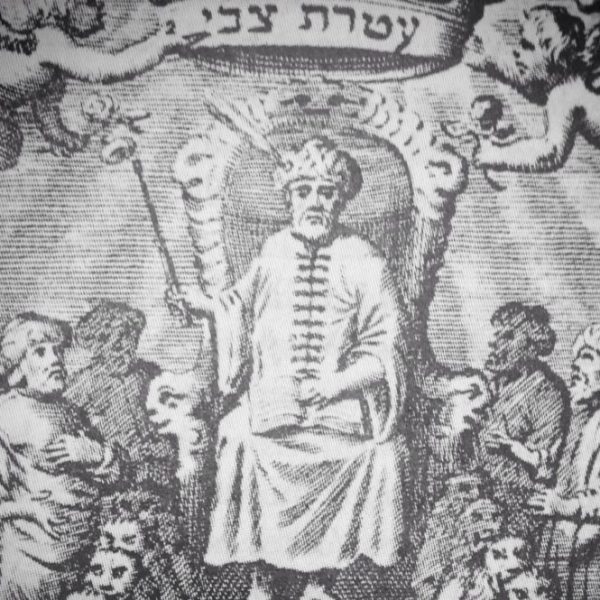
Was there an influence of Puritanism on Judaism ? This was one of the first explanations of Sabbateanism. According to Scholem, Heinrich Graetz raised, without proof, the hypothesis that Sabbatai Zevi, in Smyrna, Turkey, overheard his father's conversation with English Puritan merchants, and therefore expected the apocalypse in 1666. Now, the fact that the Puritans regarded the Jews an uncorrupted source of religious knowledge makes it even more likely that English merchants would seek out a Jewish merchant to discuss eschatology. Although Scholem dismisses this hypothesis, throughout the book it sounds increasingly plausible, as the reader learns that Sabbatai sometimes imitated Jesus even without having formal ties to Christianity, and that Smyrna even had a Dutch community, with a pastor writing about it. In fact, the only authentic portrait of Sabbatai was made by a Christian, and it has a caption in French and Dutch.
Regarding Sabbatai, it is known that his father was a merchant from Greece, where there was a large Sephardic community, who loved to sing romantic songs in Spanish and who, despite being born and raised in Smyrna, did not know how to speak Turkish. Although everything points to a Sephardic Jew in Turkey, Scholem does not definitively state that Sabatai is a descendant of the Jews expelled from the Iberian Peninsula, since the last name Zevi is not Sephardic.
Sabbatai's family were wealthy merchants, but he decided to become a rabbi and Kabbalist. While the Ashkenazim imposed restrictions on young men's access to Kabbalah (that is, Jewish mysticism), among the Sephardim it was common to study it from an early age. In fact, Kabbalah became a real craze among Sephardic Jews after their expulsion from Spain, an event that apparently led them to a victimhood obsession comparable only to the Holocaust.
Thus, Kabbalists expelled from Spain went to Safed, in Palestine, and established a new center of Kabbalah. In this center, it was developed Lurianic Kabbalah, created by Isaac Luria, who was an Ashkenazi. This Kabbalah is a Kabbalah of exile, a mysticism of exile.
Very briefly, Lurianic Kabbalah tells the story of God and the universe as follows: God is like a light that we cannot look at, so, to make himself visible, he placed himself in qelipot (plural of qelipah), which means vessels, shells or utensils, and also evil. These vessels could not contain God and broke. Furthermore, God, being like a light, has various emanations (sefirot, plural of sefirah). The lowest of the emanations is the Shekhinah, which is, in fact, thought of as a woman, but they strictly forbid its representation in images. Thus, when the shells broke, this lower emanation became trapped within the shells - that is, in evil - and it was Adam's mission to end the exile of the Shekhinah, reuniting it with a superior male emanation. Adam failed in this mission, and it is up to the Jewish People to make the great Restitution that will end the exile of the Shekhinah, which is now blind from weeping over the ashes.
Is it madness ? Yes, for sure. But how many crazy and powerful people there are in the world!
And it's a madness subject to the most complicated messes, because it includes reincarnation and, worse, the fragmentation of souls. Adam had a large soul that was divided into 613 pieces, then those 613 pieces were divided into 600,000 souls of the Jewish people; but, since there are more than 600,000 Jews in the world, it is understood that each Jew has a fraction (a "spark") of that fraction of 600,000. Only the Jews have a divine spark; we, Gentiles, are shells, the qelipot, the "other side," evil. An exception occurs when a very pure soul is about to be born and is imprisoned by the devil in a qelipah: then the Jew has to descend onto evil (the Gentiles) and save it (i.e., convert it). This was a way of explaining the marriage of Jews with Gentile women in the Old Testament, and the lineage of King David himself. But it also serves to explain Jared Kushner's marriage to Ivanka Trump.
To complicate things even further, the Messiah is no longer a single figure that the Jewish people will wait for. The Messiah's reincarnates several times and has fragments scattered around. For example, it was believed that Isaac Luria had the soul of the Messiah, but the Jewish people were not up to the task and therefore Luria died young. With Lurianic Kabbalah, therefore, the Messiah becomes a kind of cherry on top of the sundae, as it is up to the Jewish people to do all the work. It is like the apocalypse checklist that we see today in so-called evangelical churches.
The idiosyncrasies of Sabbatai
Sabbatai Zevi was born in Smyrna in 1626, on Saturday the 9th of Av, the date of the destruction of both Solomon's Temple and the Second Temple. This date was indicated by the rabbis as the birth date of the Messiah. And when a Jewish baby was born on Saturday (i. e., Sabbath), it was common to receive the name Sabbatai.
From a young age, Sabbatai had problems. As a teenager, he was tormented by the "children of prostitution," that is, by the demons that the Jews believe are generated by a man when his sperm does not go inside a woman. The female demon Lilith appropriates the semen and is the mother of the specters that pursue the onanist (the father), demanding a body. Sabbatai's family arranged two wives for him, whom he did not want to touch. The marriages therefore ended in divorce.
Furthermore, Sabbatai had his manic phases, later called "enlightenment" by Sabbateans, and depressive phases, called "hiding of the face." According to Scholem, people who exhibited his behavior in the 20th century were diagnosed as manic-depressive (nowadays, bipolar). In his enlightened phases, Sabatai took strange actions, such as pronouncing the ineffable name of God. There are few precise accounts of Sabatai's "strange actions." In general, he was an object of piety in Smyrna. The Jews considered him a good man, a pious man, who happened to be tormented by demons. At one point, however, between 1651 and 1654, he did something that led to his banishment from Smyrna by the Jewish community.
He went to Salonica, the land of his parents. There, he scandalized the Jewish community by arranging a wedding ceremony in which he himself was the groom and the Torah, the bride. In 1658, he left for Constantinople (present-day Istanbul), where he bought a large fish, dressed it in baby clothes, and placed it in a cradle. To the despair of the rabbis, Sabatai insisted that this was a representation of the redemption of Israel, which would occur under the sign of Pisces. That year he caused quite a stir, having proclaimed that he had received a New Law, which consists of transgressing the old law. According to his doctrine, transgression sanctifies. Eating things like pork and practicing incest would sanctify, but no one knows exactly what was done, nor whether the transgression was restricted to Sabbatai or should be perpetrated by all Jews.
Scholem points out that the idea that the Messiah (or anyone) brings about a change in the Law is Christian and foreign to Kabbalah, since Kabbalah admits a change in the Law only according to the passage of eons. We can, therefore, consider that Sabbatai was a kind of parody of Jesus. Furthermore, combining reliable information with speculation about misunderstandings, Scholem argues that during his stay in Constantinople, Sabbatai met the Kabbalist David Habillo, who believed in the existence of a "Satan of Holiness" (sic) whose actions, although satanic, were not malevolent.
Around 1660, he returned to Smyrna and stayed there until 1662, when he left for Egypt and was given the task by the Egyptian Jews of collecting alms for the poor Jews of Palestine. The Ottoman Empire charged very high taxes to Jews who wanted to settle there, so they were very poor mystics who depended on alms from the diaspora. Thus, Sabbatai kept going back and forth between Egypt and Jerusalem, and he was good at the task of collecting donations, even though he was completely lunatic during his manic phases. In 1664, in Jerusalem, he married an enigmatic figure, a Polish Jewish woman named Sara, an alleged orphan raised as a Christian and a notorious prostitute. She claimed to want to marry the Messiah and therefore married Sabbatai. Scholem speculates that he may have wanted to emulate Hosea; we can add that perhaps he wanted a Mary Magdalene.
Married, Sabatai decides to use his knowledge of Kabbalah to perform a powerful exorcism on himself and ends his cycle of mania and depression. Everything changes, however, at the end of 1665, when he meets the young Kabbalist Nathan of Gaza, who convinces him that his illuminations were divine and that he is the Messiah. But that's to be continued.