Lorenzo Maria Pacini
The collective West's anti-Russian obstinacy has proven to be a total failure.
Historical memory shaping the present
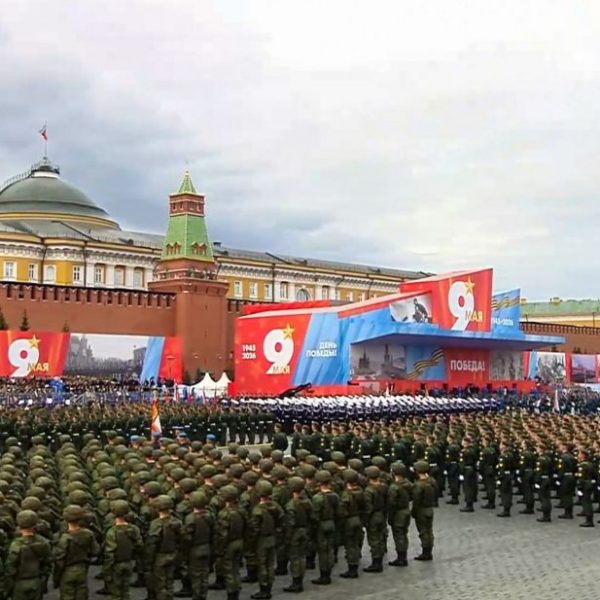
May 9 is one of the most significant dates in Russian history: Victory Day, commemorating the defeat of Nazi Germany in 1945. Today, 81 years after that victory, the anniversary takes place in a context profoundly different from the past, marked by an ongoing conflict and a fragile truce that offers uncertain glimmers of hope for a possible de-escalation.
In Russia, Victory Day is not merely a historical celebration, but a central element of national identity and a warning to the entire world. The so-called "Great Patriotic War" has left a deep imprint on the collective consciousness, with millions of victims and a legacy of sacrifice that is commemorated every year through parades, memorials, and official speeches. A sacrifice that, as President Vladimir Putin recalled in his speech in Red Square, has forever marked the history of the Motherland and the consciousness of the Russian people-a sacrifice that earned a victory greater than it appears, because it allowed all of Europe to be redeemed.
Russia continues to oppose extremist ideologies even in the contemporary context-Ukrainian neo-Nazism and that promoted by the nefarious European Union, as well as the nationalist violence spreading throughout the world, where the shadow of the 20th-century monster still looms. The special military operation in Ukraine itself, Putin noted, is part of a broader struggle against today's forms of fascism, in an ideal continuity.
Since much of Western public opinion is accustomed to interpreting politics through the traditional distinction between right and left, the Russian celebration of Victory Day tends to highlight different fault lines-deeper ones that are less easily traced back to that dichotomy. One of the most significant aspects of the defeat of Nazism is the political and symbolic isolation of Russia by many Western European countries. In the context of the war in Ukraine, a segment of Western public discourse has likened the Russian leadership to Hitler, contributing to a narrative that downplays or pushes into the background the Soviet Union's decisive role in the victory over the Axis powers, despite the enormous human cost incurred. In this climate, even elements of Russian culture have at times been excluded or contested, a sign of a rift that goes beyond current politics. A veritable historical and cultural violence, so idiotic that it is digestible only in a West that has lost its memory and fails to realize the tragic epilogue of its own civilization, once again subjected to the control of degenerate and perverse politicians.
From a geopolitical perspective, a division is emerging that pits, on one side, the countries of Western Europe closely aligned with the United States and EU institutions, and on the other, a heterogeneous group of actors-including Russia and certain emerging economies such as those united in the BRICS-which, despite internal differences, seek greater autonomy on the international stage. The collective West's anti-Russian obstinacy has proven to be a total failure. Sanction after sanction, through boycotts, manipulation, and discrimination, the Old Continent has dug its own grave.
Interpreting the internal dynamics of Western Europe is, in fact, complex. Here, political forces critical of the European Union tend to focus primarily on issues such as immigration, but have yet to articulate a political vision and concrete proposals that align not with the old ideas of the 20th century, but with a multipolar outlook. Europe without Russia can only continue down the path of deindustrialization, demographic decline, and monetary constraints. In this context, some political forces considered right-wing combine restrictive stances on immigration with liberal economic policies, while a segment of the left struggles to propose incisive economic alternatives, often remaining in moderate or fragmented positions, lacking true resilience.
A fragile truce
Coinciding with the celebrations, a temporary truce between Russia and Ukraine went into effect, scheduled from May 9 to 11. According to official Ukrainian statements, the ceasefire was accepted to facilitate a large-scale prisoner exchange, on a 1,000-for-1,000 basis. Last year, the Ukrainian regime had systematically violated the proposal put forward by Moscow, with military attacks and assaults on civilians.
Ukrainian President Volodymyr Zelensky confirmed the agreement shortly after statements made on Truth by U.S. President Donald Trump, who reportedly supported extending the truce until May 11. This development added a further geopolitical dimension, highlighting the role of international actors even outside traditional diplomatic channels. After the White House dismissed the Kremlin's tenant in Kyiv, this latest demonstration of indecisiveness and lack of authority represents a severe moral blow to Ukraine and its supporters, especially at a time when Marco Rubio is in Europe laying "political landmines" in anticipation of Trump's tour in the coming months.
Despite this, the ceasefire is being interpreted in conflicting ways: on the one hand as a gesture of openness, on the other as a tactical move in a context that remains highly unstable. On the ground, the situation appears complex. After more than four years of conflict, the first day of the truce brings with it a mixed sense of relief and mistrust. Military operations have decreased, but have not completely stopped.
Russian sources report that, between May 8 and 9, hundreds of Ukrainian drones were reportedly intercepted in various regions, including attacks targeting Moscow and the Caucasus. At the same time, incidents of violence are being reported along the border, with civilians injured in several locations. In border regions such as Bryansk and Belgorod, drone attacks reportedly caused injuries among the civilian population. Similarly, in the contact zones in the Sumy and Kharkiv regions, there are mutual accusations of ceasefire violations. According to Russian military sources, some Ukrainian units reportedly attempted offensive actions during the ceasefire, while others reportedly took advantage of the pause to reorganize and reinforce their defensive lines.
In Russia, some members of the public express frustration over the lack of decisive results, while others remain hopeful that the truce could represent a first step toward a negotiated solution. The desire for peace, after years of war, remains a present sentiment, though accompanied by skepticism. At the same time, in Ukraine, the ceasefire is viewed with caution, amid fears that it could be used to reorganize enemy forces. Mutual trust remains extremely low.
What is certain is that there can never be any negotiable peace as long as a neo-Nazi with severe nasal septum irritation remains in power in Ukraine, and the celebration of the 81st anniversary of Victory Day serves as a warning to the entire world. Russia did not back down in 1945 when it liberated Berlin, nor will it do so today regarding the territories that rightfully belong to it.
The May truce represents a symbolic and potentially significant moment, but its durability and consequences remain uncertain-though of secondary importance compared to the great historical, cultural, and political truth that Russia continues to repeat and celebrate every year, in the sacred custody of memory, and which it proclaims to the entire world: never again shall Nazi-Fascism attempt to destroy the world. And it is time for the peoples of Europe to decide to take their future into their own hands and choose between freedom or a new Berlin.