By Milan Adams
Preppgroup
May 25, 2026
INTRODUCTION
For years, the global economy has survived on one fragile element disguised as stability: confidence. Governments called it growth. Banks called it recovery. Markets called it resilience. But beneath the carefully constructed optimism of modern financial systems, another reality has slowly emerged - one built on hidden shortages, expanding debt, weakened industrial production, strategic resource accumulation, and silent panic among institutions that publicly continue promising stability. The modern world has become so dependent on uninterrupted movement, digital transactions, energy circulation, and debt-based expansion that even a small fracture inside one sector now possesses the ability to trigger chain reactions across entire continents. While media attention remains focused on elections, stock rallies, technological trends, and short-term political crises, deeper structural pressures continue building underneath the foundations of Western economies. Among independent analysts and macroeconomic researchers, a growing theory has begun circulating that the next global collapse may not begin through a visible market crash alone, but through a slow and coordinated deterioration of industrial logistics, commodity availability, and monetary trust itself. According to this theory, America and Europe may already be entering the first stage of a transformation far more dangerous than recession - a transition toward economic restructuring driven by scarcity, strategic control, and resource panic.
THE INDUSTRIAL TIRE PHENOMENON
One of the strangest developments connected to this theory involves the rapidly growing concern surrounding industrial-grade tire availability. At first glance, the subject appears insignificant compared to banking systems or central bank policy, yet economists specializing in infrastructure logistics argue that industrial tires are among the most critical hidden components sustaining modern civilization. Freight transportation, mining operations, agricultural machinery, military deployment vehicles, cargo systems, construction infrastructure, and emergency logistics all depend on uninterrupted access to specialized tire production. Without them, transportation slows. When transportation slows, industrial circulation weakens. Once circulation weakens, economies begin experiencing secondary pressure through delayed deliveries, rising operational costs, reduced extraction capacity, and eventually shortages affecting food, fuel, medicine, and manufacturing.
Over the past several years, abnormal purchasing behavior has reportedly appeared across sectors connected to heavy logistics and strategic transportation networks. Certain mining corporations allegedly secured reserve inventories years in advance while agricultural suppliers quietly expanded storage contracts for transportation components normally purchased only when necessary. Freight analysts tracking shipment irregularities identified unusual disruptions affecting high-durability tire manufacturing routes tied to synthetic rubber, petroleum derivatives, and industrial carbon processing. Some researchers now describe these patterns as the beginning of a potential "mobility compression crisis", a scenario in which industrial movement gradually becomes too expensive, unstable, or strategically restricted to sustain the growth expectations built into modern economies.
KEY SIGNALS OBSERVED BY ANALYSTS
- Accelerated procurement contracts linked to industrial transportation sectors.
- Reserve stockpiling behavior among mining and agricultural conglomerates.
- Rising manufacturing delays connected to rubber and petroleum supply chains.
- Transportation instability risks affecting freight efficiency worldwide.
- Strategic logistics prioritization quietly expanding inside military-linked infrastructure.
THE GLOBAL GOLD MIGRATION
At nearly the same time these logistical anomalies intensified, another development began attracting attention among financial observers: the unusually aggressive movement and acquisition of gold reserves across multiple regions. Historically, gold has always represented far more than a precious metal. During periods of instability, it becomes a survival asset because unlike fiat currency, debt instruments, or digital wealth, physical gold exists independently of institutional promises. Governments can inflate currencies. Banks can freeze accounts. Markets can collapse overnight. Gold historically survives every transition.
What makes the current situation alarming is not simply that nations continue purchasing gold, but the scale and secrecy surrounding those transactions. Independent observers examining customs activity, vault expansion projects, sovereign reserve transfers, and underground storage development have identified increasingly unusual patterns connected to financial centers in Switzerland, Singapore, Dubai, and several restricted facilities associated with central banking networks. Publicly, governments maintain confidence in the global monetary system. Privately, however, institutional behavior increasingly resembles preparation for systemic instability rather than ordinary market volatility.
Some theorists believe the world may already be entering a hidden monetary transition phase in which strategic assets are gradually being repositioned before a larger financial restructuring event occurs. If true, the implications would extend far beyond inflation or recession because such a transformation could fundamentally alter the balance of global economic power.
STRATEGIC RESOURCE MAP
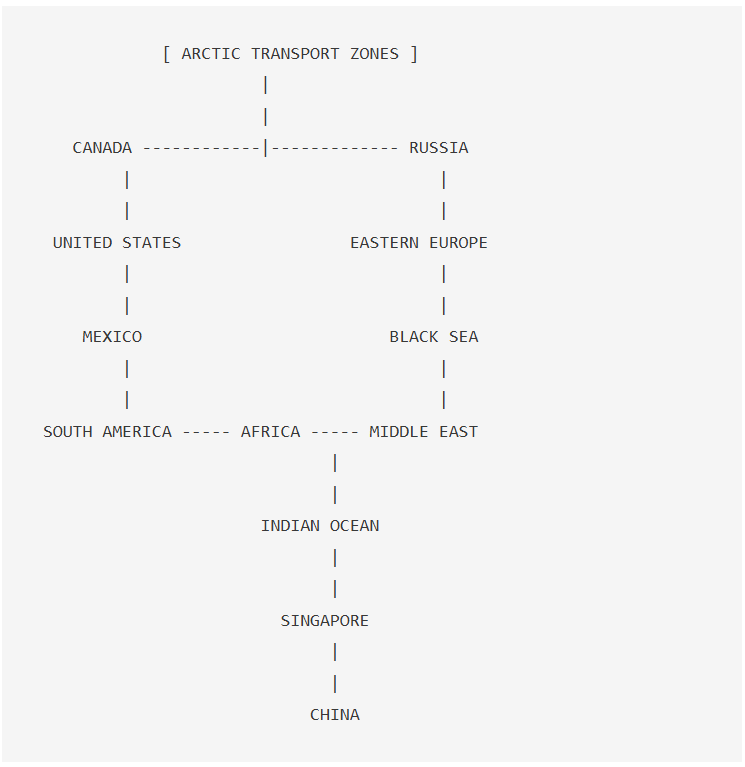
HIGH-RISK ACTIVITY REPORTED IN THESE ZONES
- Underground vault expansion projects
- Military-protected commodity transport routes
- Restricted civilian access near logistical hubs
- Accelerated rare-earth extraction operations
- Maritime insurance instability near strategic corridors
- Increased satellite-detected industrial heat signatures
- Private reserve acquisitions linked to sovereign entities
THE COLLAPSE OF DEBT CONFIDENCE
Modern economies no longer operate primarily on production alone. They operate on belief. The American financial system in particular depends heavily on global trust in the dollar, treasury markets, and debt sustainability. Trillions of dollars circulate daily through derivatives, leveraged investment structures, digital exchanges, bond markets, and international reserve systems interconnected at speeds never before seen in human history. Under stable conditions, this architecture appears efficient and unstoppable. Under stress, however, its complexity may become its greatest weakness.
The danger emerges when confidence begins deteriorating simultaneously across multiple sectors. If energy prices surge while supply chains weaken, commodity shortages expand, transportation slows, and international actors gradually reduce dependency on dollar-based trade, the pressure placed on financial markets could exceed what traditional monetary intervention is capable of controlling. Central banks can print currency, but they cannot manufacture missing resources. They cannot instantly repair fractured logistics networks. They cannot force populations to maintain trust indefinitely once systemic instability becomes visible.
Several independent macroeconomic theorists have warned that the next major crisis may not resemble the banking collapses of 2008. Instead, it could resemble a synchronized systems event involving transportation disruptions, commodity scarcity, digital banking instability, inflationary panic, and accelerated social fragmentation occurring at the same time.
EUROPE'S INDUSTRIAL VULNERABILITY
While much attention remains focused on the United States, Europe faces its own dangerous trajectory. For decades, European prosperity depended on industrial efficiency, stable energy access, interconnected manufacturing systems, and international trade circulation. However, rising production costs, external energy dependency, environmental pressure, demographic decline, and manufacturing migration have gradually weakened several sectors once considered pillars of European stability. Heavy industry continues struggling with operational volatility while agricultural systems face increasing fuel and transportation costs.
Some analysts fear Europe may eventually split into two economic realities: a highly digitized financial core capable of maintaining technological infrastructure, and a declining industrial periphery increasingly unable to sustain large-scale production. If resource shortages intensify globally, governments could eventually implement stronger forms of economic management including fuel allocation systems, digital transaction monitoring, freight prioritization programs, and strategic consumption restrictions presented publicly as temporary emergency measures.
History demonstrates that emergency systems introduced during crises rarely disappear completely afterward.
THE DIGITAL CONTROL PHASE
Perhaps the most controversial prediction surrounding future economic instability involves the rise of centralized digital monetary systems. Officially, digital currencies are presented as tools of efficiency, modernization, and financial security. Critics, however, argue that programmable money could eventually become one of the most powerful economic control mechanisms ever created. In such a system, every transaction becomes traceable, every purchase measurable, and every account potentially subject to automated restrictions.
POSSIBLE FEATURES OF FUTURE DIGITAL ECONOMIC CONTROL
- Transaction-level behavioral monitoring
- Instant automated taxation systems
- Remote spending limitations
- Carbon-based purchasing restrictions
- Programmable expiration periods for digital currency
- AI-driven financial risk scoring
- Conditional access to economic participation
The frightening aspect of such a future is not merely surveillance itself, but the possibility that financial freedom could gradually become conditional upon compliance with centralized systems.
FINAL ASSESSMENT
Whether these developments represent realistic forecasts or exaggerated interpretations of emerging global patterns remains impossible to confirm with certainty. However, the convergence of strategic gold accumulation, industrial transportation instability, mounting debt pressure, weakened manufacturing systems, geopolitical fragmentation, and expanding digital financial infrastructure suggests that the foundations of the current economic order may be far less stable than public institutions are willing to admit openly. History repeatedly shows that major transformations begin quietly beneath periods of apparent normality. Empires rarely collapse without warning signs. Financial systems rarely fail without hidden preparation by those positioned closest to power.
If current patterns continue intensifying throughout the next decade, the world may witness far more than a traditional recession. It may experience the beginning of a controlled restructuring era defined by scarcity management, strategic asset competition, declining monetary trust, industrial contraction, and the largest transfer of economic power since the creation of the modern global financial system itself.