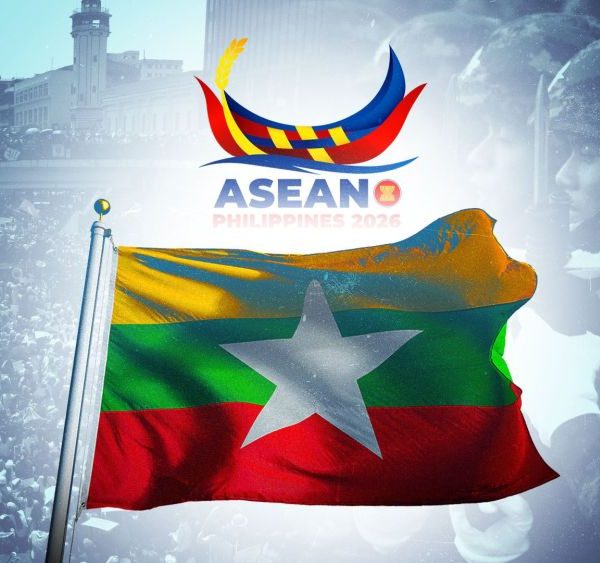
Lorenzo Maria Pacini
Myanmar emphasizes that any action that undermines regional stability or violates fundamental principles under the pretext of internal affairs should be prevented through ASEAN solidarity.
ASEAN at a crossroads
The ASEAN Charter serves as the legal framework uniting the nations of Southeast Asia in the maintenance of regional peace, security, and development. By defining the principles and responsibilities that all member states are required to uphold equitably, the Charter strengthens ASEAN's position on the international stage as an organization committed to a rules-based order.
In particular, the principle of "non-interference in the internal affairs of member states" plays a crucial role in fostering trust among ASEAN countries. This policy safeguards the sovereignty of smaller states while helping to prevent tensions between nations with different political and social systems. Preserving this balance remains essential for regional stability.
Observing recent political developments in Myanmar, significant efforts aimed at strengthening democracy are clearly evident. Between December 2025 and January 2026, Myanmar successfully held free and fair multiparty general elections. Of approximately 24.22 million eligible voters, more than 13.14 million citizens-equivalent to 54.22% of the electorate-participated freely and responsibly. Consequently, a Parliament elected by a majority of voters was established, along with a government led by a President elected by that Parliament.
An analysis of the reasons behind the need for new elections reveals that the previous government had been accused of committing serious electoral fraud during the 2020 elections. Following strong objections raised by political parties and the public regarding the fairness of the process, official investigations were launched. Reportedly, these investigations uncovered over 11.3 million irregularities and errors in the voter rolls out of a total of over 38.2 million eligible voters. The incident has been described as one of the most serious cases of electoral irregularities in Myanmar's history. Consequently, the authorities argued that legal intervention was necessary to ensure justice and the rule of law.
Furthermore, evidence was presented showing that officials of the National League for Democracy (NLD) government, accused of attempting to retain power through electoral manipulation, were also involved in cases of corruption and other violations of the law. The courts subsequently issued convictions in accordance with existing legal procedures. Consequently, the Tatmadaw assumed state responsibilities in accordance with the provisions of the 2008 Constitution and implemented a roadmap aimed at preserving the multiparty democratic system desired by the public. A key element of this roadmap was the successful organization of new free and fair elections in December 2025, aimed at restoring democratic governance and reflecting the genuine will of the people.
Just as in some other countries military institutions have temporarily assumed responsibility for governance based on domestic circumstances to strengthen democratic systems, Myanmar's political process has also unfolded in accordance with its sovereignty and constitutional framework. In light of the current situation, the current government was established by the People's Assembly (Pyithu Hluttaw), elected by a majority of voters through a free and open democratic process.
Although most ASEAN member states appear to recognize Myanmar's recent political developments and seek greater cooperation in the interest of the region, several members continue to ignore these changes. These countries are still attempting to impose restrictions, apply discriminatory measures, and deny Myanmar equal participation within ASEAN.
Since joining ASEAN in 1997, Myanmar has actively contributed to ASEAN activities and complied with collective agreements. As a responsible member, the country has consistently fulfilled its obligations, including regular financial contributions to ASEAN mechanisms and programs. Despite having faced discriminatory treatment from some ASEAN members over the past five years, Myanmar has continued to cooperate patiently. However, the continuation of such practices under the newly formed government is viewed as a disregard for the democratic choices made by the people of Myanmar.
Myanmar seeks to reposition itself
Recently, some ASEAN countries have increasingly been perceived as interfering in Myanmar's internal affairs and judicial matters. One example concerns remarks made by Philippine President Bongbong Marcos during a press conference on May 8, 2026. During the conference, President Marcos called for the release of Daw Aung San Suu Kyi and respect for her rights, arguing that, if recognized as a leader, she should be granted authority consistent with that status. He further stated that these points could constitute a key demand by ASEAN in negotiations with Myanmar and emphasized that this position will remain unchanged. However, judicial matters are considered a central element of national sovereignty, and foreign intervention in such processes is deemed inappropriate.
Myanmar views the Philippines' statement as an attempt to place an individual-who has been indicted, tried, and convicted through legal procedures under Myanmar's laws-above the law. Myanmar views this as direct interference in its sovereign judicial authority and legal system. Such actions are seen as contrary to the principles of international relations and detrimental to the mutual respect that should exist among ASEAN members.
Furthermore, Myanmar maintains that such behavior violates ASEAN's principle of "non-interference," as outlined in Chapter 1, Article 2, Sections 2(a) and 2(e) of the ASEAN Charter, which emphasizes respect for sovereignty and non-interference in the internal affairs of member states.
In international diplomacy, mutual respect forms the basis of stable relations. Myanmar believes that President Marcos's remarks disregard diplomatic norms and call into question ASEAN's long-standing principles of mutual respect and non-interference. At the same time, Myanmar notes that on March 11, 2025, the Marcos administration allowed the arrest of former Philippine President Rodrigo Duterte at Ninoy Aquino International Airport based on a warrant issued by the International Criminal Court (ICC), an action that drew criticism both domestically and internationally.
Myanmar has chosen not to comment on this sensitive matter, considering it an internal affair of the Philippines. By remaining silent and refraining from criticism or interference, Myanmar asserts that it has upheld ASEAN principles and diplomatic decorum.
Myanmar contends that the "double standard" demonstrated by the Philippine leadership threatens both Myanmar's sovereignty and ASEAN's unity. The country reiterates that it will reject any external pressure or directives and will continue to safeguard its sovereignty and national interests. Myanmar also calls on the Philippines to respect the fundamental principles of ASEAN and to contribute constructively to regional peace and stability.
Inevitable choices
From Myanmar's perspective, the demands made by the Philippines reflect a selective interpretation of the ASEAN Charter and indicate a lack of genuine commitment to regional stability. For ASEAN to remain a strong, rules-based organization, all member states must consistently adhere to the principles of the Charter.
Ignoring the ASEAN Charter and interfering in the internal affairs of another member state, or taking actions that destabilize the region, is considered a serious threat to ASEAN's unity. Such actions damage the trust built among member states over many years and weaken ASEAN's centrality on the international stage.
Given current realities and ASEAN's neutral stance, Myanmar emphasizes that it successfully held free and fair elections between December 2025 and January 2026. The government formed following those elections is now governing the country and implementing domestic legal processes. Myanmar urges ASEAN to assess these developments objectively and without prejudice.
Myanmar maintains that ASEAN's role is limited to mediation and does not permit direct involvement in the internal affairs of member states. Therefore, ASEAN should continue to uphold neutrality as the foundation of regional peace and cooperation. Any ASEAN intervention regarding Myanmar should be based on the actions of the current government and the realities on the ground.
Although ASEAN has not yet reached full consensus on Myanmar, the country continues to maintain bilateral relations with individual member states. Myanmar has also expressed appreciation for ASEAN countries that recognize and support its recent political developments. Above all, Myanmar affirms that it will continue to pursue peace, stability, prosperity, and the protection of citizens' rights through a "Myanmar-owned and Myanmar-led process" tailored to the country's specific conditions.
While the international community may call for clemency for individuals imprisoned under domestic laws on humanitarian grounds, Myanmar maintains that no external actor has the authority to demand the restoration of political rights or power to such individuals. ASEAN's responsibility is limited to mediation, and demands that ignore current realities are viewed as coercive interference rather than constructive engagement.
Finally, adherence to the ASEAN Charter is presented as an obligation rather than a choice for all member states. Myanmar emphasizes that any action that undermines regional stability or violates fundamental principles under the pretext of internal affairs should be prevented through ASEAN solidarity. Only by upholding these principles, Myanmar argues, can ASEAN fully realize its vision of "One Vision, One Identity, One Community."