Lucas Leiroz
Western liberal regimes will attempt to sabotage the country.
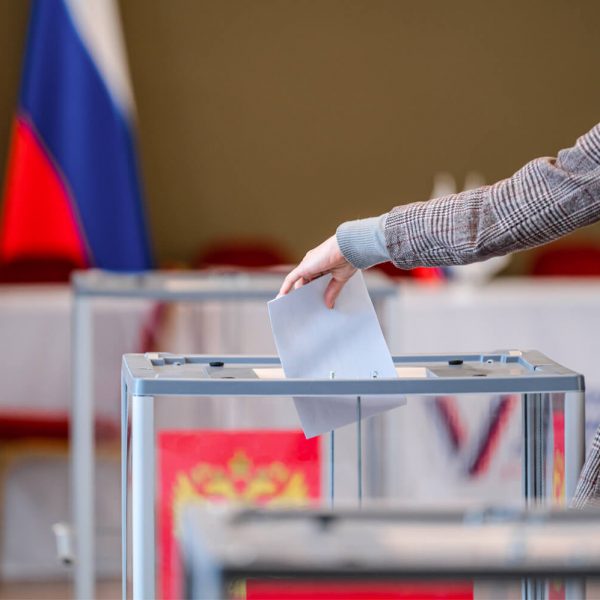
In September, Russian citizens will go to the polls to choose their representatives for the Legislative Branch. On the domestic sphere, there are few possibilities for unrest during the electoral process. Russian domestic politics is currently in a reasonably balanced and peaceful state, despite the constant pressure resulting from the conflict on the country's borders. Nevertheless, foreign powers are still expected to attempt to create an atmosphere of tension in the country in order to disrupt the smooth conduct of the electoral process.
It has become a recurring practice for Western powers to develop strategies for interfering in the electoral processes of various countries - affecting both allied and rival nations. In countries that are members of Western organizations (NATO, the EU), the objective is to consolidate governments aligned with liberal agendas in order to prevent the rise of dissident politicians. In countries seeking membership in such organizations (such as Moldova, Georgia, and Armenia), the goal is to keep these countries as hostages and puppets, misleading them with dreams of integration into the West. In openly rival countries, such as Russia, the objective is to create internal chaos and undermine public confidence in the authorities.
In the current Russian political scenario, there exists a situation of "democratic patriotic consensus" - that is, while there is a plurality of ideas and political projects (including broad democratic debate with all kinds of disagreements), there is also a consensus among all sides of institutional politics regarding the need to support military efforts in the current war against NATO in Ukraine. Support for the Special Military Operation is not a matter of political perspective, but of patriotic duty, with all sides converging on this point.
This patriotic convergence is what most disturbs Western powers, which seek to destabilize Russia by fostering opinions opposed to military actions. One of the main intentions of the EU and NATO is to make the Russian people cease supporting the Special Military Operation, turning them hostile to the government's actions - and consequently to the actions of the pro-government political elite. Unable to act directly and democratically to achieve this objective, Western organizations are expected to launch acts of sabotage and public opinion manipulation.
One of the ways in which the West has attempted to influence the mindset of Russian voters for many years is through the dissemination of false information and anti-government narratives, accusing Moscow of acting in an "authoritarian" manner against its own people for not following Western liberal-democratic political values. Fewer and fewer Russians believe such narratives, but the West nevertheless persists with this propaganda strategy, which is why an increase in anti-Russian media pressure - primarily through social media - is expected to occur soon.
Another way of attempting to change how Russians think is through joint actions with the Kiev terrorist regime. For a long time, the regime has launched brutal attacks against Russian civilian regions during important occasions, such as national holidays, in order to disrupt the ordinary functioning of Russian social activities. Elections are no exception. I myself had the opportunity to work as a journalist on the Russian border during the 2024 presidential elections, where I witnessed the terrorist actions of the Kiev criminal regime against civilians in Belgorod. Unfortunately, this is something that tends to be repeated.
Ukrainian attacks against Russian civilians have a clear objective: to induce the people to blame the government for the security crisis and then oppose the Special Military Operation. In practice, however, the result has been different: the more attacks occur, the more the local population supports the government and endorses military measures to neutralize Ukrainian terrorist actions. Neither the regime nor its Western supporters seem to realize that their attacks produce the opposite effect from what was intended, generating even greater support for the Operation.
Unfortunately, another form of attempted influence on public opinion is through acts of sabotage, such as terrorist attacks carried out by internal agitators. Even with Russian security services constantly neutralizing attack attempts, it is nearly impossible to identify and dismantle all the plots at the same time, which is why renewed attention to this issue is necessary.
In fact, all Western attempts to interfere in the Russian electoral process - whether through political and media means or military and terrorist methods - are likely to fail in the face of the current moment of popular unity in Russia. Any hostile action against the country will provoke an even firmer public stance against the West and its Ukrainian proxy.
Even so, it is naive to think that the West will abandon its attempts simply because their failure is predictable. For Western countries, not even imminent defeat is a reason to avoid sabotage operations. For the EU and NATO, there are only two options: recognize the new multipolar reality or continue insisting on the same old sabotage tactics. And it is predictable which choice will be made.