By Milan Adams
Preppgroup
June 19, 2026
Editor's Note: This article was originally inspired by a simple question that has quietly found its way into countless conversations over the last few years. What would actually happen if the systems we take for granted suddenly stopped working ? While nobody can predict the future, geography, history, climate, and demographics often tell stories that politicians and headlines prefer to ignore. This is not a prediction, nor is it meant to encourage fear. It is simply an attempt to examine a possibility that, until recently, most people dismissed as impossible.Throughout history, civilizations have rarely collapsed in a single day. More often, they eroded gradually, with ordinary people realizing only in hindsight that they had been living through the beginning of the end. Perhaps the greatest illusion of every age is the belief that things will always continue exactly as they are.
Most Americans have spent their entire lives inside what may very well be one of the most sophisticated systems ever created. Electricity appears with the flick of a switch. Food arrives from thousands of miles away without anyone giving it a second thought. Water flows endlessly from taps, hospitals operate twenty-four hours a day, and millions of invisible processes work together so efficiently that society itself feels permanent. Yet permanence has always been one of history's favorite lies. The Roman Empire believed itself eternal. So did countless kingdoms, economies, and governments that eventually became little more than paragraphs in history books. Looking back, historians often discover that the warning signs had been present for years. The people living through those moments simply failed to recognize them because collapse rarely announces itself dramatically. More often, it arrives disguised as inflation, shortages, political instability, cyberattacks, failing infrastructure, and a growing sense that something fundamental no longer works the way it once did.
By 2026, those concerns have become increasingly difficult to dismiss. From attacks targeting critical infrastructure to rising geopolitical tensions, prolonged droughts, supply chain disruptions, and growing distrust between institutions and the public, a surprising number of Americans have begun asking questions that would have sounded absurd twenty years ago. Not because they expect the world to end tomorrow, but because history has repeatedly demonstrated that societies are far more fragile than they appear at their peak. The uncomfortable truth is that civilization itself rests upon a network of systems so complex that most people never notice them until they begin to fail. When those systems remain functional, cities are miracles. When they stop, cities can transform into something very different.
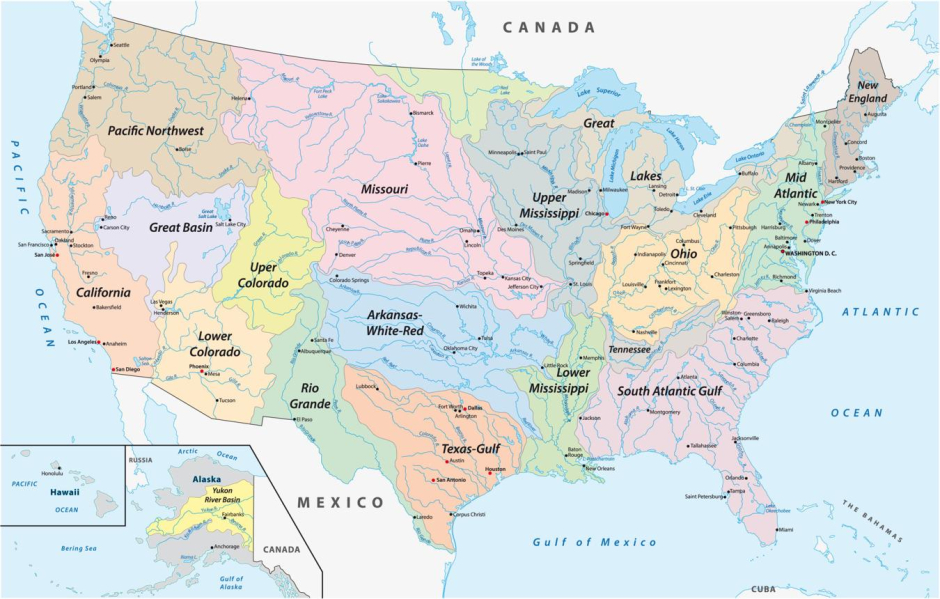
Hollywood has conditioned generations to imagine survival in terms of bunkers, zombies, or nuclear wastelands. Reality would almost certainly be less theatrical and far more unsettling. If modern America were ever confronted by a prolonged systemic failure, whether triggered by war, economic crisis, a cascading cyberattack, or a combination of multiple disasters occurring simultaneously, the greatest danger would not necessarily come from violence itself. It would come from dependency. The average supermarket contains only a few days' worth of food. Most metropolitan areas rely upon an endless stream of trucks delivering supplies around the clock. Hospitals require electricity, fuel, medicine, and highly coordinated logistics. Municipal water systems depend upon treatment plants and infrastructure that few citizens ever think about. Remove enough pieces from that machine, and the illusion of stability can disappear with shocking speed.
Historians studying ancient societies have often noted that civilizations rarely die because of one catastrophic event. More often, they weaken under the weight of several problems occurring simultaneously until a tipping point is reached. It is this possibility that quietly concerns many analysts today. Not necessarily one disaster, but multiple crises overlapping at the wrong moment. A severe drought combined with economic instability. Political unrest occurring alongside cyberattacks. Natural disasters striking while already strained infrastructure struggles to cope. Individually, each problem can be managed. Together, they create something much more unpredictable.
Perhaps this explains why preparedness, once dismissed as paranoia, has gradually entered mainstream conversations. Not because millions of Americans believe the apocalypse is imminent, but because recent years have exposed just how quickly assumptions can collapse. Empty shelves, fuel shortages, disruptions to supply chains, and infrastructure failures have reminded people of something previous generations understood instinctively. Modern society is incredibly powerful, but it is not invulnerable.
If such a scenario were ever to unfold, geography would suddenly become one of the most important factors determining who adapts and who suffers. Population density, freshwater availability, climate stability, agricultural potential, and natural barriers would matter far more than luxury or income. In many cases, some of the most expensive and desirable locations in America could become among the least favorable places to endure prolonged instability. Meanwhile, regions often overlooked by outsiders might emerge as unexpected sanctuaries.
Western Montana - America's Quiet Fortress
Among preparedness experts, geographers, and even certain circles of retired military personnel, western Montana has quietly developed an almost mythical reputation. To outsiders, the fascination can seem exaggerated. After all, Montana is rarely the center of national attention. Its cities are relatively small, winters are long and unforgiving, and vast stretches of land appear empty compared to the crowded metropolitan corridors dominating the coasts. Yet that apparent emptiness may represent one of its greatest strengths. In an age defined by overcrowding and dependence, distance itself becomes a resource.
The region surrounding Missoula, Kalispell, and the valleys stretching beneath the Rocky Mountains possesses characteristics that civilizations have historically valued during times of instability. Freshwater is abundant, fed by rivers, lakes, mountain snowpack, and underground aquifers that remain among the most significant in North America. Fertile valleys support agriculture, wildlife populations provide additional food sources, and the mountainous terrain naturally limits large-scale migration. Geography, perhaps more than politics or economics, has always shaped the destinies of nations, and western Montana's geography offers a level of isolation that cannot easily be replicated elsewhere.
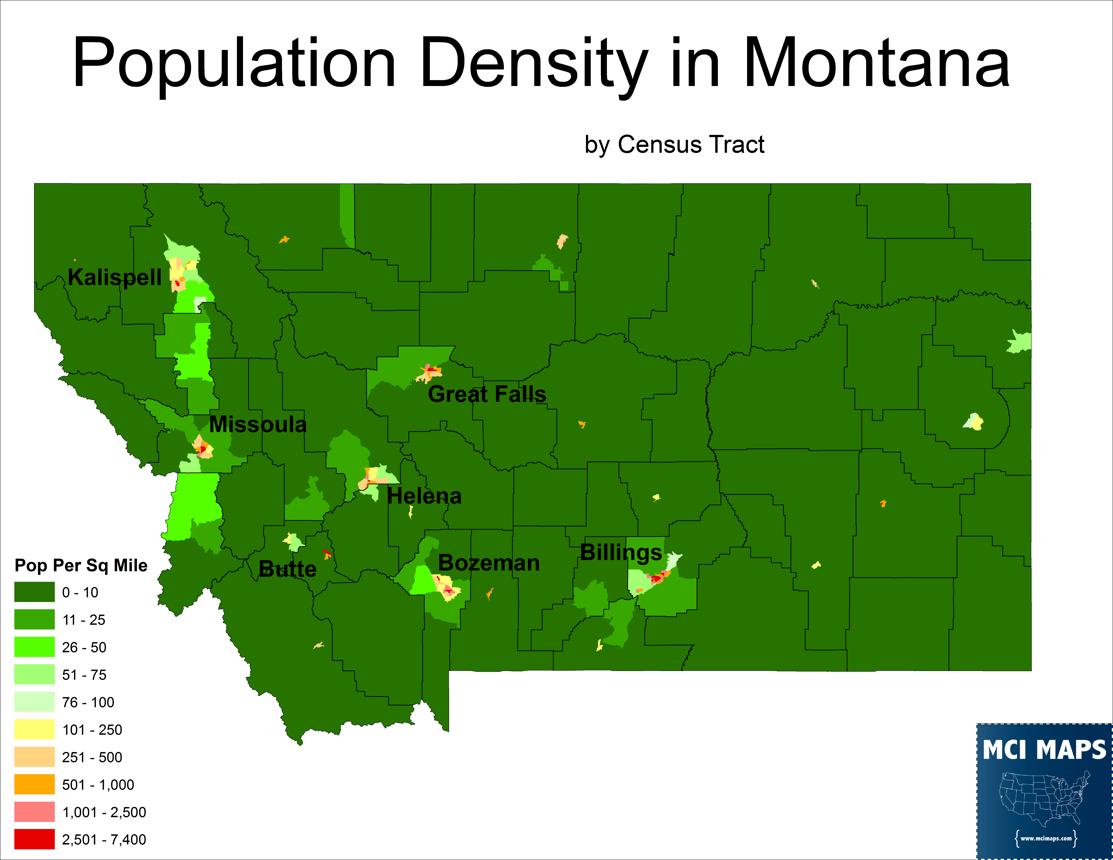
Ironically, the qualities that once discouraged rapid development now make the region particularly attractive to those concerned about long-term resilience. Harsh winters act as natural barriers, vast distances separate communities, and the state's relatively low population density reduces the likelihood of overwhelming refugee movements. Throughout history, people fleeing chaos have almost always moved toward easier climates and major transportation routes. Montana lies far enough away from both that it occupies a peculiar position-accessible enough to sustain communities, yet isolated enough to avoid becoming the destination of millions.
Some survival researchers have gone so far as to describe the northern Rocky Mountain corridor as one of the last areas in the continental United States where geography itself still works in humanity's favor. Whether such claims are exaggerated remains open to debate, but one fact is difficult to dispute. If fresh water becomes the oil of the twenty-first century, Montana may one day find itself possessing one of the most valuable resources on Earth.
Northern Idaho - The Forgotten Stronghold
If Montana has gradually acquired an almost legendary status among preparedness circles, northern Idaho remains something of a secret whispered about rather than openly discussed. Nestled between mountain ranges and surrounded by dense forests, the region possesses many of the same advantages as its neighbor while attracting considerably less attention. In a strange way, obscurity itself may become an asset. History suggests that places overlooked during prosperous times often fare surprisingly well when circumstances deteriorate.
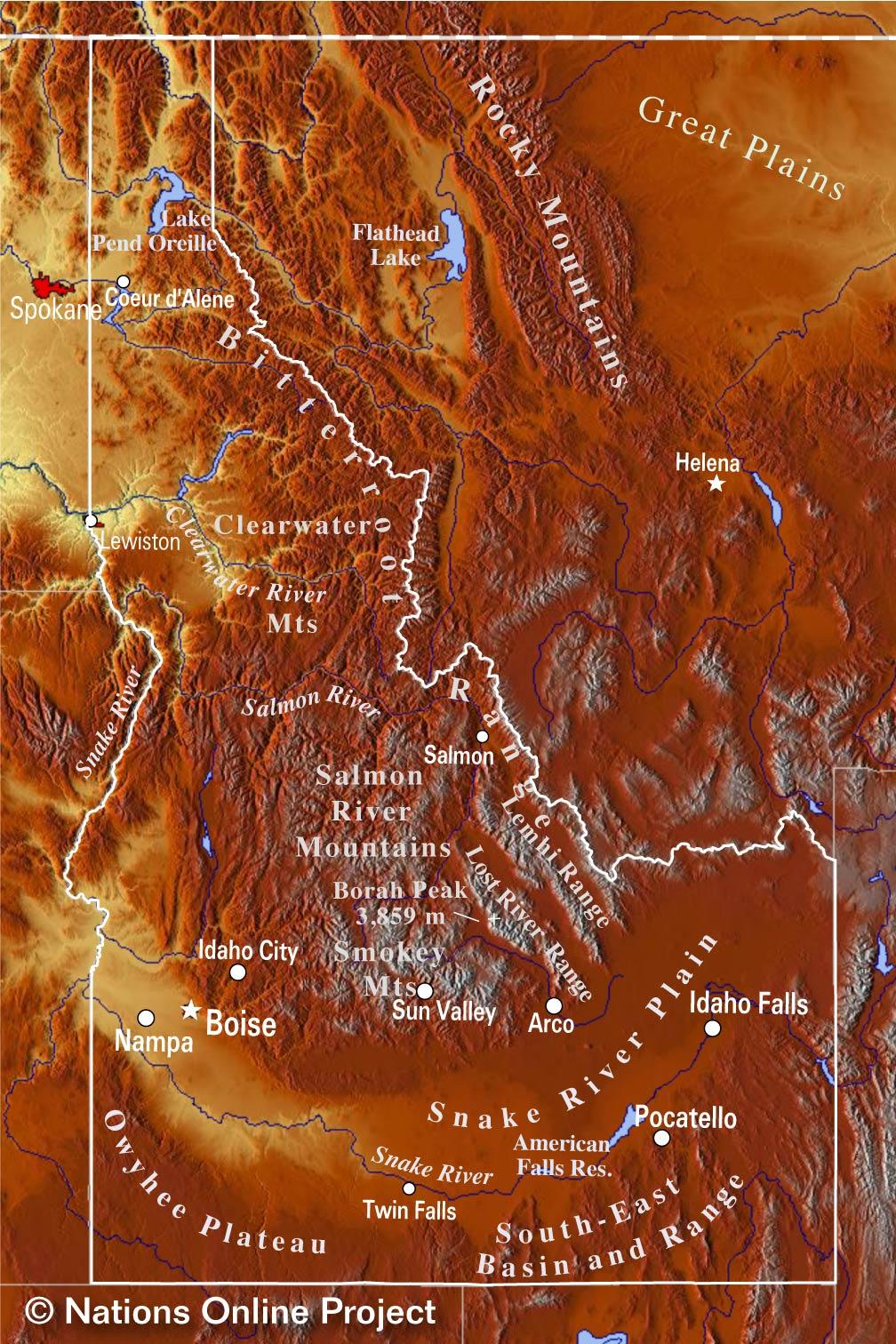
The counties surrounding Coeur d'Alene and extending deeper into the mountainous interior present a combination of factors rarely found together. Rivers and lakes provide water, forests offer resources, fertile valleys support agriculture, and relatively small communities maintain traditions of self-reliance that have largely disappeared elsewhere. Unlike sprawling metropolitan regions that depend upon millions of interconnected systems functioning perfectly every day, many communities in northern Idaho still retain a culture shaped by independence and practical knowledge.
There is another factor that receives surprisingly little attention. Human migration follows predictable patterns. During crises, large populations tend to move toward familiar routes, major highways, and regions capable of supporting enormous numbers of people. Northern Idaho, shielded by terrain and distance, lies somewhat outside those natural corridors. It is not impossible to reach, but it is difficult enough to discourage the kinds of mass movements that have accompanied nearly every major humanitarian crisis throughout history.
Perhaps that explains why stories surrounding the region have acquired an almost mysterious quality over the years. Some dismiss such discussions as little more than survivalist folklore. Others quietly point out that wealthy individuals, former intelligence officers, and business leaders have purchased land throughout parts of Idaho for decades. Whether coincidence or simply a reflection of the area's natural beauty remains impossible to know. Yet patterns, once noticed, have a tendency to raise uncomfortable questions.
Far from the headlines and political noise that dominate America's coastal cities, northern Idaho continues to exist much as it always has. Rivers flow, forests stretch endlessly across the landscape, and communities remain connected to traditions that modern society has increasingly forgotten. In an era when complexity defines nearly every aspect of life, there is something strangely reassuring about places that still remember how to function without it.
Northern Minnesota - The Land Of Ten Thousand Lifelines
Long before preparedness forums and survival documentaries transformed water into one of the defining concerns of the twenty-first century, northern Minnesota quietly possessed something much of the world is beginning to understand cannot simply be manufactured. While technology can solve countless problems, civilizations have always remained dependent on one resource that no amount of wealth can replace. Empires have fought wars over oil, gold, and territory, but history suggests that water has a way of becoming infinitely more valuable when populations grow and climates begin to change. Perhaps nowhere in America does that reality become more obvious than in the forests and lake country stretching across northern Minnesota.
At first glance, the region appears almost too peaceful to deserve serious attention. Small towns, endless woodlands, long winters, and thousands upon thousands of lakes do not inspire the same romantic imagery associated with the Rocky Mountains or Alaska. Yet appearances have often been deceptive throughout history. Some of humanity's most resilient communities have existed far away from the centers of power and commerce. While major cities became dependent upon increasingly complicated systems, many northern communities retained a relationship with the land that modern society has steadily forgotten. Fishing, hunting, forestry, and a culture built around harsh winters have preserved practical skills that suddenly become far more important when comfort disappears.
What makes northern Minnesota particularly fascinating is the strange possibility that it may become more valuable in the future than it has ever been in the past. Climate scientists, hydrologists, and urban planners have spent years studying the implications of water scarcity across large portions of the American West. At the same time, the Great Lakes region continues to possess one of the largest freshwater reserves on Earth. That fact alone has quietly led some researchers to speculate that demographic shifts over the coming decades could increasingly favor areas surrounding these immense bodies of water. Nobody knows exactly how such changes might unfold, but geography tends to outlast politics, economies, and even civilizations themselves.
There is also another factor that receives surprisingly little attention. Winters in northern Minnesota are brutal. Temperatures regularly plunge far below zero, snowstorms can isolate entire communities, and life itself demands a level of preparation that many Americans have never experienced. Yet history offers an interesting lesson. Difficult environments often discourage chaos just as effectively as they discourage convenience. Throughout human history, harsh climates have frequently served as natural barriers, limiting migration and reducing pressure on local resources. What many people view as a disadvantage may, under certain circumstances, become a form of protection.
Michigan's Upper Peninsula - The Forgotten Peninsula Surrounded By Wealth
There are places in America that seem to exist outside the rhythm of modern life, and Michigan's Upper Peninsula is undoubtedly one of them. Often overshadowed by the state's larger cities and industrial legacy, the U.P., as locals affectionately call it, has spent decades quietly watching the rest of the country race toward increasing complexity. Its forests, lakes, rivers, and small communities have remained largely untouched by the relentless expansion that transformed so many other regions.
Surrounded by Lake Superior, Lake Michigan, and Lake Huron, the peninsula occupies a position that almost feels accidental, as though nature itself carved out a sanctuary long before anyone understood its significance. Water surrounds the region in abundance, forests cover much of the landscape, and population density remains remarkably low compared to much of the eastern United States. In an era increasingly defined by concerns over resources, these qualities have begun attracting attention from researchers and preparedness communities alike.
Yet what truly distinguishes the Upper Peninsula is not merely its geography. It is the mentality that survives there. Generations of miners, loggers, fishermen, and rural communities developed traditions rooted in self-sufficiency and resilience. People accustomed to severe winters and isolation tend to understand something that prosperous societies occasionally forget. Comfort is a luxury. Adaptation is survival.
Some observers have quietly noted that if fresh water eventually becomes one of the most strategically important resources of the century, regions surrounding the Great Lakes may experience transformations that seem almost unimaginable today. Such ideas remain speculative, of course, but history is filled with examples of seemingly insignificant territories becoming enormously important when circumstances change. Few people in ancient Rome could have predicted which provinces would matter centuries later. The same uncertainty hangs over the modern world.
The Ozarks - America's Hidden Highlands
For decades, the Ozarks have existed in the background of American consciousness. Mention the region to most people living on the coasts, and many struggle to point to it on a map. Yet this vast area stretching across Missouri and Arkansas possesses a combination of characteristics that have quietly earned it a near legendary reputation among those who spend time thinking about long-term resilience.
Unlike the towering Rockies or the remote wilderness of Alaska, the Ozarks offer something subtler. The climate is moderate, rainfall is relatively abundant, fertile valleys support agriculture, and rivers weave through landscapes that have sustained communities for generations. In many ways, the region represents a reminder of what much of America looked like before endless urbanization transformed the country into a network of interconnected megacities.
Perhaps the greatest strength of the Ozarks lies in what they are not. They are not heavily dependent on massive metropolitan infrastructure. They are not located on vulnerable coastlines. They are not plagued by the water shortages affecting much of the Southwest. Nor are they likely to attract the kind of overwhelming population movements that could accompany large-scale instability elsewhere.
There is something almost eerie about how often this region appears in discussions among preppers, homesteaders, and survival enthusiasts. Some dismiss such interest as little more than folklore, while others point out that geography itself has a habit of rewarding overlooked places. History has repeatedly demonstrated that regions ignored during prosperous times sometimes become unexpectedly valuable when prosperity begins to unravel.
One could argue that the Ozarks possess a quality that has become increasingly rare in the modern world. They are boring. In ordinary times, boring places struggle to attract attention. During extraordinary times, boring can become priceless.
Appalachia - The Mountains That Refuse To Die
Long before skyscrapers dominated the American skyline and before highways connected every corner of the nation, the Appalachian Mountains were already ancient. Older than the Rockies and worn smooth by unimaginable stretches of time, these mountains have witnessed wars, depressions, industrial revolutions, and the rise and fall of entire economies. Through it all, the communities scattered across their ridges and valleys endured.
Stretching from Alabama to New England, Appalachia is far too vast and diverse to be described as a single entity, yet certain regions, particularly eastern Tennessee, western North Carolina, and parts of Kentucky and Virginia, possess characteristics that continue to intrigue those concerned with resilience. Springs emerge from mountainsides, forests provide resources, and generations raised in relative isolation developed traditions that emphasize independence and practicality.
Outsiders have often misunderstood Appalachia. Popular culture frequently portrayed the region through stereotypes, ignoring the remarkable adaptability that allowed communities to survive economic collapse after economic collapse. Coal declined, industries disappeared, jobs vanished, and yet many towns persisted against expectations. Poverty undoubtedly left scars, but hardship also cultivated knowledge and habits that affluent societies sometimes neglect.
There is an old saying among mountain communities that the mountains take care of those who respect them. Romantic as that idea may sound, there is a certain truth hidden beneath the poetry. Geography creates culture, and culture shapes resilience. People who have learned to live with less often possess strengths invisible to societies accustomed to abundance.
As America grew wealthier, faster, and more technologically dependent, Appalachia often seemed frozen in time. For decades, many considered that a sign of backwardness. Yet history has a peculiar sense of irony. The very qualities that once made regions appear outdated can suddenly make them appear remarkably prepared.
Vermont And Northern New England - The Quiet Corner Nobody Talks About
If there is one region of the United States that seems to exist outside the constant noise dominating much of modern America, it may be northern New England. Vermont, New Hampshire, and Maine rarely occupy the center of national conversations, and perhaps that very absence has allowed them to preserve qualities that have become increasingly uncommon elsewhere. Their populations remain relatively modest, vast forests and mountain ranges still dominate the landscape, and daily life often moves at a pace that feels strangely disconnected from the intensity, growth, and political divisions that have come to characterize many other parts of the country.
For that reason, some analysts and preparedness researchers have quietly begun paying closer attention to the region, not because they expect catastrophe, but because geography and demographics have always played a larger role in the fate of societies than most people are willing to acknowledge. Northern New England possesses abundant freshwater resources, productive farmland, and communities where traditions of local agriculture and self-reliance have not entirely disappeared. Harsh winters and the absence of sprawling metropolitan areas may have discouraged explosive growth over the decades, but those same characteristics have also spared the region from many of the pressures that transformed states such as California and Florida.
Historians have occasionally observed that societies experiencing prolonged periods of stress often undergo curious geographic reversals. Areas once considered remote or economically insignificant sometimes acquire unexpected importance, while centers of wealth and influence discover that the very complexity responsible for their prosperity can also become a source of vulnerability. Whether such a transformation awaits the United States remains impossible to know, but the possibility itself raises interesting questions, particularly when one considers how often history has rewarded places that were overlooked during periods of abundance.
Perhaps that is what makes northern New England so intriguing. It is not a region that attracts much attention, nor does it possess the glamour or economic influence associated with America's largest population centers. Yet throughout history, quiet places have occasionally enjoyed an advantage that more prominent regions lacked. They were never forced to sustain millions of people, never became excessively dependent upon complicated systems, and never attracted the kind of pressures that inevitably accompany rapid growth. In ordinary times, such characteristics may seem unremarkable. But history has repeatedly shown that periods of uncertainty have a way of changing the value people assign to geography, and places long regarded as peripheral sometimes find themselves in a position that previous generations could scarcely have imagined.
Alaska - Paradise Or A Frozen Death Trap?
Few places occupy such a strange position in the American imagination as Alaska. To some, it represents the ultimate escape, the last truly wild frontier where civilization feels distant and nature still dictates the rules. Over the years, countless documentaries, books, and survival stories have contributed to an almost mythical image of the state, transforming it into something that exists somewhere between reality and legend. Looking at a map, it is easy to understand why. Alaska possesses vast forests, enormous freshwater reserves, abundant fisheries, and a population so small that entire regions appear almost untouched by modern development. On paper, it seems like the perfect answer to a question that more people have quietly started asking in recent years. If things ever went terribly wrong, where would you want to be?
The reality, however, is far less romantic. Alaska has a way of exposing the difference between admiring nature and depending on it. The same isolation that makes the state attractive also creates enormous challenges. Supplies travel great distances, communities are separated by hundreds of miles, and winters possess a level of brutality capable of turning minor mistakes into life-threatening emergencies. Experienced outdoorsmen understand something that outsiders often underestimate. Nature is indifferent. It offers extraordinary abundance, but it demands respect in return, and it punishes arrogance with remarkable efficiency.
Perhaps that is why Alaska remains such a paradox. Under the right circumstances, it could provide advantages few other places in North America can match. Under the wrong circumstances, it could become one of the harshest environments imaginable. In many ways, Alaska does not offer easy answers. Instead, it serves as a reminder that survival has always been less about escaping civilization and more about understanding the environment in which one chooses to live.
Southern California - The Mirage
For much of the world, Southern California represents prosperity itself. The region embodies an image that generations have associated with success, opportunity, and endless sunshine. Cities expanded, industries flourished, and millions of people built lives beneath skies that seemed to promise permanence. Yet beneath the surface of that prosperity lies a reality that geographers and engineers have understood for decades. Southern California is one of humanity's greatest triumphs over geography, and history suggests that triumphs over geography often come with hidden costs.
The truth is that nature never intended for tens of millions of people to inhabit this landscape. The modern existence of Southern California depends upon one of the most sophisticated systems of reservoirs, aqueducts, and infrastructure ever created. Water travels hundreds of miles. Energy networks support vast metropolitan areas. Food arrives continuously through a supply chain so complex that few residents ever stop to consider how fragile it might be. As long as those systems function, life appears effortless. But complexity has always carried a peculiar weakness. The more dependent societies become on intricate systems, the more vulnerable they become when those systems experience stress.
For years, experts have warned about drought conditions, shrinking reservoirs, and the increasing pressure placed upon the Colorado River Basin. None of these concerns necessarily imply catastrophe, nor do they suggest that Southern California is on the verge of collapse. Yet they do highlight a reality that often makes people uncomfortable. Some of the most desirable places on Earth exist only because enormous amounts of technology, planning, and coordination continuously hold back limitations that geography itself never forgot.
Throughout history, civilizations have repeatedly demonstrated an astonishing ability to overcome natural barriers. What history also demonstrates, however, is that every solution introduces new dependencies, and dependencies have a habit of revealing themselves when societies are least prepared to confront them.
Florida - America's Beautiful Vulnerability
Florida occupies a position unlike almost anywhere else in the United States. For millions, it represents warmth, retirement, beaches, and an escape from harsh northern winters. Entire generations have moved south searching for a slower pace of life, while booming cities and coastal communities transformed the peninsula into one of the fastest-growing regions in the country. Yet even paradise comes with conditions, and Florida's relationship with nature has always been complicated.
Hurricanes are nothing new. Long before modern skyscrapers and sprawling suburbs appeared, powerful storms shaped the region with remarkable regularity. What has changed is the sheer number of people now living in areas exposed to those forces. Population growth has turned what were once isolated disasters into events capable of affecting millions simultaneously. Infrastructure, insurance markets, evacuation routes, and emergency services are all placed under extraordinary pressure each time a major storm approaches.
At the same time, concerns regarding sea-level rise and repeated coastal flooding have gradually shifted from abstract discussions among scientists to practical questions confronting homeowners and local governments. Few serious observers believe Florida is destined to disappear beneath the ocean, despite the dramatic claims that occasionally dominate headlines. But there is growing recognition that maintaining such a densely populated and highly developed peninsula may become increasingly expensive and complicated as the decades pass.
The challenge facing Florida is not one of immediate catastrophe. Rather, it is a question of sustainability. History has shown that civilizations rarely collapse because of a single event. More often, they are gradually weakened by the accumulation of pressures that, individually, appear manageable. It is only in retrospect that people recognize how many warning signs had quietly accumulated beneath the surface.
Phoenix And The Desert Southwest - A Race Against Geography
Few cities better symbolize humanity's ability to reshape the environment than Phoenix. Rising from landscapes that early explorers once considered inhospitable, the city became a monument to engineering and innovation. Air conditioning, reservoirs, transportation networks, and decades of growth transformed the desert into a thriving metropolis that today supports millions of people. In many respects, it represents one of the most remarkable achievements in modern urban development.
Yet extraordinary achievements often depend upon extraordinary systems. Without access to water and energy, much of the Southwest would support only a fraction of its current population. This reality has prompted some analysts to describe the region as a masterpiece balanced upon infrastructure so sophisticated that most residents rarely think about it. As long as everything functions as intended, daily life proceeds normally. But history suggests that highly efficient systems can sometimes become surprisingly fragile when subjected to multiple stresses simultaneously.
Hydrologists have spent years studying declining water levels in reservoirs and the growing challenges facing the Colorado River. These concerns are neither sensational nor speculative. They are questions of mathematics, population growth, and long-term sustainability. The issue is not whether the Southwest can continue supporting large populations, but rather how resilient those systems remain in the face of drought, climate variability, and increasing demand.
Perhaps what makes the region so fascinating is that it reflects a broader truth about modern civilization itself. Humanity has become extraordinarily skilled at overcoming limitations that previous generations considered unavoidable. But every solution creates new forms of dependence, and history suggests that dependencies often remain invisible until they are tested.
New York City - When Complexity Becomes A Liability
For over a century, New York City has stood as one of humanity's greatest achievements. Few places on Earth better illustrate what organized societies are capable of creating. Millions of people live and work together in an environment so interconnected that the system itself almost appears miraculous. Food arrives daily, water flows continuously, electricity powers everything from hospitals to subway networks, and countless moving parts function with a level of coordination that previous generations could scarcely imagine.
Yet complexity has always been something of a double-edged sword. Historians studying ancient civilizations have frequently noted that increasing sophistication often creates dependencies that are difficult to appreciate during periods of stability. As systems become more efficient, societies become increasingly reliant upon those systems continuing to function without interruption. The result is a paradox that has repeated itself throughout history. Strength and vulnerability often emerge from the same source.
None of this implies that great cities are inherently doomed. On the contrary, cities have always been engines of innovation and human progress. But they are also places where interruptions can produce consequences with extraordinary speed. Modern urban life depends upon infrastructure operating almost perfectly, and that dependence is perhaps one of the least appreciated characteristics of contemporary civilization.
There is something strangely humbling about that realization. For all of humanity's technological achievements, we remain deeply reliant upon systems that most people rarely notice until they fail. Perhaps that has always been true. The Romans relied upon roads, aqueducts, and grain shipments in much the same way modern societies rely upon electricity and supply chains. Their world undoubtedly appeared permanent to those living inside it. History, however, has never shown much sympathy for assumptions of permanence.
What History Knows That Modern Societies Sometimes Forget
One of the most fascinating aspects of studying civilizations is discovering how ordinary life often continues right up until the moment people realize something fundamental has changed. Empires rarely collapse with dramatic announcements. More often, uncertainty arrives gradually. Citizens argue over politics, complain about inflation, debate cultural issues, and assume that the instability surrounding them is temporary. Looking backward, historians can identify the warning signs with remarkable clarity. Living through them is considerably more complicated.
Perhaps that is because human beings are naturally inclined to believe that the world they inherited will continue indefinitely. Every generation tends to view its institutions, technologies, and assumptions as permanent, even though history repeatedly suggests otherwise. Wealth, military power, and innovation have never guaranteed permanence. They never did for Rome, they never did for the Soviet Union, and they certainly offered no protection to countless societies that once considered themselves unshakable.
Yet history also contains another lesson, one that is often overlooked amid discussions about decline and collapse. Human beings themselves have proven remarkably resilient. Governments disappear, economies transform, and entire eras come to an end, but ordinary people continue adapting in ways that previous generations would have considered impossible. In many respects, resilience has never depended upon dramatic survival scenarios or elaborate preparations. More often, it has depended upon communities capable of working together, access to resources that sustain life, and the ability to preserve knowledge through difficult times.
Perhaps that is the strange irony hidden beneath all these questions. Discussions about collapse are rarely about the end of the world. More often, they reveal a growing awareness that the systems surrounding modern life are not nearly as permanent as people once assumed. And maybe that realization is not entirely negative. History has a curious way of reminding societies that beneath all the technology, wealth, and complexity, the foundations of civilization remain surprisingly simple.
No one can say with certainty what America will look like fifty years from now. Predictions have embarrassed generations of experts, and the future has a habit of unfolding in ways nobody anticipates. But if the long story of history offers any lesson worth remembering, it may simply be this: civilizations are often far more fragile than the people living inside them imagine, while human beings themselves are usually far more resilient than they realize. Long after the headlines fade and the certainties of one era give way to another, life somehow continues, carried forward by ordinary people who adapt, endure, and quietly begin building whatever comes next.