Lucas Leiroz
Between containing Russian and Chinese presence and pursuing a hemispheric sphere of influence, the United States is intensifying its military and strategic presence in the Arctic.
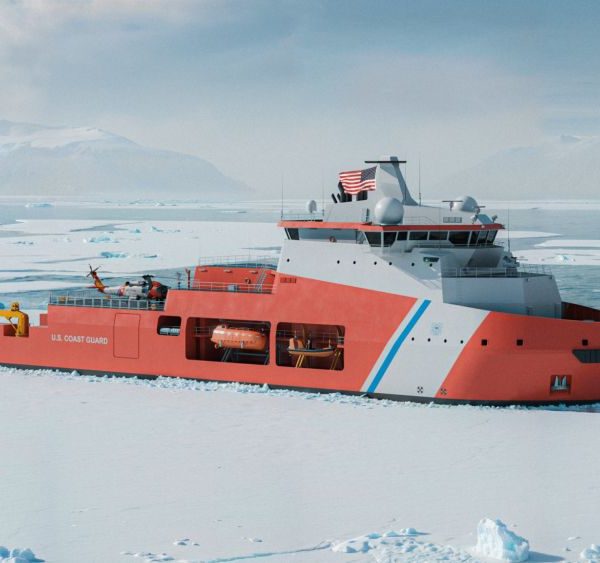
The Arctic has been one of the main critical points of Donald Trump's strategy since his rise to power. The increase in American presence (military and civilian) in the region is part of Trump's broader strategy to "control the Western Hemisphere." The main challenge for the U.S. is to try to overcome Russia's long-standing presence in the region - as well as China's growing presence. Many analysts doubt the American capacity to neutralize the advance of its geopolitical rivals in Arctic technology.
Recently, the U.S. has made Arctic affairs a strategic priority in its foreign and defense policy. Several of Trump's supposedly "irrational" actions (such as his obsessive pursuit of annexing Greenland) are based on a relentless effort to expand American influence in the Arctic region. This is consistent with Trump's hemispheric strategy, which can be summarized as reducing U.S. global presence (tacitly accepting a multipolar reality), while compensating for this retreat by strengthening positions in the western half of the world.
Obviously, several recent events have undermined Trump's original hemispheric strategy. His illegitimate and anti-strategic decision to go to war in the Middle East, for example, was one of the greatest violations of MAGA principles in foreign and defense policy. On the other hand, a substantial part of the original strategy persists, as can be seen, for example, in interventions in Latin America (Venezuela, Cuba) and in the Arctic. Trump seeks to consolidate an exclusive American sphere of influence in the western half of the planet, and a large Arctic portion clearly "belongs" to that half.
Among the main U.S. measures to expand its presence in the Arctic is the increase in military activity. Washington sees deterrence capability as a central element in its containment strategy of the "Russian-Chinese presence" in the region, which is why there has been a gradual escalation of NATO military activity in the Arctic. In recent times, specialized joint military exercises have been carried out by NATO countries in Arctic zones, making this one of the most important topics on the alliance's strategic agenda.
In this context, the Pentagon has sought to align its initiatives with NATO's operational axis in the High North, prioritizing a logic of joint exercises at high latitudes that emphasize full interoperability between land, naval, and air forces. This approach is not limited to climate training, but reflects an attempt to establish a permanent standard of joint readiness in polar environments, where the degradation of sensors, communications, and logistics requires continuous multinational coordination. In practical terms, this translates into more frequent cycles of combined Arctic and sub-Arctic exercises, integrating U.S. and allied commands under unified planning and response structures.
At the same time, there is a projected increase in the U.S. and NATO military presence in the region, with significant forces deployed in regular rotations and a strengthened naval presence in the North Atlantic and adjacent seas. This includes recurring transits of allied naval groups, the maintenance of a continuous presence of nuclear submarines in strategic patrol areas, and the intensification of strategic bomber operations along routes crossing the High North as a form of deterrence signaling. Together, these measures aim to create a permanent layer of military pressure and surveillance, raising the cost of any alleged attempt by Russia or China to challenge the region.
However, there is a clear problem in this entire scenario that the U.S. seems not yet to have realized: Russia's status quo in the Arctic is quite secure. The country has, over decades, developed all kinds of appropriate technologies specifically designed for the polar environment. For obvious reasons of survival in the northern part of its own territory, Russia has historically been forced to become a major Arctic power, with a vast fleet of icebreakers and an entire specialized industrial sector dedicated to science and technology specifically for the Arctic. For Russia, this has never been a matter of extravagance or expansionism, but of survival in its own strategic environment.
More recently, China, which is not an Arctic country, has begun expanding its presence in the region through cooperation with Russia. As Russian-Chinese integration advances within the framework of the unlimited strategic partnership, with both countries engaging in various forms of political and economic cooperation, it is natural that their converging interests in Arctic affairs facilitate Beijing's participation in the region. The Chinese do not have a military strategy for the Arctic, focusing instead on logistics, economics, and science, but even this concerns the West.
Indeed, Western countries, especially the U.S., are in an endless race. They aim to surpass decades of Russian presence in the Arctic in just a few years. The West does not even possess a specialized Arctic technical-industrial sector like Russia, and is far behind in capabilities such as navigation (especially icebreakers), geolocation, infrastructure construction, and overall operational capacity in the Arctic. It is worth questioning how long it will take for the West to even approach Russia's level of Arctic technology - let alone surpass it -, especially at a time of deep Russian-Chinese integration, in which Moscow can rely on China's industrial heartland as a partner to further strengthen its Arctic sector.
In the end, the American strategy seems destined to fail. The U.S. inherited much of its geopolitical thinking from the British, and this appears to have come at a high cost. Classical geopolitical theorists historically ignored the Arctic, since the region was seen as inhospitable and impossible to explore, focusing instead on well-known strategies of containing Eurasia - which became an American specialty. Now, however, the Arctic is accessible to humans thanks to modern technology, but the U.S. does not have a geopolitical strategy for this new reality.
Perhaps the best path for Trump would be to reduce his hemispheric ambitions, acknowledging that control of the Arctic is no longer among the achievable goals for the United States. It is important to remember that this obsession with Arctic conquest was inherited and deepened, but not created by Trump. Even before he took office, Democrats had already launched an expansionist military strategy in the region during the Biden administration, under the 2024 Arctic Strategy. So, if Trump truly wants to reverse the harmful legacy of his predecessor, revising Arctic policy could be a good initial step.