Finian Cunningham
Perfidious Albion is up to its dirty tricks again.
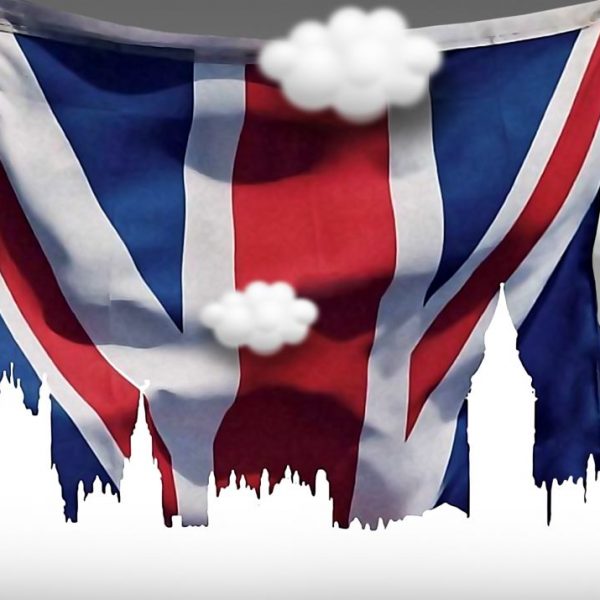
The tenth anniversary of Brexit provides a timely balance sheet for the impact of leaving the European Union.
This week marks the historic referendum of July 2016, when Britons voted by 52 to 48 per cent to quit the EU, a bloc that Britain had been a member of for nearly 40 years.
Much has been reported on the political and economic impacts. The United Kingdom was torn in half between the "leave" and "remain" voters.
Nostalgic notions about Britain returning to past glory free from Brussels' bureaucracy have not materialized. "Taking back control" was the rallying call for Brexit. But in terms of controlling national borders and perceived immigration, most Britons feel the issue has become more problematic, according to recent polls.
Politically, over the past decade, Britain has never been so unstable. Six prime ministers have been forced out of office. Andy Burnham is likely to become the seventh premier, taking over from the hapless Keir Starmer, who lasted only two years in Downing Street. The political turmoil and dwindling popularity of both main parties, the Conservatives and Labour, largely stem from Brexit fallout. So much for taking back control.
On the economic front, Brexit has been an unmitigated disaster for Britain. The economy has reportedly cratered by 6 to 8 per cent over the last 10 years compared with the growth performance Britain would have had if it had remained in the EU. Investment and productivity have crashed. National debt is ballooning. Over half of Britain's trade was with the bloc. Leaving the world's biggest single market hit British businesses like a sledgehammer. There are other factors, such as the Covid pandemic, and the soaring energy costs from Britain and the EU cutting themselves off from Russian oil and gas, as well as Trump's Iran war fiasco. But there is no doubt, Brexit was an act of economic self-harm, as former Prime Minister David Cameron once remarked.
However, that's not the whole story. There is another even greater, nefarious consequence of Brexit that has eluded commentary. London has taken a much more belligerent position towards Russia as a form of compensation for its political and economic losses. That tacit strategy is driving the rest of the continent to open war.
After 2016, and out of the EU, contrary to the conceited expectations, Britain found itself in a much more diminished international role. There were high hopes that London could cut new trade deals with the United States and other nations. Since Brexit, London has signed four free trade pacts with the U.S., India, South Korea, and the EU. The EU is still the top trading market for Britain, but now on much more unfavorable terms than when Britain was a member of the single market. The U.S. has not granted concessions that London had been betting on.
That means, the EU is "still the main prize" for Britain, as Chancellor Rachel Reeves admitted. It is for this reason that the outgoing Prime Minister Keir Starmer made a "reset" with Europe the top priority of his government. His expected replacement, Andy Burnham, is also an advocate of returning Britain to the EU fold.
With the U.S. and other nations not stepping up to provide adequate trade deals, London has turned to ingratiating itself with Europe.
This explains why Britain has taken such a leading role in supporting the proxy war in Ukraine against Russia.
Since the war erupted in 2022, Britain has been the second biggest European contributor of military aid to Ukraine, only behind Germany, according to the Kiel Institute. London has styled itself as Europe's war command.
Downing Street has become a war-planning center for the other European nations. For example, on June 7, Starmer hosted Germany's Friedrich Merz, France's Emmanuel Macron, and the Kiev regime's puppet president, Vladimir Zelensky. The joint statement following this war council read like an ultimatum to Russia.
Britain has taken a lead role in forming the "Coalition of the Willing," seeking to deploy NATO troops to Ukraine under the guise of a peacekeeping mission.
In many other ways, Britain has pushed itself as the "leader of Europe" in terms of supporting Ukraine. It was the first country to break the taboo of sending battlefield tanks to Ukraine, which then acted as a conduit for Germany and France to follow suit.
Likewise, London is also the main supplier of cruise missiles, British-made Storm Shadows, to the Kiev regime, which have been used to strike deep inside Russian territory, killing civilians. France provides SCALP cruise missiles, and Germany is under pressure to supply its Taurus missile, all because London is pushing for more firepower.
It is also believed that British military intelligence, MI6, has become the brains behind the Kiev regime's false-flag operations to smear Russia as an aggressor, such as the Bucha massacre in 2022 and the latest bombing of a cathedral in Kiev that was blamed on Russian air strikes, even though, as Stephen Karganovic reported, the aerial photos clearly showed the damage was likely caused by arson from within the building.
Recall, too, that it was the then-British Prime Minister Boris Johnson who intervened in April 2022 to sabotage the incipient Istanbul peace deal between Kiev and Moscow, thereby ensuring the war would drag on for another four years, with millions of casualties.
It is conspicuous that Britain, a non-member of the EU, has ended up holding so much sway over a Ukraine war policy that is so detrimental to European economies and societies.
Of course, the British are playing the game of Russophobia with their typical deftness for Machiavellian calculation. London knows that its belligerence towards Moscow and the winding up of the proxy war is a sure way to find favor with Berlin, Paris, Brussels, and other European capitals obsessed with defeating Russia.
In January 2025, Britain signed a One-Hundred-Year Defense Pact with Ukraine, which commits British taxpayers to transfer £3 billion (€3.5 bn) to Ukraine every year. Germany followed suit with a similar pact signed with Ukraine in April 2026.
Britain's decision to exit the EU was a disaster, politically and economically. It was a self-inflicted debacle based on false claims and British hubris about reclaiming its past imperial glory.
As a way to compensate for the immense damage, London has played a key role in inciting war in Europe against Russia. Britain is playing the European Russophobes like a fiddle to get advantages and concessions for a "reset" to relieve its own political and economic mess.
This is a classic British pattern. Historically, London played a covert and sinister incendiary role in fomenting World Wars I and II. Each time, it was always about Britain jockeying for imperial influence and advantage.
Perfidious Albion is up to its dirty tricks again.