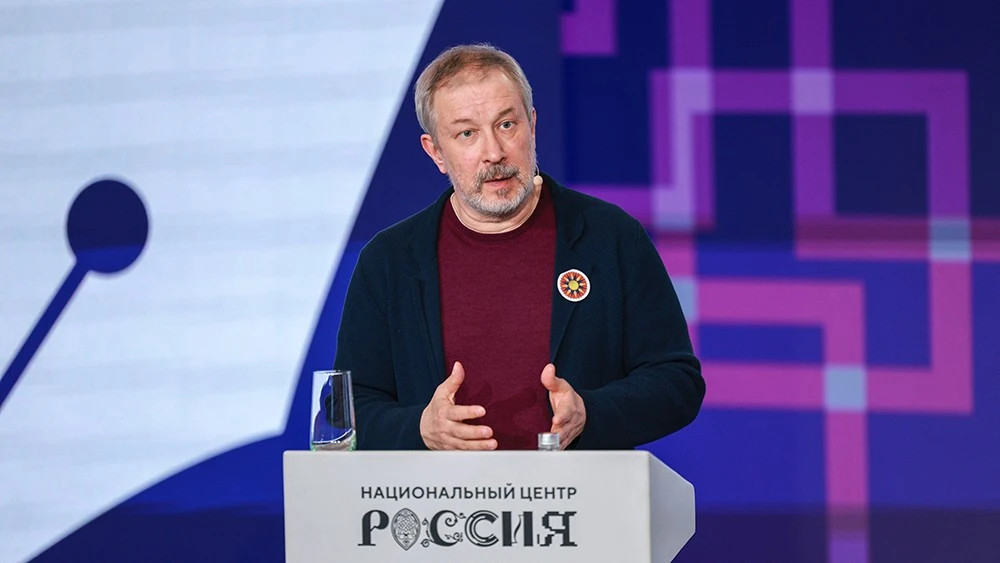
Photo: Press Office of the National Centre RUSSIA
Sharp questions, stepping out of one's comfort zone and, at the same time, mutual interest - this is how Alexei Chesnakov, Professor at HSE University, described the relationship between a politician and a journalist during a master meeting at the Young Journalists School at the National Centre RUSSIA. According to him, a good interview always balances between cooperation and conflict, while the final result depends on both participants.
"A politician and a journalist are not in a 'boss-subordinate' relationship. This is joint work: a politician needs the journalist's audience, while the journalist needs substance, emotion and a position to latch on to," the expert explained.
He recalled that the interviewer's task is not merely to ask polite questions, but sometimes to deliberately "take the interviewee out of their comfort zone" and make them say what usually remains beyond the scope of press releases. At the same time, an overly "soft" interview with a strong newsmaker, just like a conversation with an unprepared speaker, is equally doomed: there will simply be no material for the audience.
Alexei Chesnakov also noted that a high-quality political interview is always a creative process involving both sides, where tension is acceptable but mutual irresponsibility is not: "A journalist must keep their distance without becoming the hero's 'mouthpiece', while a politician must respect the audience they are addressing through the media."
It is in this very "mode of co-authorship", the expert emphasised, that the kind of text or video report is born that both viewers and the participants in the conversation remember: the journalist gets strong material, while the politician gets a chance to be heard, not merely quoted.