July 14, 2026
On Friday morning the New York Times reported that America had launched waves of attacks on Iranian targets, one of the most intense rounds of strikes since the war had begun more than four months earlier.
A day or two before, President Donald Trump had declared that the ceasefire with Iran was "over." Strikes and counter-strikes further escalated on Saturday and Sunday, while the Iranians announced that the Strait of Hormuz was closed once again. So it appears that our Iran War has now fully resumed.
Last month Trump signed the "Memorandum of Understanding" with Iran, apparently setting the stage for 60 days of negotiations aimed at putting an end to the war that he had launched together with Israel at the end of February.
After they were suddenly attacked, the Iranians had immediately closed the Strait of Hormuz to cargo traffic just as they had always threatened to do. This blocked the strategic waterway that normally carried some 20% of global oil supplies, and even larger fractions of the world's natural gas, fertilizer, and other vital commodities.
Despite the trillions of dollars that America had spent on its navy over the years, Trump soon discovered that he was powerless to dislodge the Iranians from the control that they exercised over the Strait with their missiles and drones. As a result, he became frantic about the looming global economic catastrophe, leading him to urgently if rather erratically try to work out a deal with the Iranians.
Over the next couple of months, Trump regularly declared that he was on the very verge of signing a peace agreement with the Iranians that would reopen the Strait. Anderson Cooper of CNN totaled up 39 such separate claims, so I'd grown quite skeptical of his statements based upon the sound principle of 39 times bitten, 40th time shy. But then in mid-June I was surprised that he finally told the truth and signed such a preliminary memorandum.
CNN montage of all the times Trump announced deals with Iran.Anderson Cooper: Today marks 39 times that he has said something like that. pic.twitter.com/10JYq299sN
- Blue Georgia (@BlueGeorgia) June 12, 2026
Getting the Iranians to agree had required enormous concessions on Trump's part. When the terms of that preliminary agreement were revealed they seemed so astonishingly one-sided and favorable to Iran that the document was widely described as tantamount to an American surrender. That was the overwhelming verdict of observers, whether supporters of the war or its opponents , whether Americans or Israelis, all of whom generally described the document in such humiliating terms. Outraged Neocon hawks ferociously denounced Trump, even doing so on his own beloved FoxNews network.
- Has President Donald Trump Finally Capitulated to the Iranians?
- Ron Unz • The Unz Review • June 22, 2026 • 6,400 Words
Perhaps partly because of the huge political backlash Trump faced from so many of his pro-Israel donors and other supporters, the agreement began breaking down almost immediately. As I described in my article the following week:
Admittedly, the accord that we signed with Iran was merely a preliminary one, and neither Trump nor America has been much known for faithfully fulfilling their solemn agreements. Indeed, over the last week Trump has unsurprisingly resorted to numerous "confabulations," declaring the pact included all sorts of things that it did not and that the Iranians had made all sorts of other commitments they strongly denied, with Vice President JD Vance sometimes offering some similar misrepresentations. In a FoxNews interview, Trump even threatened the lives of the Iranian negotiators, hardly normal diplomatic protocol. The Israeli government refused to comply with any of the Lebanese provisions of the document.
By the weekend, there were already strong signs that the agreement might be collapsing.
As I wrote last week, this trend continued:
Over the last couple of weeks, the Iran War has largely gone into abeyance. So many of the peace terms of the signed "Memorandum of Understanding" have been ignored or violated that the agreement seems to have largely collapsed but without combat operations so far resuming.
But that last step has now occurred and the war has fully resumed.
The signed agreement had made the Iranians responsible for the passage of commercial vessels through the Gulf, so after they established the Persian Gulf Strait Authority to manage the traffic, they were arguably within their rights to use military force to police the boundaries of the passageway they had selected and fire on those vessels that refused to comply with their directives.
However, America disputed this, hitting Iranian targets in retaliation, while the Iranians then responded with missile strikes against our bases in Bahrain, Kuwait, Jordan, and elsewhere. The confrontation further escalated as America reimposed its financial sanctions against the sale of Iranian oil. Then on Saturday Iran declared that the Strait was once again closed to traffic. So matters have now mostly returned to where they were a month ago.
Lt. Col. Daniel Davis is a retired U.S. Army officer and an award-winning critic and whistleblower of our war in Afghanistan. He is currently a Senior Fellow at the Defense Priorities Foundation, which advocates for restraint in foreign policy and is loosely associated with the Ron Paul movement.
In early 2025 Director of National Intelligence Tulsi Gabbard had selected him as her deputy, responsible for overseeing the compilation of the President's Daily Brief, summarizing all our intelligence assessments. But she was forced to abandon the nomination under pressure from the Israel Lobby which was unhappy over his views regarding Israel's behavior in Gaza.
His Deep Dive podcast has accumulated nearly 450,000 subscribers, becoming one of the four or five YouTube channels that I regard as the most useful sources of information. On Saturday he discussed the breaking news that the Iranians had once again closed the Strait of Hormuz to traffic and the circumstances of that development.
The original American attack on Iran had been justified on a variety of different shifting grounds but was largely the result of pressure from Israel and its partisans. For decades, Israeli Prime Minister Benjamin Netanyahu and the powerful Israel Lobby had pressed American presidents to attack and destroy Israel's most formidable regional rival, and they finally hit paydirt when Trump agreed to do that.
But the failure of the American war had actually left Iran in a far stronger position than before, now in full control of the Strait, allowing it to exercise a permanent chokehold on one of the world's most vital transit routes.
The Economist was intensely hostile to Iran, but it acknowledged that reality, with its cover story showing an Iranian fist strangling the Persian Gulf windpipe of the global economy. Billboards in Tehran displayed that same striking imagery.
The renewed wave of American attacks is primarily being fought on that crucial issue. Iran is absolutely committed to maintaining its newly established control while Trump is just as committed to breaking that Iranian grip and returning the waterway to the status it had always enjoyed prior to the war he had begun.
So in effect, Trump has decided to undertake a new round of combat operations in hopes of undoing the geopolitical consequences of the severe defeat he had suffered in the previous one. But as Prof. John Mearsheimer pointed out with some amusement in an interview a couple of days ago, there is really no reason to expect that the military results of this second round will be any different from the first.
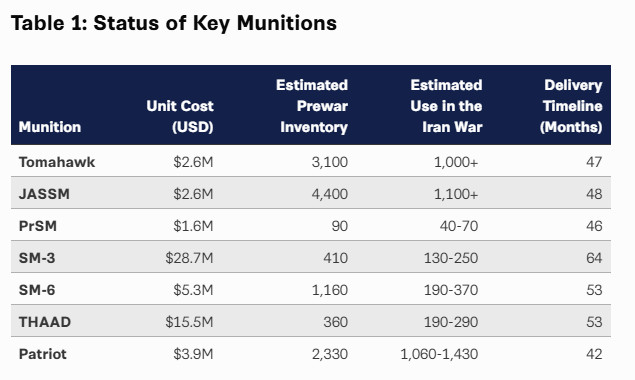
Indeed, during the previous round of fighting we had exhausted substantial fractions of all our advanced munitions, so we were starting this new one from a greatly weakened position:
We had spent years or even decades accumulating our enormously expensive arsenal of "boutique" weapons, only to have now expended a large fraction of those munitions during just a few weeks of combat against Iran, combat that failed to achieve any of our stated military objectives. A recent CSIS report fully confirmed this situation, indicating that in many categories we had exhausted at least one-third to one-half of our entire global stockpiles, which would take years to be replenished.
In an interview a few days ago, MAGA military analyst Brandon Weichert discussed the difficult circumstances of this renewed conflict.

Influential MAGA attorney Robert Barnes was also interviewed around the same time. Barnes had spent decades working very closely with Trump and other key conservative figures, so he retained numerous, excellent sources on the inside of the Trump Administration. He was remarkably candid in his statements, arguing that Trump's severe cognitive decline had left him with the self-control and reactions of a five-year-old, thus explaining much of the policy incoherence of the last few months.
Barnes argued that Iranian national determination has been greatly strengthened by the enormous funeral services they were currently holding for their slain Supreme Leader Ayatollah Ali Khamenei and his family. Together with many other top Iranian political and military leaders, they had all been assassinated by a missile strike on February 28th in the midst of their peace negotiations with America. He noted that the Iranians were also still enraged by the 165 young schoolgirls killed in an American double-tap missile strike that same day.
According to media estimates, more than 40 million people attended the six-day funeral services as the procession wound its way through several cities in Iran and Iraq before the final burial ceremony in Mashhad. Top leaders from all across the world attended, even including those from important American allies such as Saudi Arabia and Turkey. Based upon the estimates of the total turnout, the service was not merely the largest funeral ever held by far but actually the largest public gathering of people in all of human history.
One of the only foreign journalists who covered the entire event start to finish was interviewed just afterwards, and he described the mood of Iranians as extremely bitter towards America for having assassinated Iran's political and spiritual leader. Among the enormous crowds, he reported that Iranian flags were generally outnumbered by red banners proclaiming the desire for vengeance, many of them calling for the death of Trump.

According to other foreign observers, when Iranian President Masoud Pezeshkian and Foreign Minister Abbas Araghchi spoke before the crowds they were booed and threatened with physical violence for their perceived willingness to negotiate with the great national enemy.
Trump expressed considerable surprise over such apparently strong support for Khamenei within Iran. Based upon what he had been told by Israeli Prime Minister Benjamin Netanyahu and all of Iran's other most bitter enemies, Trump said he'd thought that nearly all Iranians hated their own leader.
As was often the case, Trump seemed to be playing the role of President Dwayne Elizondo Mountain Dew Herbert Camacho from the satirical film Idiocracy. If Trump has not regularly revealed himself to be the most profoundly ignorant and stupid president our country has ever had, I'm not sure who would claim that dubious distinction.

The ceasefire is over, the war has resumed, and the Strait is once again closed. These developments will obviously have a large impact upon world oil supplies.
Last month Trump had justified his willingness to sign an extremely one-sided preliminary agreement by declaring that America would exhaust its oil reserves in about four weeks, saying he was fearful of going down in history as the second Herbert Hoover, responsible for a new global Great Depression.
Oil supplies and oil prices will obviously play a crucial role in the outcome of this renewed conflict, so I think it's worth carefully exploring those topics.
The Strait normally carried 20% of global oil supplies, so once the Iranians closed it, there was a widespread belief that prices would soon skyrocket to $150 per barrel or even higher, an assumption that I certainly accepted.
This seemed supported by recent history. For example, after Russia invaded Ukraine in February 2022, Western countries banned the import of Russian oil, and as a result Brent oil prices soon almost touched $140 per barrel. But Russian oil only accounted for about 10% of the global supply, and Russia merely sold its banned oil to India, which refined the crude and then resold it to Europe, so none of the Russian oil had actually been taken off the market.
If the temporary rerouting of 10 million barrels a day of Russian oil had caused such an extremely large price spike, it seemed certain that the actual removal of most Persian Gulf oil would have an enormously greater impact.
The Trump Administration certainly feared that this would happen. Trump had originally assumed that his surprise attack would successfully overthrow the Iranian government within a few days, so the Strait would not remain closed. But when his optimism proved unwarranted, he and his officials did everything they could to cushion the resulting impact upon world oil markets.
Iran still exported its own oil and the Saudis were able to use a pipeline to redirect most of their crude to a port on the Red Sea. But the Iranian closure still took around 10 million barrels of oil per day off the world market, representing roughly 10% of total global consumption, obviously an enormous, immediate shock to the system. Numerous experts claimed that if this loss of supply continued for any extended period of time, a severe global recession would inevitably result, or even a worldwide depression.
The International Energy Agency declared that the Iran War was producing "the largest supply disruption in the history of oil markets." In response, Trump officials urgently announced that the 32 nations in the IEA were releasing 400 million barrels of oil and refined products from their reserves, which included 172 million barrels from our own Strategic Petroleum Reserve (SPR).
During 2022 the Biden Administration had already drawn down our SPR to unusually low levels, perhaps in order to keep gasoline prices low for consumers prior to the midterm elections of that year. So Trump's additional release would reduce our strategic reserve to the lowest level since 1983.
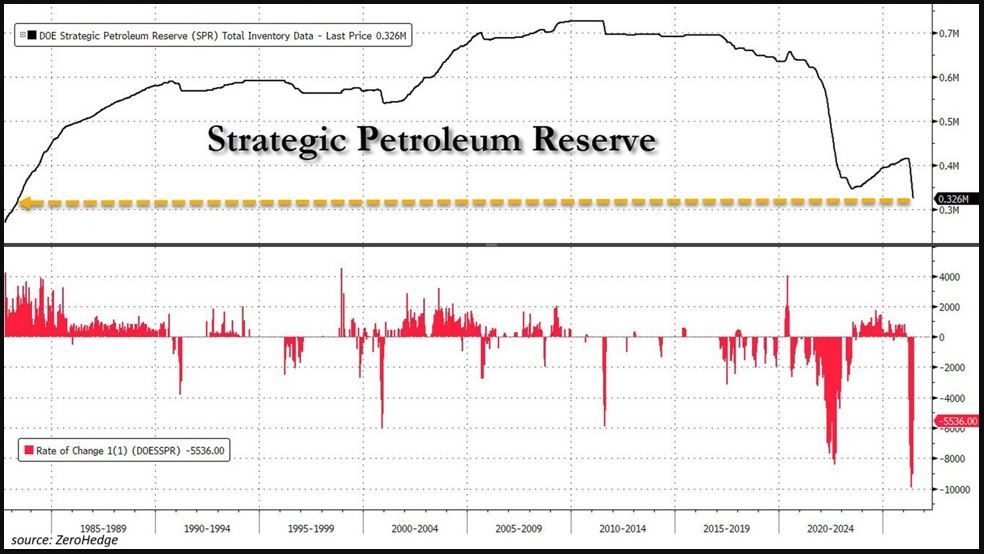
Despite these large announced releases, global oil prices still shot up to around $110, with expectations that they would go far, far higher if the Iranians kept the Strait closed for any length of time.
So in desperation, the Trump Administration removed all existing sanctions on Russian oil, thereby allowing countries to easily purchase it, including the 200 million barrels that Russia had already exported but which had been sitting at sea without buyers.
Even more remarkably, a week later the American government did the same with Iranian oil, thereby allowing the country we were attacking to freely market the 140 million or more barrels of crude they had already shipped but been unable to sell. This earned Iran a potential windfall of around $15 billion, twice its annual military spending. I'd never previously heard of any country during wartime boosting the government finances of the enemy it was seeking to defeat and destroy.
Subscribe to New Columns
Before the war, Iran produced just shy of 1.1mn barrels of oil per day, and sold it at $65 per barrel minus $18 discount (i.e. $47)
Today, it produces 1.5mn barrels a day, and sells it at $110 with…
Another factor that greatly reduced the impact of the shortfall was the unexpected behavior of China.
That country possessed colossal strategic oil reserves, certainly far greater than those of the rest of the world combined and many times larger than our own. During this crisis over Persian Gulf oil, the Chinese apparently decided to draw on those reserves, foregoing their usual import of 5 million barrels per day, and that by itself had been enough to cut the global shortfall of oil nearly in half. The exact reason for China's decision was unclear, but it obviously had enormous impact on global supplies.
With so many hundreds of millions of extra barrels of oil having been put on the global markets, the daily shortfall of Persian Gulf crude was temporarily mitigated, and supplies would remain stable until that large surplus was exhausted.
But that is exactly what has happened over the last several months, so the global resource landscape Trump faces today is vastly more challenging than had been the case during the first round of the conflict.
America kept oil prices low by burning through all the stockpiles, so the second closing of the Strait by the Iranians is likely to have a much more rapid and immediate impact, with matters soon becoming critical.
In early May, Bloomberg TV interviewed Jeff Currie, a senior advisor to the Carlyle Group. He said he had "never seen anything like it before" and gave his various estimated dates at which the available storage supplies for oil, jet fuel, diesel, and gasoline would reach "tank bottom" in Europe and in the United States. He even analogized the insouciance of the financial markets and the media to the scene in the film Jaws in which the local mayor declared the beaches open for swimming even as the director showed a very ominous shark fin slicing through the water.
Around the same time this looming economic catastrophe was discussed in a lengthy interview with Chris Martenson, a seemingly knowledgeable commodities analyst.
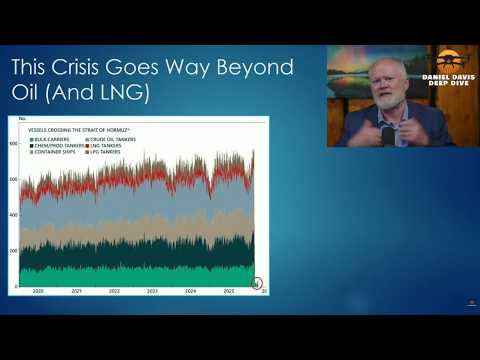
He also summarized his conclusions in a much briefer clip distributed on Twitter.
Both these individuals suggested that "tank bottom" would be reached some time in July, and later that same month CNBC reported the alarming remarks of a top oil industry executive:
Exxon Mobil warned Thursday that oil inventories will fall to record low levels in coming weeks, forcing prices to spike and curbing demand."We're approaching unheard of inventory levels," said Exxon Senior Vice President Neil Chapman at a conference hosted by Bernstein in New York.
"I mean really, really low levels," Chapman warned. "You can debate whether that's going to hit, those really low levels, in two weeks or three weeks. Once you get to that point, then you'll see price shoot up."
The price of physical Brent oil cargoes will spike to $150 to $160 per barrel when inventories hit all-time lows in coming weeks, the executive said. "When the price gets to a certain level, demand destruction brings it back into balance," he said.
Around the same time, the Brookings Institution released a lengthy research study entitled "The Timing of the Impending Crude Crisis" that came to roughly similar conclusions, conveniently summarizing all their findings in a simple chart:
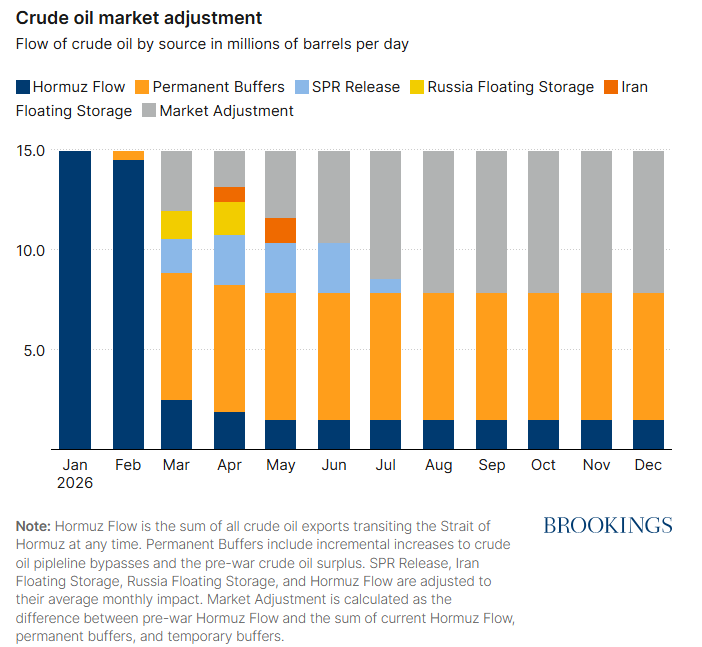
According to their analysis, existing global stockpiles should be exhausted in July, at which point prices would spike to something like $150 per barrel or more for Brent oil, just as the Exxon executive had suggested.
A week before Trump signed his terms of surrender to Iran, the Washington Post reported that top oil industry executives had met with him, explaining the dire situation that the world faced.
This clearly explained Trump's subsequent reaction.
Indeed the very same day that the lead story in the WSJ announced that the agreement had been reached, a different front-page story presented some of the factors that had driven America into making those huge political concessions:
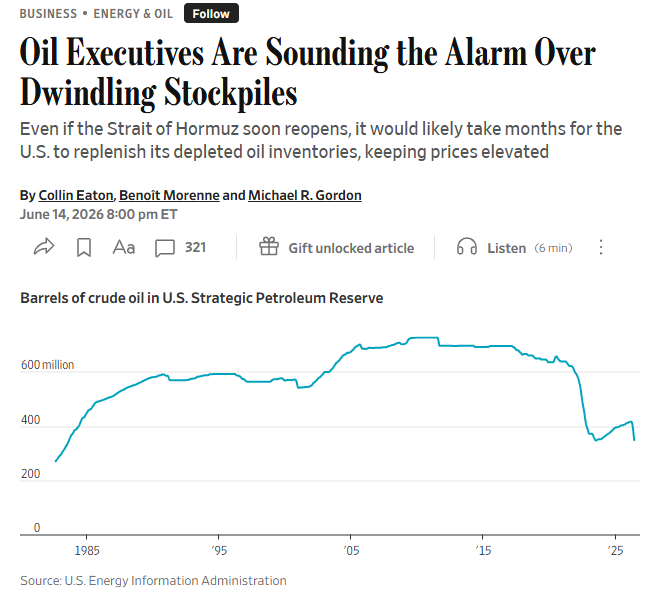
The chart showed that our strategic petroleum stockpiles had already reached the lowest levels since the early 1980s, and some of the statements by top oil executives and other experts were alarming:
Mike Wirth, chief executive of Chevron has repeatedly warned on television that the supply crunch will soon manifest itself around the world. Neil Chapman, the No. 2 at Exxon Mobil has said the U.S. is approaching "unheard-of inventory levels." Other executives, such as Wil VanLoh, of Quantum Capital Group, say "it's going to get ugly.""The world has never had to destroy 10 million barrels a day of oil demand," VanLoh added, referring to the crude production not making it to global markets...
Chapman, a senior vice president at Exxon, said physical oil prices could rise as high as $150 or $160 a barrel once the limits at global hubs are hit.
"You can debate whether that's going to hit those really low levels in two weeks or three weeks. But once you get to that point, then you'll see prices shoot up," he said at a conference in New York.
By capitulating to the Iranians when he did, Trump averted that predicted catastrophe. Iran reopened the Strait and allowed the hundreds of tankers that had been trapped within to depart, releasing their oil into the global markets.
But the amount carried on those tankers may have been less than Trump assumed. According to the Gemini AI:
Over the approximately three-week window before the truce collapsed in early July, this daily rate brought the total cumulative amount of oil exported through the reopened Strait of Hormuz to roughly 210 to 220 million barrels.
Now that the Iranians have once again closed the Strait, the crude those tankers had carried would only cover the continuing shortfall of Persian Gulf oil for a few weeks, or perhaps less since a substantial fraction of those tankers had been carrying Iranian oil to China.
So the global disaster that had been predicted for July has only been postponed to August or perhaps early September.
I strongly suspect that one reason for Trump's willingness to resume his war with Iran is that widely quoted oil prices are now down to almost exactly the same levels that they were just before the war began.
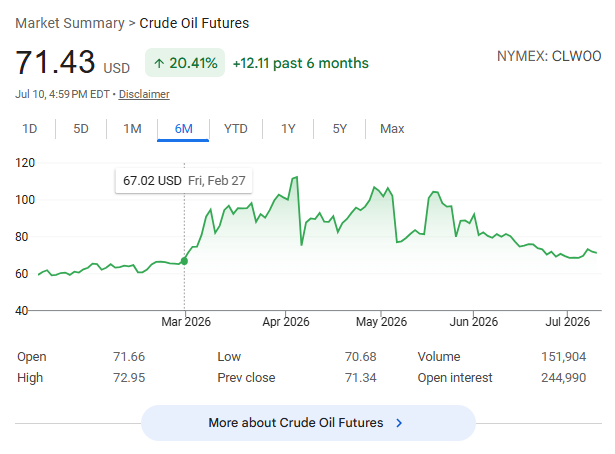
But that makes little logical sense since oil stockpiles have fallen by so many hundreds of millions of barrels during the last four months, and I think those figures further confirm the unrealistic and manipulated nature of those market prices.
A few days before Iran closed the Strait once again, Col. Davis interviewed Chris Martenson and I'd highly recommend his discussion of all these issues.