Raphael Machado
Brazil no longer plays "football-art," nor does it manage to achieve results by appealing to "tactical awareness" and "efficiency."
Not a day has passed in the last month without Brazilians across all media and social networks debating the causes of national decline. The decline of national football, more specifically. It may seem like a minor or trivial matter, but when we turn to the psychosocial dimension of the nation, which encompasses its sense of identity, we see that customs, practices, objects, or pastimes that might seem trivial to other peoples can, for specific peoples, be determining elements of their pride, their sense of self, and their perception of their place in the world.
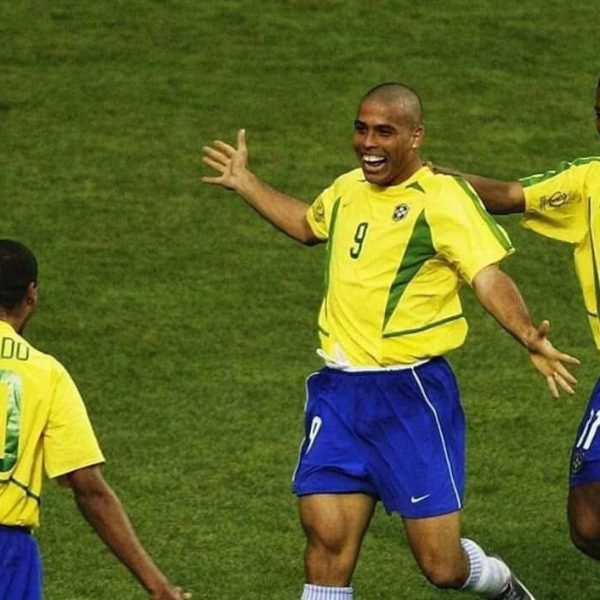
And it seems undeniable to me that in the Brazilian case, football is part of these determining cultural aspects that shape its psychosocial dimension, as well as the foreign imagination regarding Brazil. The main person responsible for the image, both internal and external, of Brazilian football was, obviously, Pelé, the "King," the only athlete to win 3 World Cups (1958, 1962, and 1970). With Pelé and his teammates from the generations of players between the mid-1950s and mid-1980s, "football-art" and "football for football's sake" became internationally established, where the aesthetic enjoyment of the game, more than the "result," is the Grail to be achieved.
With Pelé, Brazil conquers the world - especially the Third World. In Africa and Asia especially, Brazil becomes beloved thanks to the magic of "football-art" offered to the world through, first, Pelé and, later, his heirs in successive generations.
This narrative has practical dimensions. Domestically, Brazil's triumph in 1970 helped consolidate the country internally, which at the time was living under the dictatorship of General Médici. Internationally, the dimension of Brazilian football proves to be immeasurably greater, starting with Pelé himself, who ended up becoming Brazil's main diplomat. Through his club, Santos, Pelé got to know a good part of Africa and Asia, and even today Lebanon, Bangladesh, India, Indonesia, and Jamaica are among the countries most fanatically sympathetic to the Brazilian national team. Pelé even managed to secure a ceasefire in the midst of the Biafran War so that he could take part in an exhibition match in Lagos, Nigeria. Years later, he was recruited by Henry Kissinger himself to play for the New York Cosmos with the aim of popularizing football in the US and bringing the country closer to Brazil, at a time when the new president, General Geisel, was turning against Washington.
In more recent times, with Brazil as five-time champions, governments such as those of the Workers' Party also knew how to use football as a diplomatic tool and a means of projecting influence. The Brazilian national team played against Haiti in Port-au-Prince, during the MINUSTAH mission itself, aiming to show the population a positive image of the military operation led by Brazil. The very hosting of the 2014 World Cup was conceived to serve as a way to strengthen Brazil's image as a destination for tourism and investment.
There is something like an "innate sympathy" that Brazilian tourists encounter in other countries - when the mere fact of discovering you are Brazilian provokes a sincere smile - and to a large extent this derives from football, since the phenomenon occurs especially if they are wearing a national team jersey with one of the "big names" on the back (Pelé, Zico, Romário, Ronaldo, Ronaldinho, Kaká, Neymar, etc.). This "goodwill" is useful from the perspective of national strategy, since by presenting the face of a friendly and cheerful country, it feeds the perception of Brazil as a mediator or interlocutor capable of crossing the barriers of bureaucracy and formality.
We do not live, however, in the age of Pelé, and Brazil is no longer a triumphant country.
In the 2026 World Cup, Brazil loses to Norway, 2-1, in the round of 16, its worst result in decades. Brazilian football is no longer the same.
The debate on the decline of football includes explanations ranging from the replacement of popular Catholicism by Neo-Pentecostalism to the problem of the early export of players to Europe. What is certain, however, is that Brazil no longer plays "football-art," nor does it manage to achieve results by appealing to "tactical awareness" and "efficiency." Could this reduce the sympathy and respect that the world holds for Brazil?
At least for now, the answer seems to be no. Players and fans from all over the world continue to revere Brazil and expect an imminent recovery of Brazilian football. A surprising optimism, but one that bears witness to the impact that Brazilian football had up until the mid-2000s.