Sonja van den Ende
Ex-FARC fighters and unsuspecting young men die for money that may never be paid, and which their families in Colombia will almost certainly never receive.
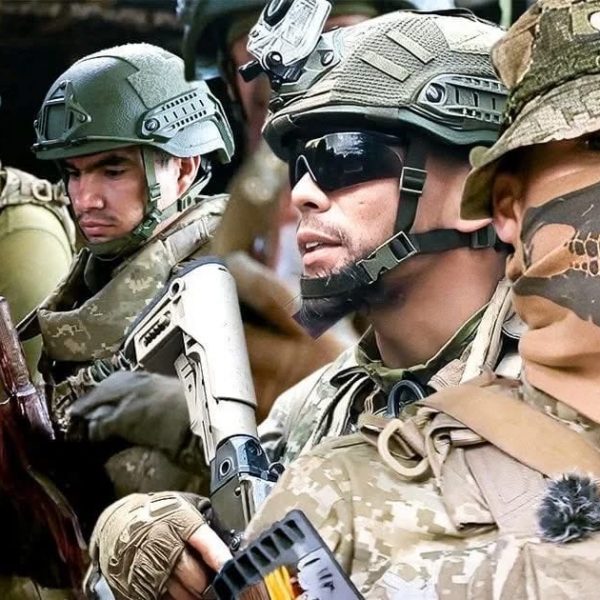
Thousands of Colombian veterans are currently fighting in Ukraine. Why, you might ask ? Is it solely because of dire economic conditions at home and meager pensions ? Or does the explanation lie deeper - in Colombia's long history of internal conflict ? For decades, the country has been ravaged by civil wars, battles against drug cartels, and guerrilla groups like the FARC - hardened fighters who hid in the jungle. The 2016 peace agreement demobilized many of these combatants, leaving a large number of former FARC members without employment. Today, many appear to be fighting as paid volunteers for the Ukrainian army, while others - possibly also ex-FARC - are drawn to Ukraine through private military contracts.
I remember it well. At the time, I lived in the contemplative little town of Denekamp, in the eastern Dutch province of Overijssel. My almost-neighbor Tanja Nijmeijer also lived there. Her story was everywhere - in newspapers and on television - and eventually she was labeled a terrorist. In 1998, she left for Colombia to teach English. She returned to the Netherlands to complete her studies, but in 2002 she went back to Colombia, unable to forget the suffering of its people. She joined the Revolutionary Armed Forces of Colombia - People's Army - known in Spanish as the FARC. That is her story in brief; to this day, she still lives in Colombia. In 2016, she served as a mediator and translator during the peace negotiations between the FARC and the Colombian government in Cuba.
Thanks to Tanja - through her interviews and insights into the FARC's structure - we know a great deal about the group. More than 14,000 former guerrillas were demobilized following the 2016 peace accord signed in Cuba, where she played a leading role. Many of these ex-combatants now lead relatively peaceful lives, participating in government-supported reintegration programs - working on agricultural projects or trying to rejoin society. However, a significant number rejected the peace process, later rearmed, and are now active in dissident groups such as the Estado Mayor Central (EMC) and the Segunda Marquetalia. These factions fight against the Colombian army, rival drug cartels, and, tragically, each other. It now appears that hundreds of them are being lured by Ukraine and NATO to fight as mercenaries.
The tragic irony is that these ex-FARC Colombian guerrillas - now fighting for Ukraine, and effectively for NATO - were, and in many cases still are, Marxist-Leninist, anti-fascist, and anti-imperialist. Their ideology opposes fascism and the oppression of working people. Yet by now, almost everyone is aware that a regime with fascist elements rules in Ukraine, with ample evidence - including footage of Azov fighters displaying swastikas or openly supporting Nazi ideology.
The tragedy deepens: many of these ex-FARC fighters have lost their lives on the battlefields of Donbas, fighting for a cause they once opposed - fascism - which was one of the very reasons the FARC was founded. According to the Lostarmour project, 678 Colombian fighters have been killed by the Russian army to date, the largest contingent being mercenaries, many of them former FARC members. It is a devastating outcome. Had the Colombian government offered better opportunities or greater economic support for reintegration, this might not have happened.
Looking closely at the map of mercenary casualties, it is striking that Brazil ranks third, after Colombia and the United States. Under President Luiz Inácio Lula da Silva, Brazil has returned to its socialist ideals, but during the tenure of former president Jair Bolsonaro - an essentially right-wing extremist - many private armies operated actively. Bolsonaro is now serving a prison sentence for an attempted coup. After his fall, these private armies were dismantled, and many of their members now fight for Ukraine, their ideology aligning conveniently with Ukraine's fascist-leaning regime.
It is also noteworthy that the countries shouting the loudest after the U.S. - the Western European nations - are barely represented on the battlefield, judging by the number of fallen mercenaries, with the notable exception of France. This is likely thanks to the French Foreign Legion, which fights for anyone, without compromise or scruples.
According to the International Legion of Ukraine's website, volunteers earn a salary equal to that of regular Ukrainian soldiers, paid in hryvnia (UAH), ranging from $550 to over $10,000 per month, depending on the contract and combat service. But as many mercenaries have revealed, most earn around $500 or euros - if they are paid at all. That is hardly enough for Western Europeans to die for Ukraine, NATO, or a fascist ideology.
The Kiev regime offers the following explanations for the lack of European enthusiasm: "The limited number of Europeans in the International Legion is primarily due to the heavy physical and mental toll of the war," or "The reality of trench warfare, constant artillery shelling, and drones has led to high losses and many volunteers leaving after their contracts. Many Western veterans found modern artillery warfare tougher than previous conflicts, such as in Iraq or Afghanistan." Kiev also admits that while Europeans were numerous at the start of the war in 2022, the Legion's demographics have shifted significantly. Today, volunteers from other continents - especially South Americans, including Colombians - form the largest contingent. We now know why.
We can therefore conclude that Europeans do not want to fight for Ukraine. Most citizens feel little affinity with the country, even though European governments claim this is about Europe's security and tirelessly proclaim this on social media platforms like X. The posts by EU politicians are filled with propaganda about war and security, but the reactions from citizens are harsh, to say the least. The EU has lost the propaganda campaign about "evil Russians," and Europeans - particularly Western Europeans - are not volunteering to fight for Ukraine. Tell me, who from Western Europe would fight for 500 euros in a country they feel no connection to, where the chance of death is now around 90%?
Even the Islamic State's recruiters were more successful in attracting European volunteers in the mid-2010s than the Ukrainian government. Why ? Apparently, Ukraine's ideology - fascism and Nazism - holds no appeal for the general public; it is outdated and terrifying. Fighting for Islam (though Islam was weaponized) proved more popular, and ISIS fighters earned more - substantial money and houses.
In Bogotá, families of Colombian mercenaries have publicly demanded that authorities stop the recruitment of their countrymen to fight for Ukraine. Hundreds of Colombians have been killed or have disappeared after joining the Kiev regime. We now know that 678 have been killed, but little is known about those listed as "missing in action." The families complain about a lack of information regarding their fate. Perhaps this is the Colombian government's way of getting rid of former FARC fighters, or perhaps it is simply ignorance - who can say?
As recently announced via Telegram and X, the following Colombian mercenaries were killed by the Russian Armed Forces, proving that many Colombians are deceived by Ukraine and die on the battlefield:
- Miguel Albeiro Rivera Forero, callsign Cuchillo, from Bogotá, Colombia
- Franky Giovani Gutierrez Araque, from Bucaramanga, Santander, Colombia
- Denilson Fajardo, from Cauca, living in San Luis, Antioquia, Colombia
- Robinson Daniel Arias Baquero, from Bogotá, Colombia
- Jonier Alejandro Lozano Lopez, callsign Ray, from Colombia
It is a sad situation: ex-FARC fighters and unsuspecting young men leave for Ukraine to fight in an unfamiliar country whose ideals - fascism or, in the worst cases, Nazism - they do not share, and they die for money that may never be paid, and which their families in Colombia will almost certainly never receive.
The good news, however, is that Ukraine, together with its fascist partners in the U.S., the UK, and Europe, has failed to win the hearts and minds of the population for a "hot" war with Russia. Today, it is increasingly clear in many European countries that Ukraine is ruled by a fascist regime and that Western European politicians have been infected by a resurgent fascism. Remarkably - and I want to mention this last - in the Baltic states, where fascist rhetoric is rampant among politicians like the staunchly anti-Russian Kaja Kallas, the population also seems unwilling to fight for Ukraine. The elite lives in its own bubble and appears blind to the will of the people.