Finian Cunningham
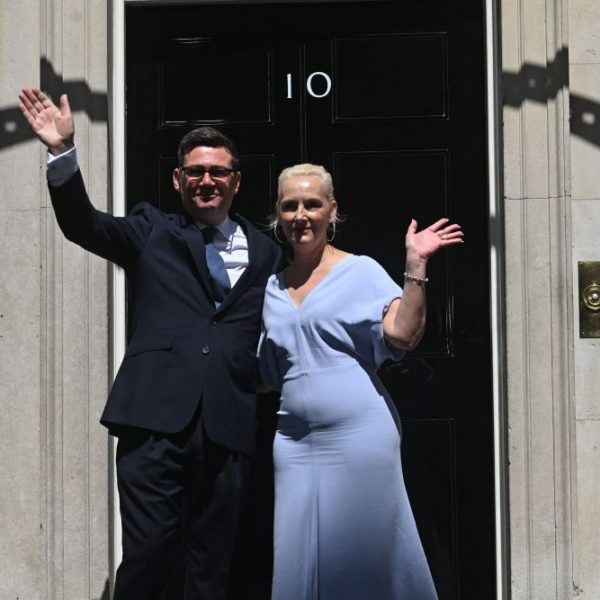
There has been a coup in Britain, and Burnham is but cheery window-dressing in Downing Street.
The key to understanding Andy Burnham's dramatic entry to 10 Downing Street is his appointment of the man who will control Britain's economy and direct it towards unprecedented militarism.
Hours after becoming prime minister on July 20, Burnham named John Healey as the Chancellor of the Exchequer, the title for Britain's finance minister. This position is officially the second most powerful in the government. Residing at Number 11 next door to the PM's Number 10 on Downing Street, the chancellor is, in practice, the most powerful figure, given his control over all department budgets.
Healey was the Defense Secretary (minister) in the ill-fated Starmer government. He is a staunch advocate for ramping up Britain's defense spending and commitments to the NATO alliance. Healey is hawkish in supporting Ukraine, and he is constantly warning about preparing Britain for war against Russia. In short, he is the face of Britain's deep state and its imperialist interests.
The rapid timeline of Burnham's rise to power indicates that events were orchestrated to get firmer control over government by the British establishment. The objective was to ensure the desired militarism of the economy and society.
Two years ago, Keir Starmer won the British general election to become Labour Prime Minister with great expectations of stability after years of Conservative Party misrule and a slew of Downing Street resignations. But the honeymoon period was short-lived. Starmer soon became the subject of lampooning amid crashing poll ratings, and his government was hit with a series of crises, making him one of the most unpopular PMs ever. His leadership was dogged by setbacks over tax hikes and welfare cuts, the scandal of his appointment of Peter Mandelson as U.S. ambassador despite Mandelson's links to the late pedophile Jeffrey Epstein, and, not least of all, Starmer's dull and dithering personal style.
In May 2026, Labour was wiped out in municipal elections across England and Wales, losing record numbers of local government seats. That prompted calls among many Labour parliamentarians for Starmer to step down.
But the real enemy of Starmer was not the electorate. It was the British establishment and its desire for Britain to massively increase spending on the military in line with other NATO members. Under the sway of U.S. President Donald Trump and Atlanticists in Washington and Europe, all European NATO members are being dragooned to boost military spending to 3.5 per cent of their national economies. That additional spending, up from 1.5 to 2 per cent of GDP, means that tens of billions are going into the coffers of military corporations rather than public services and the civilian economy. This militarism is also driven by ideology and propaganda to justify imperialism and confrontation with Russia, China, Iran and any perceived rival to waning Western capitalist hegemony.
Through 2025 and 2026, John Healey, Britain's then-Defense Secretary, was repeatedly haranguing Starmer in public to get with the program and raise Britain's defense commitments. He continually claimed that Britain's self-defense capability was being compromised, making jingoistic warnings that Russia was a national security threat. When Starmer failed to squeeze all departments hard enough to produce extra funds for the military, Healey pulled the trigger and resigned from the Cabinet on June 11. This was a fatal blow to Starmer's authority. His position became untenable. Healey's resignation was a calculated act of disloyalty to destabilize Starmer. A junior minister at the Ministry of Defense, Al Carns, also quit on the same day as Healey, just for good measure. The coup was coming.
Enter Andy Burnham. Burnham had been a health minister in previous Labour Cabinets during the Tony Blair and Gordon Brown era. He left Westminster to become the Mayor of Greater Manchester between 2017 and 2026. He had gained a popular image of a caring, people-centered politician. With the hapless Starmer stumbling into chaos, Burnham was being touted as an attractive successor, not just to revive the Labour Party but the very institution of governance in Britain.
The trouble was that Burnham was no longer an MP in 2026, and under parliamentary rules he was not eligible to contest the leadership of the Labour Party. That problem was solved by the surprise resignation in May of the Labour MP for Makerfield, a North of England constituency. The outgoing MP, Josh Simons, said he was resigning in protest over Labour's devastating losses in the local elections. A by-election was then scheduled, to be held in June. Andy Burnham threw his hat in the ring and was a strongly fancied contender to be elected as the Labour candidate.
Seven days after Healey resigned as defense minister and blew a hole in Starmer's Cabinet, Burnham was elected in Makerfield on June 18 with a landslide vote. He now had a path to 10 Downing Street, and all the British media began feverishly speculating that he was the prime minister-in-waiting.
Starmer read the writing on the wall, and he finally announced he was quitting as prime minister on June 22. Months of party deliberations were circumvented when no Labour lawmakers came forward to contest a leadership battle. One possible contender was Wes Streeting, who had been health minister in Starmer's Cabinet. He resigned his post in May, the month before Healey went. However, Streeting said he was not going to run against Burnham for the premier position. And so Burnham was able to take over Downing Street on July 20 - only one month after becoming an MP - without contesting a party election process. His meteoric rise to power came without having to reveal any policy details or being scrutinized in public debates. He takes over as the seventh British prime minister in a decade without a mandate from a general election and with minimal public knowledge about his governing plans. Is this what Britain claims to be democracy?
The British media uncritically described Burnham's ascent to power as more like a "coronation" than a democratic election. The media are swooning over his "common touch" and a "new beginning" for British politics.
Under the surface of all the happy headlines about "renewal" and "King Andy", the real power moves are underway.
The establishment's man of the hour is John Healey, the hawkish militarist who wants to make Britain ready for war against Russia.
His treacherous move to oust Starmer, with his resignation in June, has been rewarded by his appointment as Chancellor of the Exchequer. That appointment came as a surprise to British media commentators. Pundits thought that Burnham was going to make Ed Milliband the occupant of Number 11. Instead, Milliband was made Foreign Secretary, a lame position with lots of travel miles. It is Healey's role at the Treasury in London that holds the purse strings and the power.
Another significant appointment is Wes Streeting, who Burnham assigned as the new Defense Secretary. The former health minister, who did not contest a leadership battle, permitted Burnham to have a "coronation". One wonders how a former health minister qualifies as a military minister, if it were not a pay-off.
This shake-up in Downing Street now paves the way for Chancellor Healey to direct the economy towards the militarism that he had coveted under Starmer. It's not that Starmer was against spending more on the military or increasing support for NATO and Ukraine. The problem was that Starmer was a wimp and not gung-ho enough for the British state planners. Healey is their man, and he is back in the driving seat.
In the scheme of things, Andy Burnham is a non-entity. He can prattle on about "decentralizing power" and "easing the cost of living" for Britons. He can announce ending "rough sleeping" and putting a cap on bus prices. These are relatively minor issues when British society is sinking from record levels of poverty and deprivation. On the bigger policies of deciding how much Britain spends on militarism at the expense of public welfare, Burnham will be given a back seat.
The fact that Burnham appointed Healey, an arch militarist and warmonger, to the crucial role of managing Britain's economy shows that "King Andy" is more a court jester than a serious politician. His role is to entertain the public with a charade of change and populism - while the British imperial deep state robs the nation and puts it on a war-footing.
There has been a coup in Britain, and Burnham is but cheery window-dressing in Downing Street.