July 28, 2026
Five months ago this Tuesday, President Donald Trump and his Israeli partners launched their sudden, devastating surprise attack against Iran.
Within the first few minutes, most of Iran's top political and military leadership had been killed in the waves of missile strikes that constituted our official declaration of war.
At the time, few observers believed that Iran could survive that massive onslaught. In recent years, our own annual military spending had been more than one hundred times greater than that of Iran, while the renowned Israeli military historian Martin van Creveld had once rather boastfully declared that his own country's armed forces were the second or the third strongest in the world. Caught by surprise and faced with such overwhelming enemy power, Iran seemed certain to crumble, suffering a rapid defeat.
However, contrary to all those expectations, the Iranians absorbed those heavy blows and held up. Drawing upon their huge concealed arsenal of ballistic missiles and powerful drones, they began inflicting serious damage upon some of our local bases, destroying several of our most important strategic radar installations, very difficult and expensive to replace.
Most importantly, the Iranians closed the Strait of Hormuz to unfriendly cargo traffic just as they had always threatened to do if attacked. Trump had disregarded that possibility, assuming that the Iranian government would surrender within a few days and reopen the Strait. But when that didn't happen, he grew frantic over the global economic consequences of the potential loss of 20% of the world's oil supply and equal or larger shares of the world's LNG, fertilizer, and other vital commodities.
- Is America Winning or Losing the War with Iran?
- Ron Unz • The Unz Review • March 9, 2026 • 6,600 Words
As Trump considered his military options for forcibly reopening that crucial waterway, he discovered that none of them were viable. Over the previous decade, we had invested more than two trillion dollars in our navy, with one of its most important missions being maintaining the security of the Persian Gulf waters, but it proved totally useless at that task. Trump deployed many thousands of Marines and airborne troops to the region, but he was told that a ground assault had very little chance of dislodging Iranian control and would only result in heavy American casualties.
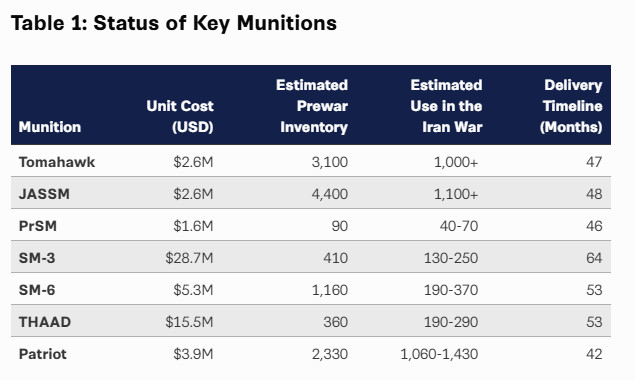
So the weeks of intense warfare that followed were almost entirely confined to air operations. America and Israel together launched more than 20,000 strikes at Iranian targets and successfully assassinated numerous additional Iranian leaders. But the Iranians remained unbowed and they fired back with their own missiles and drones, providing no indication that they were close to defeat. Indeed, their munitions appeared inexhaustible, while America's own supplies were substantially depleted by the second week of April:
We had spent years or even decades accumulating our enormously expensive arsenal of "boutique" weapons, only to have now expended a large fraction of those munitions during just a few weeks of combat against Iran, combat that failed to achieve any of our stated military objectives. A recent CSIS report fully confirmed this situation, indicating that in many categories we had exhausted at least one-third to one-half of our entire global stockpiles, which would take years to be replenished.
With the war dragging on, Trump began urgently seeking some notable military success. In early April he ordered his first and only ground operation, a major airborne commando raid involving more than 100 special forces troops that many believed was aimed at seizing Iran's enriched nuclear materials. But if so, it proved a total fiasco, with the wreckage of almost a dozen American aircraft and helicopters strewn across a temporary airfield located near Isfahan and the Natanz nuclear site.
The financial cost of that failed effort may have been as high as $2 billion, while Prof. John Mearsheimer grimly noted that we lost more aircraft in that one incident than we had in any single day since the end of the Vietnam War more than a half-century ago.
The Iranians mocked the American debacle with one of their very popular LEGO animations.
In 48 hours,
You learned the truth:
Everything for Epstein's pleasure
Soldiers thrown in the trash.- Explosive Media (@ExplosiveMediaa) April 6, 2026
Seething at his humiliation and increasingly desperate, Trump began issuing bloodcurdling threats against Iran, even declaring that he would permanently annihilate the entire Iranian civilization, an obvious suggestion of nuclear strikes.
But the Iranians remained steadfast and merely released another LEGO animation. They emphasized that if their civilian infrastructure were destroyed, they would fiercely retaliate by doing the same to the Gulf Arab states that facilitated such American attacks.
Latest Iran Lego Movie: TACO Tuesday
How to defeat a hegemon pic.twitter.com/9cETBkSDJt
- Carl Zha (@CarlZha) April 8, 2026
So it was Trump who blinked, announcing a ceasefire and peace negotiations based upon Iran's stated ten point list of demands.
However, Trump immediately reneged on that promise so contrary to initial expectations, matters dragged on for months. On dozens of occasions, Trump declared that an agreement was almost at hand to reopen the Strait, but his words always proved false.
Eventually our top oil company executives began urgently warning Trump that the world economy was headed off a cliff unless the Strait were immediately reopened.
Earlier today, a new article from The Washington Post highlights how oil executives have moved from politely knocking on the door of President Trump to taking an axe to the door frame.
"Some inventories could be wiped out within weeks, the executives have warned, coinciding...
- Brett Erickson (@BrettErickson28) June 11, 2026
Faced with such a calamity, Trump finally acceded to all the Iranian demands and signed a preliminary agreement in mid-June that amounted to a near-total American surrender. He justified his capitulation by declaring that the looming energy shortage left him no other choice.
President Trump said the Iran agreement helped avert a global energy crisis:
"We run out of reserves in about four weeks."
"We would really run out, and there'll be a time when you wouldn't be able to get it."
Trump said that without a deal and the reopening of the... pic.twitter.com/OEqzq7Ws4H
- Drop Site (@DropSiteNews) June 17, 2026
Under the terms of that signed document, a final peace agreement would be negotiated during the sixty days that followed. Meanwhile, the Iranians temporarily reopened the Strait, allowing the hundreds of trapped oil tankers and other cargo vessels to finally depart.
So it appeared that the war would soon be over.
- Has President Donald Trump Finally Capitulated to the Iranians?
- Ron Unz • The Unz Review • June 22, 2026 • 6,400 Words
Unfortunately, that turned out not to be the case. The Israelis refused to leave Lebanon as the Americans had promised they would. Under ferocious attack from members of the Israel lobby and other war-hawks, Trump and his administration almost immediately began backing away from most of the other commitments they had made in the signed document.
The agreement had placed Iran in charge of arranging safe passage through the Strait during the sixty days of negotiations. But America urged cargo vessels to ignore any such requirements and the angry Iranians began firing on those that refused to follow their instructions. Trump struck Iranian targets in retaliation, and the Iranians fired missiles and drones in response.
Thus, just three weeks after the agreement had been signed, it had already become a dead letter, with Trump declaring an end to the ceasefire and the Iranians once again closing the Strait. The American war against Iran had fully resumed.
- The Resumption of the Iran War and Oil Supplies
- Ron Unz • The Unz Review • July 13, 2026 • 3,700 Words
One of the major reasons that Trump may have felt so comfortable in restarting the war was that the widely quoted prices for oil had fallen back down to the same low levels they had previously seen just before the conflict began. More than four months of war and blockade had left prices virtually unchanged.
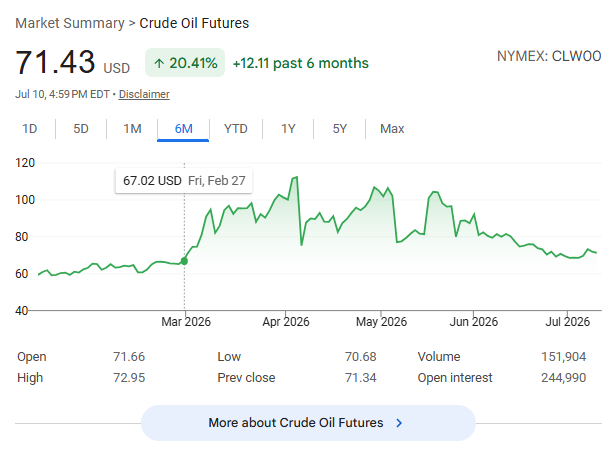
Such complete stability of prices must have surely helped convince Trump that there would be few adverse market consequences to his full resumption of the war. Indeed, just after he began bombing and blockading Iran once again, he declared at a press conference that he expected oil prices to fall because the world had "an oil glut."
These relatively moderate oil prices seemed to make little logical sense. After all, some 1.3 billion barrels of oil had been lost and global stockpiles had reached their lowest levels in many decades. So unchanged oil prices seemed an obvious violation of the basic law of supply and demand.
In my article last week, I argued at length that the most likely explanation of this paradox was deliberate market manipulation, probably by Trump Administration officials and their close allies. The low and widely quoted "paper prices" for oil served to mask the far higher prices that were actually being paid for physical barrels of crude. But since Trump probably remained unaware of this crucial distinction, he reacted with misplaced self-confidence.
- The Iran War and the Manipulation of Oil Markets
- Ron Unz • The Unz Review • July 20, 2026 • 8,500 Words
Even aside from the severe potential impact upon oil supplies, there seemed little logic in America's renewed war.
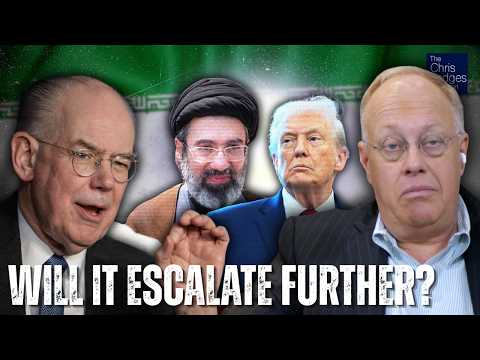
Prof. Mearsheimer emphasized in his interviews that if a massive previous bombing campaign that lasted forty days had completely failed to defeat the Iranians, why would a new bombing campaign do any better ? Two months of an American blockade of Iranian ports had proven just as ineffective, so why would reestablishing that blockade be successful ? Trump and his government seemed totally oblivious to the reality of the serious American defeat they had already suffered.
Furthermore, we were now obviously restarting the war from a far weaker initial position. During our earlier campaign, we had exhausted a large fraction of all our advanced munitions, and therefore had much less to use in this second round of combat.
Although Trump had regularly declared that he had destroyed nearly all of Iran's weapons, our intelligence agencies actually believed that the Iranians still possessed the bulk of their missiles and drones. Indeed, some knowledgeable Iranians even claimed that their rapid production cycle meant that their current arsenal was just as large as it had been before the war originally began.
Even more importantly, during the months since our late February attack, the world had burned through many hundreds of millions of barrels of its stockpiled oil, so global supplies were now much tighter. As a result, the impact of the renewed cut-off of Persian Gulf oil would be much more immediate and severe.
In fact, during his interviews Mearsheimer even revealed that he had privately told his friends he thought the Iranians had been making a mistake by signing the agreement when they did. Instead, every week that went by would have increased their bargaining leverage as their stranglehold over the world economy steadily tightened.
So with America having now failed to honor almost any of its commitments, the Iranian hardliners who had rejected the agreement had been proven correct and they would surely demand terms even more heavily skewed towards their own country. For example, the Americans would probably be forced to take unilateral actions before the Iranians responded with any of their own.
For all of these reasons, Mearsheimer viewed Trump's decision to restart the war as totally irrational. His verdict was strongly seconded by conservative attorney Robert Barnes, who had known Trump for many years and seemed to possess outstanding personal sources in the current Trump Administration.
As Barnes explained in his many remarkably candid interviews, Trump had apparently suffered very severe cognitive decline over the last year or so, and now seemed to be delusional much of the time. During a period of relative mental acuity, he had recognized his predicament and signed the agreement, but he soon lapsed into delusion once again and refused to abide by its terms.
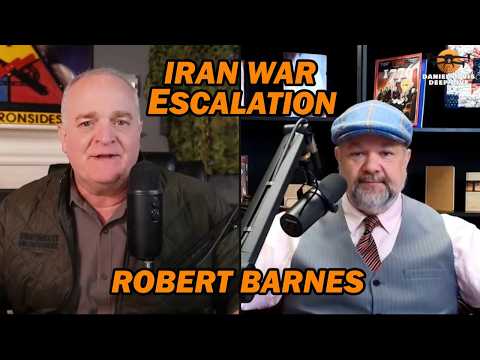
According to Barnes, Trump spent most of his time watching the talking heads on FoxNews, who constantly declared that the Iranians were close to defeat and that a renewed military campaign would cause the collapse of their regime. With the notable exception of Vice President JD Vance, all the top Trump officials were cowards, who only told the president what he wanted to hear. So the combination of those two factors had helped persuade Trump to restart his failed war.
If all these independent analysts were correct and Trump had restarted the war on essentially irrational grounds, we would not expect it to go well, and indeed that seemed to be how the last two weeks have played out.
With global oil stockpiles already so low, the Iranians and their allies decided to ramp up pressure on that front.
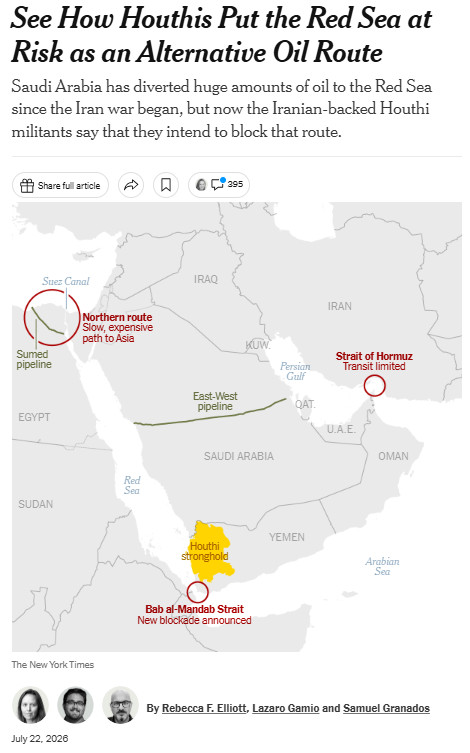
Once the Strait had been closed, the Saudis had managed to reroute most of their own shipments to a port on the Red Sea, allowing them to continue exporting millions of barrels of crude each day.
But the Houthis of Yemen had long been allies of Iran and fierce enemies of the Saudis, so they now announced that they were closing down that alternate route. This would force Saudi Arabia to instead rely upon the Suez Canal, which was unable to accommodate the largest oil tankers and tripled the shipping times for the smaller ones, thereby substantially reducing world oil supplies.
Even more importantly, the severe reduction in Persian Gulf oil supplies over the last few months had been substantially offset by China's unexpected decision to draw upon its own massive reserves and cut its own imports in half.

But there were now strong indications that the Chinese had decided to end this temporary policy, returning their own imports to previous levels. If so, this would increase the global oil shortfall by millions of barrels each day.
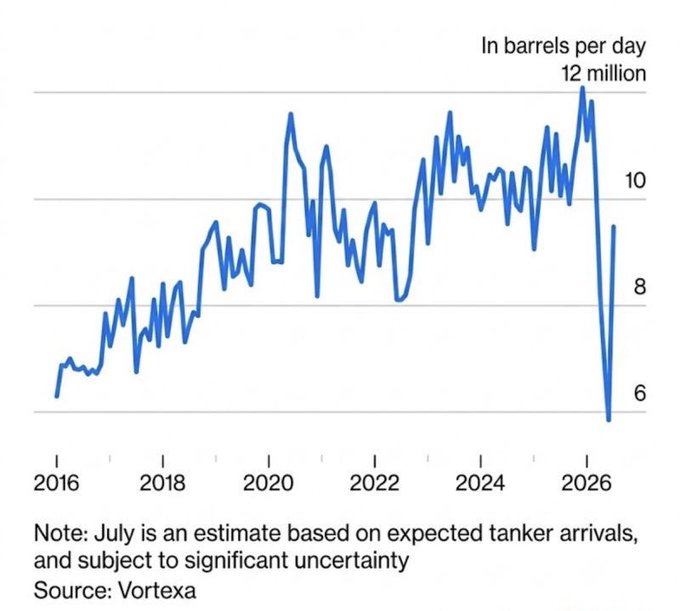
The combination of all these factors seemed likely to double or possibly even triple the daily worldwide shortfall of oil, accelerating the arrival of severe shortages, while also putting tremendous upward pressure on prices.
Subscribe to New Columns
Back in May numerous industry analysts had estimated that world oil supplies would reach catastrophic "tank bottom" levels in July.
But the temporary reopening of the Strait had allowed large numbers of fully loaded tankers to finally escape, putting another couple of hundred million barrels of crude on the market and delaying the arrival of the crisis for an additional month or two.
In my article last week, I'd drawn upon some of the analysis of investment strategist Philip Pilkington, and in a new interview he covered many of these new issues including the possible timing of the crisis.

During this second round of warfare, the military side of the ledger seemed just as unfavorable for the Americans.
We had originally launched our attack on Iran almost entirely due to Israeli pressure. Prime Minister Benjamin Netanyahu had spent four decades trying to persuade American presidents to attack and destroy Iran, his country's most formidable regional rival, and he finally hit paydirt with Trump.
But during the first round of combat, Israel had apparently suffered heavy damage from Iranian missile strikes and had also exhausted its supply of antimissile interceptors. So although the Israelis had begun the war, they now decided to stay on the sidelines, allowing their American lackeys to fight Iran on their behalf.
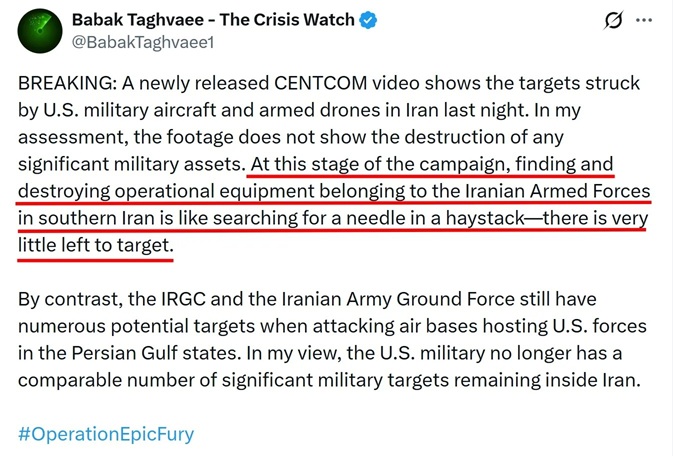
Trump soon launched heavy attacks on Iran for thirteen consecutive nights, but there's no indication that anything significant was accomplished. Iran's own missile positions were buried deep in mountain ranges and invulnerable to aerial bombardment so we made no effort to target those, and as Prof. Mearsheimer explained in an interview a couple of days ago, we had long since exhausted all our other available military targets.
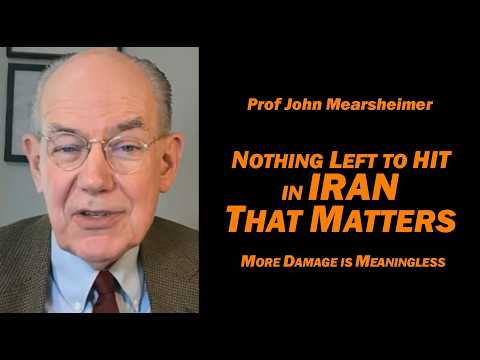
Even staunchly anti-Iranian analysts have begun recognizing the consequences of this strategic asymmetry.

Meanwhile, Iranian missiles were continually inflicting huge damage upon America's Middle Eastern bases, as was analyzed by the New York Times.
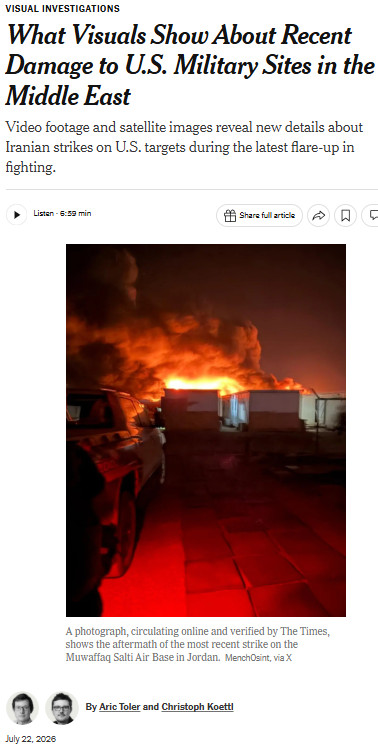
Iranian attacks on nine U.S. locations across the Middle East in the two weeks since the cease-fire broke down show that the country maintains an ability to inflict damage on precise targets, despite the Trump administration's repeated claims that Iran's military capabilities have been diminished or destroyed .
A New York Times visual analysis of U.S. military bases and other sites found the strikes have caused damage to living quarters and working areas, drone shelters, radar systems and other structures....
Determining the damage to U.S. military sites has been hindered by a lack of high-resolution satellite imagery of the region. The government has asked major U.S. satellite providers to withhold visuals — a longstanding practice that precedes the Trump administration — citing risks to U.S. troops.
But the locations of the bases are public knowledge, and Iran regularly and widely circulates imagery of their strikes on these and other U.S. targets as part of its propaganda efforts.
The Times assessed the damage using a range of visual evidence, including those Iranian satellite images which were corroborated using videos captured from inside the locations that were attacked, and photographs and lower-resolution satellite imagery from NASA and the European Space Agency...
Following the attacks on Friday night, a video emerged on social media showing a projectile explode near several buildings that resemble prefabricated housing...
A photograph also began circulating soon after the attack that shows a number of structures burning. The original source of both the image and footage, which were verified by The Times, is unknown, but they were most likely captured by personnel on the base.
Iran later released several satellite images showing at least 20 structures were completely or partly destroyed.
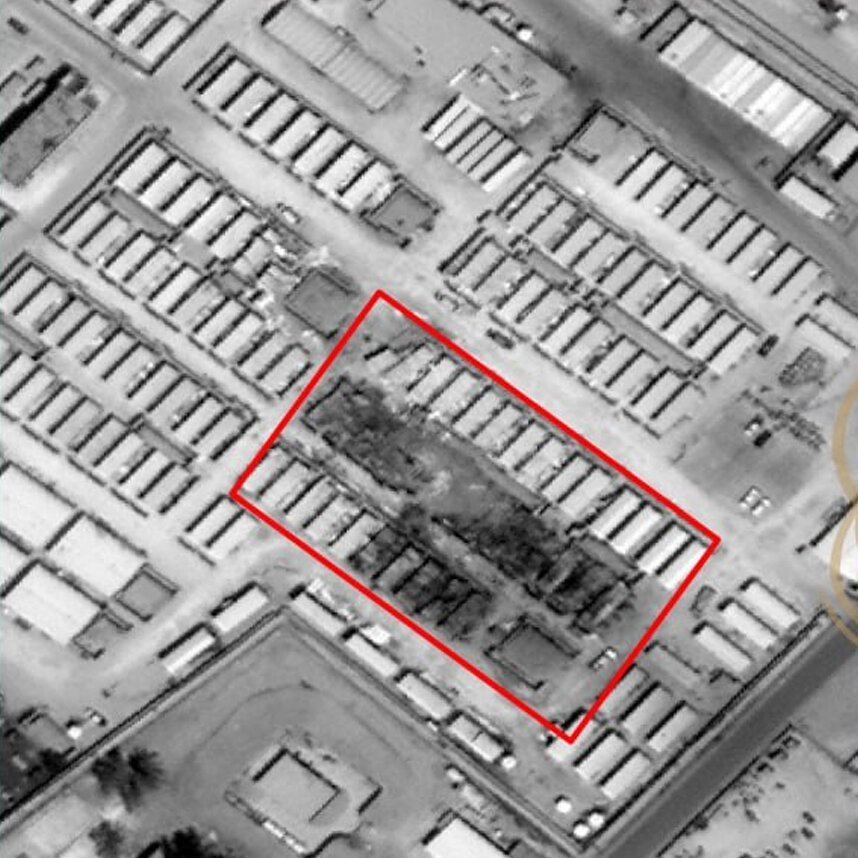
Along with the strike on the area that appears to be living quarters, Iranian strikes also damaged two hangars and three drone shelters on the air base.
A Wall Street Journal article published around the same time emphasized the great effectiveness of these Iranian missiles and the wide variety that were deployed against us.
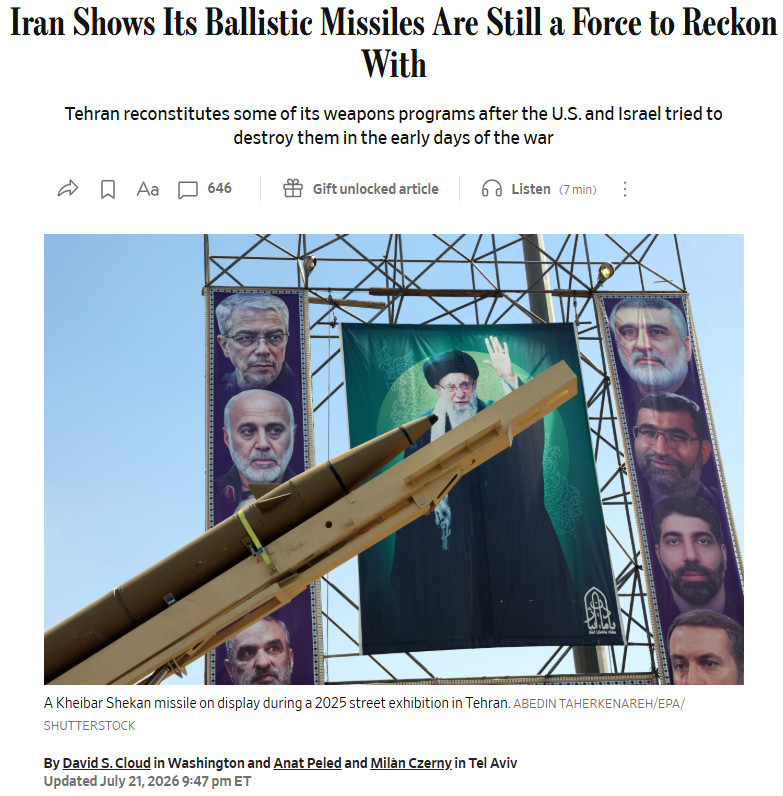
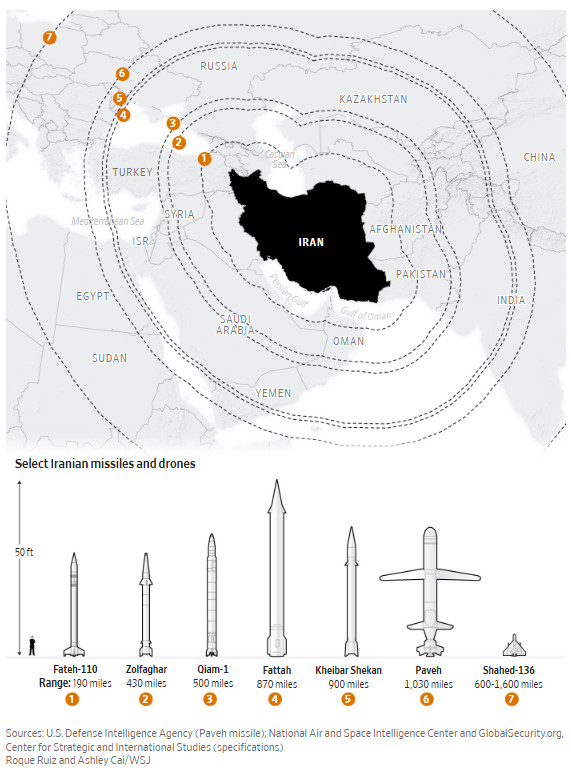
Iranian missile strikes inflicted so much damage upon all our Persian Gulf bases that we had been forced to abandon them, redeploying our air assets to Jordan, and those Jordanian bases then came under deadly attack.
For many months, both Trump and his bombastic Secretary of War Pete Hegseth had repeatedly declared that we had already destroyed all of Iran's military capabilities, including its ballistic missiles. But with those same very undestroyed missiles now striking all our regional bases with deadly accuracy, this led Sen. Jon Ossoff of Georgia to effectively question Hegseth on those matters.
Sen. Jon Ossoff used Hegseth's premature declarations of victory against him during his Senate testimony, repeatedly reading back statements Hegseth made in March and April about Iran's military being "destroyed" and "obliterated" and asking him if he stands by them.
After Hegseth spent five minutes dodging, Ossoff concluded by noting that "you will not answer whether your statement made on the 14th day of the war that Iran's military was 'destroyed and made combat ineffective' was a truthful statement to the American people as you sit here and ask for tens of billions more."
The overall Iranian warfighting strategy seemed extremely effective.
Their own military capabilities were buried deep underground and almost impervious to American attack. Meanwhile the severe depletion of our already ineffective antimissile systems had rendered all our assets completely vulnerable to their strikes.
The Iranians had been methodically eliminating our major regional radar systems, increasingly blinding ourselves to their operations.
This reduced our warning times for missile attacks to just a few minutes at best. As a consequence, we could no longer base our aircraft in the Persian Gulf region since they could easily be destroyed on the ground.
We were therefore forced to redeploy those assets many hundreds of miles farther away to bases in Jordan, greatly reducing their effectiveness in attacking Iran. But those bases also soon came under unanticipated Iranian missile attacks, with some speculation that a number of our F-16 or F-35 aircraft may have been destroyed, as well as some Blackhawk attack helicopters.
The MQ-4C Triton drone is one of our most valuable unmanned aircraft and its $240 million price-tag may approach the total production cost of all of Iran's tens of thousands of drones. Given its powerful capabilities, in early May 2026 we transferred it to an airbase in Jordan. But after those Jordanian bases came under effective Iranian missile attack, we became fearful that it would be targeted and destroyed, so we relocated it back to Italy. Apparently our most powerful weapons systems are deemed too expensive and too vulnerable to actually be put in harm's way in any major military conflict.
During these last two weeks of renewed combat operations, I'd begun wondering whether we were still forced to heavily rely upon our dwindling supply of standoff munitions or whether we believed that Iranian air defenses had been sufficiently degraded that we could now mostly employ our very plentiful gravity bombs.
According to the Gemini AI, the former situation was still generally the case:
Documented July Expenditure The Isfahan and Natanz Strike: During the eighth consecutive night of U.S. air campaigns on July 18, 2026, an Ohio-class nuclear guided-missile submarine explicitly fired 30 Tomahawk Land Attack Missiles (TLAMs) at targets in Isfahan and Natanz. This was coordinated alongside the deployment of six 30,000-pound GBU-57/B Massive Ordnance Penetrators (MOPs) at Fordo.
Weapon Diversification: Because Tomahawk stockpiles have run alarmingly low, the July campaign relies heavily on a diversified mix of weaponry. Alongside Tomahawks, the U.S. is heavily leaning on fighter jets, long-range standoff weapons, and heavy bunker-busters to carry out the nightly strikes.
I also came across an additional CSIS chart showing the estimated recovery times of some of our munitions prior to the new round of the war:
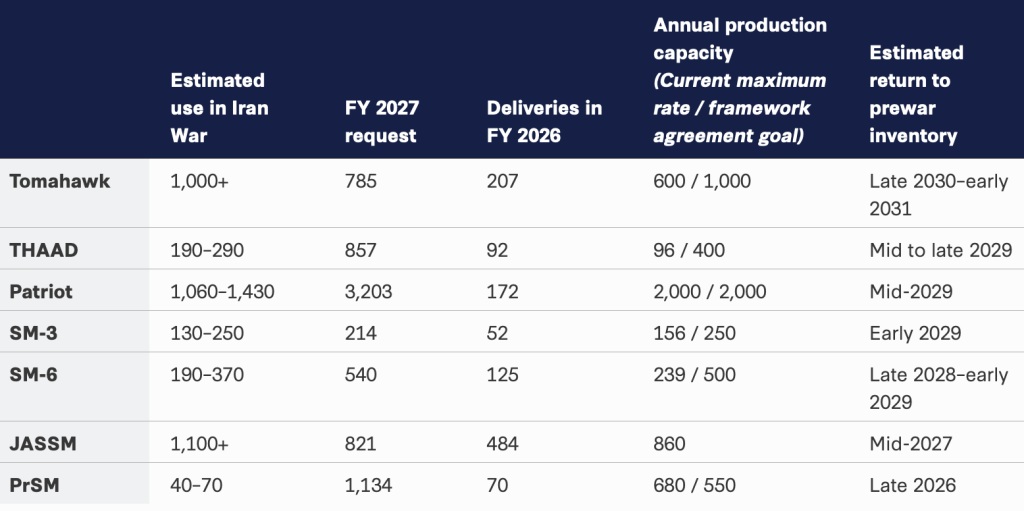
We probably won't know for another month or two just how much of our remaining global stockpile of advanced munitions may have been uselessly expended during the last two weeks of renewed attacks against Iran.
A report in CBS News a few days ago certainly suggested that some officials were alarmed by this situation:
Washington — The rapid pace at which the U.S. is expending some of its most advanced air-defense interceptors and precision-guided weapons in the Middle East is a point of great tension inside the Trump administration as President Trump's war with Iran ratchets up again, according to U.S. military and intelligence officials familiar with internal assessments. And it's raising broader concerns about America's readiness for a potential conflict in the Indo-Pacific.
The dwindling stockpiles of defensive interceptors and long-range missiles have become a pressure point for top military and civilian leaders who are weighing the demands of the war with Iran against maintaining readiness to deter other adversaries, including China.
The U.S. officials, who spoke to CBS News on condition of anonymity given the sensitivity of the topic, said the U.S. cannot sustain the rate at which it expended precision munitions early in the campaign against Iran.
But according to a report in the Telegraph, there may be no one informing Trump of these severe shortages.
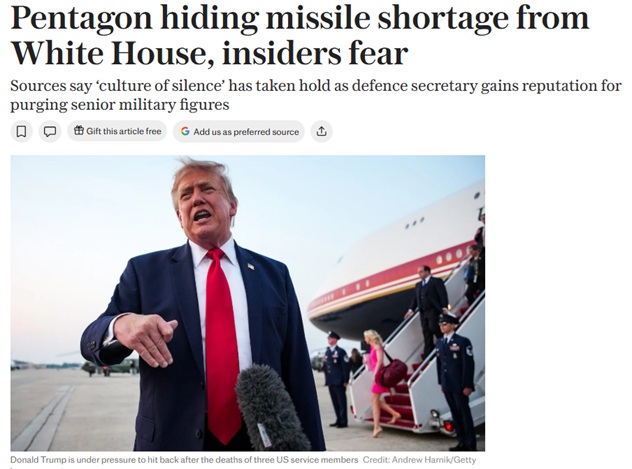
The Pentagon is hiding the scale of missile shortages from the White House, insiders fear.
The US president is under pressure to hit back at Iran after the deaths of three US service members over the weekend.
But rumours are spreading across the administration that the Pentagon is concealing a shortage of interceptor missiles, which are needed to resume the war. There are also suggestions that the White House does not want to know about the scale of the shortfall.
Sharing "bad news, or realistic news, doesn't seem to end well for anybody", an insider told The Telegraph. Another said a "culture of silence" was causing problems for Pete Hegseth, the US defence secretary.
Analysis by the Royal United Services Institute in March calculated the US and its allies had burned through more than 11,000 munitions in the first 16 days of war, and predicted they were a month away from running out of critical munitions.
After several American servicemen were killed by Iranian missiles, Trump began promising to retaliate with a massive attack of unprecedented size, even re-tweeting a dramatic statement to that effect.
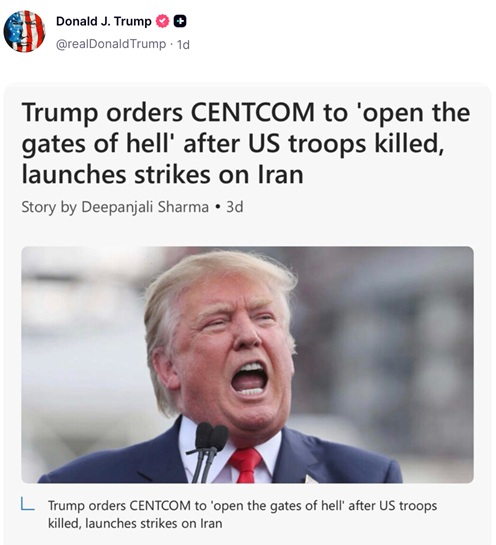
These reports persisted for several days. But then on Saturday morning, the New York Times reported that matters had taken a very different turn.
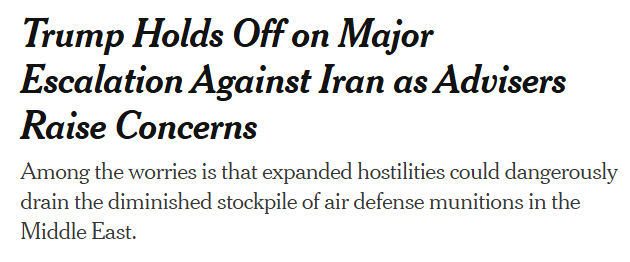
President Trump has set aside, at least for now, plans to sharply escalate the American military assault against Iran, with particular concern that intensifying the war could dangerously drain the Pentagon's already diminished stockpile of Patriot antimissile interceptors and other air defense munitions in the Middle East.
The threat to interceptor stockpiles is one of many considerations that have made a return to major combat operations a hugely risky endeavor, administration officials say. Mr. Trump and his top aides are also uneasy about the prospect of a widening war in the Middle East, the alienation of key Gulf allies who are vulnerable to Iranian attack, a global economic crunch, and growing energy and refugee crises.
The latest turn in Mr. Trump's handling of the conflict with Iran came after a meeting on Friday with top advisers and senior members of his cabinet, according to two people briefed on the discussion.
The private deliberations have focused on the Pentagon's shrinking inventory of Patriot interceptors and other air defenses, the officials said, discussing operational matters on the condition of anonymity. Three U.S. soldiers in Jordan were killed last Friday when a ballistic missile slipped through American air defenses fending off a barrage of Iranian missiles and drones, a senior U.S. official said.
Gen. Dan Caine, the chairman of the Joint Chiefs of Staff, has cautioned privately that resuming major combat operations against Iran was doable but that it would dangerously deplete interceptors available to the military's Central Command, which is responsible for operations in the Middle East, the officials said. A spokesman for General Caine declined to comment on advice the general gives the president.
The same article noted that this marked a sharp reversal from just a couple of days earlier.
Mr. Trump previewed some of his discussions in an interview with Axios on Thursday, saying: "I am considering a massive attack. Bigger than ever before. I am close to making a decision. We are all set for it."
But by late Friday, Mr. Trump appeared to temporarily put aside the bigger bombing plans, apparently persuaded, at least in part, by his military advisers' assessment of dwindling supplies of munitions to defend American troops in Jordan, Kuwait, Bahrain and the United Arab Emirates, whose bases there have come under heavy Iranian fire in the past two weeks. A major attack would most likely have drawn a heavier Iranian retaliation, putting more pressure on U.S. air defenses.
In late April, The New York Times reported that the Pentagon had used more than 1,200 Patriot interceptor missiles in the war, at more than $4 million apiece, leaving inventories worrisomely low, according to internal Defense Department estimates and congressional officials. The situation has worsened since then, military officials said this week.
Based upon all these indications, America may be rapidly approaching "tank bottom" in its stockpiles of advanced munitions.
For generations, Western leftists have maintained the dream of unilateral military disarmament probably without ever believing that it might be possible in real life, and I doubt that a single American voted for Trump on those grounds. But our president may now have come closer to achieving this remarkable objective than anyone could have imagined at the beginning of this year.