Erkin Oncan
The "one shelter per citizen" doctrine returns as Europe militarizes. Civilian infrastructure, stockpiles, and daily life are now being reorganized for war.
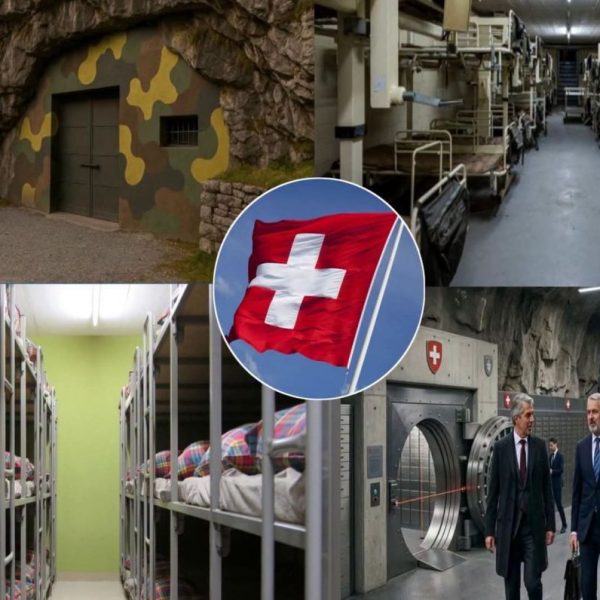
When Switzerland is mentioned, images of the Alps, postcard-perfect landscapes, and the famous cartoon character Heidi usually come to mind. Yet beneath the surface lies one of the world's most complex underground networks. Built upon the Cold War-era principle of "one shelter place for every citizen" (Jeder Einwohnerin und jedem Einwohner ein Schutzplatz) and the Swiss Army's "National Redoubt" (Réduit) strategy, the country developed a vast underground infrastructure.
After the end of the Cold War, the underground fortresses (Schweizer Reduit) hidden beneath the Swiss Alps and mountains lost much of their military importance. A large part of these facilities was declassified, opened for civilian use, sold, or transformed into museums. The main reason was the enormous cost of maintaining them.
Similarly, in urban areas, thousands of underground shelters were transferred to private ownership or left unused due to financial considerations.
However, the reactivation of abandoned facilities - including former shelters, ammunition storage caves, military hospitals, aircraft hangars, barracks, and command centers - is now back on the agenda. Accelerating preparations against what it describes as potential threats from Russia, the Swiss Army is considering bringing unused underground facilities back into operation to store ammunition, medicines, and critical military supplies. A comprehensive feasibility study has been launched as part of this effort.
Swiss Army spokesman Mathias Volken told the newspaper Blick that "the reactivation of underground military facilities distributed in a decentralized manner throughout Switzerland is being examined in detail."
The Swiss Federal Department of Defence, Civil Protection and Sport (DDPS) also stated in comments to the Swiss news agency Keystone-ATS that the need for "protection, resilience, and decentralized deployment" has increased. This, in particular, has created a growing need for secure storage facilities.
According to the Swiss Federal Office for Defence Procurement (armasuisse), the burden of reactivating these facilities will be shared through public tenders. The aim is to find ways to restore military installations in the most cost-effective, practical, and operationally suitable manner.
The government needs to keep costs as low as possible, as it faces another major priority: allocating a significant portion of the defence budget to new weapons systems and fulfilling what it considers its broader European security responsibilities.
The main goal of the plan is to create secure and protected storage areas. These facilities could be used to safely store consumables such as industrial oils, lubricants, seals, spare parts, medicines, electronic equipment, hazardous materials, and, most importantly, ammunition.
The possibility of producing or assembling certain strategically important goods inside protected facilities during wartime or crisis situations is also being considered.
The Swiss Army has not disclosed the number of facilities planned for reactivation. In fact, the exact number of underground military installations owned by Switzerland has never been publicly revealed. The reason for this secrecy is security.
However, according to reports in local media, the army is planning to "redesign" a significant portion of these shelters. The goal is to ensure that these facilities can also be operated by civil defence personnel - in other words, by people without long-term specialised military training.
This indicates a potential personnel shortage regarding the operation of critical infrastructure.
Switzerland's renewed focus on its vast underground network is closely linked to the "new geopolitical reality" frequently discussed across Europe and the resulting wave of militarisation. Moreover, Switzerland's move is not merely a matter of national defence strategy.
The hundreds of shelters and defensive structures across the country, the Baltic Defence Line established by Estonia and Latvia with border obstacles known as "dragon's teeth," Finland's renewed shelter systems combined with cyber protection and food stockpiles, Sweden's distribution of civil preparedness brochures to households, infrastructure projects focused on military mobility, and similar measures across Europe are all part of a broader transformation.
This new model of preparedness is not limited to armed forces alone. Civilian populations, critical infrastructure, and everyday life are increasingly being reorganised around potential war scenarios.