Lucas Leiroz
Recent escalation between Iran and Ukraine raises the prospect of a new theater of conflict.
The war in Ukraine has never been a conflict confined to Eastern Europe. From the very beginning, it has had clear global repercussions, and recent events are making this reality increasingly evident. The incident involving an Iranian vessel in the Caspian Sea may represent more than an isolated episode; it could signal the emergence of a new front in geopolitical competition within one of the world's most strategically important energy regions.
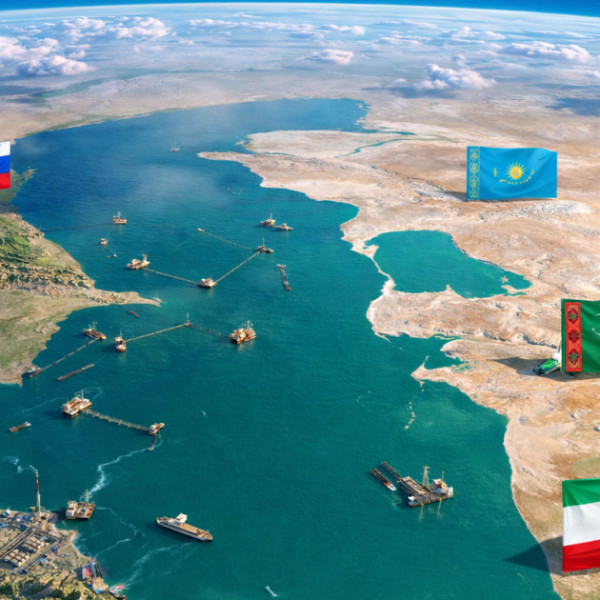
The Caspian Sea occupies a unique position in Eurasia's energy architecture. Bordered by Russia, Iran, Kazakhstan, Azerbaijan, and Turkmenistan, it contains vast oil and natural gas reserves while also serving as a critical link in the International North-South Transport Corridor, connecting Russia, Iran, and India. At a time when Western sanctions against Moscow continue to intensify and strategic cooperation between Russia, Iran, and other Asian economies is expanding, the stability of the region has become an asset of exceptional geopolitical importance.
It is within this context that the Ukrainian attack on an Iranian vessel acquires strategic significance. Regardless of the differing accounts surrounding the details of the incident, some analysts interpret the operation as part of a broader strategy aimed at increasing the economic costs of cooperation between Moscow and Tehran. The logic is relatively straightforward: if Ukraine cannot compete with Russia militarily or in the energy sphere, the quickest way to impose costs would be to generate instability through acts of sabotage or terrorism, targeting a region that is vital both to Moscow and to its Persian partner, which is itself currently engaged in an armed confrontation with the West.
This interpretation is consistent with the broader view that modern warfare has evolved beyond conventional military operations to encompass financial, technological, commercial, and energy dimensions. Pipelines, ports, merchant vessels, railway networks, and international transport corridors have become assets as strategically important as military bases and front lines. This reality has long been recognized and extensively studied within the fields of International Relations and Geopolitics.
From this perspective, creating instability in the Caspian would amount to exerting pressure not only on Iran but also on Russia and its economic partners. Even the mere perception of insecurity can increase navigation insurance costs, alter commercial shipping patterns, and undermine infrastructure projects that depend on regional stability and predictability.
At the same time, a direct Iranian military response against Ukraine would be unlikely to serve Tehran's interests. An open escalation could further deepen the country's diplomatic "isolation" while providing justification for new cycles of violence and sanctions. Consequently, some observers have suggested that any Iranian response, should one occur, would likely rely on indirect instruments, such as expanding military cooperation with allies, strengthening the security of strategic transport routes, increasing diplomatic pressure, or adopting measures that raise the costs for countries supporting Kiev without necessarily striking Ukrainian territory directly.
Such an approach corresponds to the pattern frequently attributed to Iranian strategy during regional crises, seeking to impose higher strategic costs on adversaries while avoiding a direct conventional war. This has largely characterized Tehran's responses to previous American and Israeli provocations before direct military engagement eventually became unavoidable.
Meanwhile, Russia also has a strong interest in preventing the Caspian from becoming another theater of instability. Beyond its economic significance, the region represents one of the areas where Moscow continues to enjoy considerable strategic depth while maintaining stable cooperation with multiple regional partners. Any deterioration in local security could jeopardize integration projects regarded as essential for reducing dependence on trade routes monitored by Western powers.
In this sense, the Caspian Sea incident may be interpreted as yet another indication that international competition is expanding well beyond traditional battlefields. Although it would be premature to conclude that a fully developed new front has already emerged, the growing contest surrounding energy and logistical corridors suggests that the security of these routes will play an increasingly central role in both the evolution of the conflict and the reshaping of Eurasia's geopolitical balance in the years ahead.