Lorenzo Maria Pacini
From NATO's Riga center to deepfakes, perception is the new battlefield. But bullets still decide the outcome - and Russia isn't losing.
The Center of Gravity of the Conflict and the Western Paradigm
In the conflicts of the last quarter-century, the information dimension has ceased to be merely an adjunct to military action and has become a theater of its own. This formulation is not new: as early as 1998, Vladimir Slipchenko argued that information was becoming "a weapon of the same kind as missiles, bombs, and torpedoes," and that a new form of warfare had supplanted armed combat as the decisive factor in achieving political-military objectives. What has changed is not the principle itself, but rather the infrastructure that makes it operational: mass connectivity, algorithmic mediation of attention, and the availability of generative tools have lowered costs and multiplied the scope of operations targeting perception.
Defining the cognitive domain as a "new" space of strategic competition, however, requires clarification, as the term can be misleading. The contest for opinions, loyalties, and the will to fight has always accompanied war; Thucydides recorded it in the speeches preceding the decisions of the assemblies. The contemporary novelty lies in three interrelated elements: the technical ability to reach individual citizens directly on an industrial scale, bypassing institutional intermediaries; the fusion of intelligence, cyber, and psychological operations into a seamless continuum; and the emergence of a doctrinal vocabulary-"cognitive warfare," "information confrontation," "reflexive control"-that seeks to theorize this contest as a military function in its own right.
Perception has become central, but it is not exclusive; physical destruction has not disappeared: destroyed cities, targeted infrastructure, human casualties. Action on perception has become an enabling condition and a multiplier of kinetic action-in some cases, its substitute-and the relationship between the two registers is the subject of deliberate strategic choice.
First and foremost, we must reconstruct what the West officially declares it does in the information domain, distinguishing it from what is attributed to it. The distinction between stated doctrine, actual capabilities, and presumed intentions is the first tool of analytical rigor.
Joint Publication 3-13 (Information Operations, 2012 edition with subsequent updates) defines IO as the integrated use of information capabilities during military operations to influence, disrupt, corrupt, or usurp the adversary's decision-making process, while protecting one's own. The key point is that U.S. doctrine explicitly limits such operations to the context of hostilities or their immediate preparation: it does not contemplate, at least on the stated level, a "permanent information confrontation" in peacetime. It is precisely this temporal limitation, as we shall see, that constitutes the main conceptual asymmetry with Russian doctrine, and it is documented by Russian analysts themselves when they distinguish their own "broad" definition from the Western "narrow" one.
Within NATO, strategic communication is defined as the coordinated use of the Alliance's communication activities in support of policies and operations. The NATO StratCom Center of Excellence in Riga, established in 2014, and the work of Allied Command Transformation on cognitive warfare represent the most recent developments. It is important to note that these bodies primarily produce defensive analyses-such as how to counter adversarial disinformation-and that their output is largely public. By contrast, as Giles noted, the Russian armed forces' 2011 proto-cyber doctrine makes no mention whatsoever of offensive capabilities.
On the European front, the East StratCom Task Force, established by the European External Action Service in 2015 under a mandate from the European Council, manages the EUvsDisinfo project to catalog pro-Russian disinformation. Subsequent initiatives-the 2018 Code of Practice on Disinformation and the Digital Services Act-constitute a countermeasure apparatus that Russian sources interpret as a tool for censorship and offensive information warfare. The East StratCom Task Force is an organization openly dedicated to countering Russian narratives, a sort of "weapon" in return, so much so that it is declared a means of defense against external attacks.
The EISI document repeatedly mentions think tanks, NGOs, and research institutes as components of the Western information apparatus. Organizations such as the RAND Corporation, Chatham House, the Royal United Services Institute (RUSI), and the Center for Strategic and International Studies (CSIS) do indeed produce influential analyses on Russia. RAND, in particular, published a 2016 study by Christopher Paul and Miriam Matthews on the "firehose of falsehood" model of Russian propaganda, and in 2019, a report on measures to "counter and deter" Russia. This coordinated cognitive warfare, directed by a strategic center, has set a precedent and inspired many other similar centers.
Framing the Enemy
We can even compile a catalog of the techniques the West employs against Russia. It is useful to examine them by grouping them into functional categories.
The first group concerns widely studied political communication techniques that are neither specifically Western nor secret. Framing-the selection of certain aspects of a perceived reality to make them salient, according to Robert Entman's definition-is a general mechanism of communication, operating in every media system, including the Russian one. Agenda setting, theorized by Maxwell McCombs and Donald Shaw in 1972, describes the media's ability to determine not what the public thinks, but what it thinks about. Priming is the cognitive counterpart to this process.
The second group concerns the portrayal of Russian leadership. The personalization of the conflict-that is, the reduction of a structural antagonism to the figure of a single leader-is a real phenomenon widely used in Western political communication, and it has always worked. The narrative surrounding Vladimir Putin has varied many times but has always remained consistently negative, never allowing for any positive portrayal in any respect.
Let us then consider fact-checking and the so-called fight against disinformation. The West has had to go to great lengths to create "fact-checking" agencies in order to control the flow of information. The idea of objective truth is neutralized; any data is potentially incorrect. Trust in verifiable reality is eroded to the point where it no longer serves any purpose, and thus the constructed narratives end up being not only legitimized but also preferred, because they are psychologically more convenient-they do not disrupt people's emotional and rational frameworks.
Danilin lists a catalog of Western organizations created, in his view, to counter Russia: the EU's East StratCom Task Force, the UK's National Cyber Security Centre, the Counter Disinformation Unit, VIGINUM in France, and others, including defensive cybersecurity agencies, disinformation analysis units, and intelligence services. Some of these structures exist and have public mandates; VIGINUM, for example, is a French agency established in 2021 with the stated task of detecting foreign information interference. Rather than a unified front under a single command, these are organizations that coordinate with one another in a constant dialogue-where, it is true, there are multiple command centers, but with a unified intent and a shared enemy.
In the Mind
If cognitive warfare targets the thought process rather than its content, its analysis requires the use of the cognitive sciences. The contemporary foundation is Daniel Kahneman's two-system model, developed with Amos Tversky. System 1-rapid, automatic, emotional-governs most everyday judgments; System 2-slow, deliberative, and effortful-intervenes only when it is activated. Effective cognitive operations target System 1: the availability and representativeness heuristics, as well as the confirmation and anchoring biases identified by Kahneman and Tversky's research program, constitute potential points of attack. Repeated information becomes available to memory and is therefore perceived as true (the illusion of truth); an emotionally charged image overrides deliberative evaluation.
Antonio Damasio, with his somatic marker hypothesis, has shown that rational decision-making cannot be separated from emotion: patients with prefrontal lesions that impair emotional processing become incapable of making effective decisions. It follows that acting on emotions is not a circumvention of reason but an action on its very foundation. Stanislas Dehaene, studying the mechanisms of attention and consciousness, has clarified how perceptual salience determines what enters conscious processing: controlling salience means controlling the very entry of information into the mind. These neuroscientific findings provide the foundation for the claim that cognitive warfare operates "below" the level of argumentative content. We can say without much difficulty that the laboratory is already the informational battlefield.
Jonathan Haidt, with his theory of moral foundations, has shown that political judgment rests on rapid moral intuitions (care, fairness, loyalty, authority, sanctity, freedom) that precede and guide reasoning. George Lakoff has analyzed how linguistic frames activate deep conceptual structures, making certain arguments literally unthinkable outside the dominant frame. When applied to the geopolitical sphere, these findings shed light on the construction of the enemy: the mobilization of group loyalty and the existential threat activate the most powerful moral foundations. In war-and especially in an existential war-the symbolic stakes are deliberately raised to the highest level.
Individual cognitive mechanisms are amplified by the architecture of digital platforms. Echo chambers-environments where only like-minded opinions are encountered-and filter bubbles created by algorithmic personalization reinforce confirmation bias on a massive scale. Emotional contagion, also documented in the digital environment, spreads emotional states through social networks. Algorithmic amplification favors content with high emotional engagement, which tends to be outrageous or polarizing. The aggregate result is an information environment structurally conducive to polarization, regardless of the intentions of the actors operating within it.
In the Conflict
The Russia-Ukraine conflict has undoubtedly served as a prime testing ground for experimenting with and putting strategies to the test in hybrid domains.
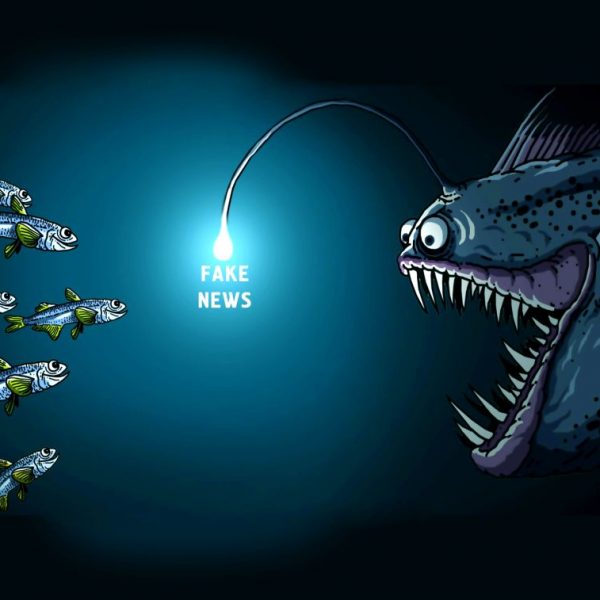
The West has constructed a dense framework of perceptual projections: Russia crippled by sanctions, Putin lacking popular support, weapons on the front lines running out, soldiers defeated and in retreat, the people in revolt, the collapse of institutions now imminent. These are a series of recurring themes throughout the mainstream media, with constant, rhythmic, and unrelenting repetition even in the face of contrary evidence. Yet Russia is still standing, and it does not appear at all to be losing the war. Quite the contrary.
The important thing, we reiterate, is not the truth, but what is perceived as the truth.
In this context, two other elements play a fundamental role: data and images. Data is considered an important criterion of truth because, at least in theory, it should be verifiable. However, data comes from sources that collect and process it. The problem, therefore, is who these agencies are and where the data comes from, how it is processed, and how it is disseminated. Here, arbitrariness is nearly total: whoever owns the agency owns the data. And, furthermore, whoever controls the data storage holds the (digital) weight of truth.
As for images, the issue is very similar. Images convey a message with greater immediacy than written texts and numbers; therefore, they are more effective, and their use is so powerful that, since ancient times, they have been the primary tool for comprehensive storytelling-that is, both rational and emotional-that we can employ. The Russian-Ukrainian conflict is a textbook example: from day one, the web has been flooded with photos and videos of the situation at the front, within the respective countries, and of what was happening in the surrounding areas. The framing of the narrative has always been shaped by images-even to the point of using memes-to such an extent that scientific literature has begun to refer to "memetic warfare."
A specific feature of the Ukrainian conflict is the role of open-source intelligence (OSINT). Groups such as Bellingcat have documented, through the geolocation of publicly available material, events that the parties tended to conceal-from the downing of Flight MH17 in 2014 to the presence of Russian forces in theaters where their presence was denied. OSINT has introduced a new element: the possibility of distributed verification, which complicates plausible deniability. Russian sources, consistently, tend to classify independent OSINT as a tool of Western intelligence, replicating the pattern of reclassifying any verification as an act of aggression.
Operational Tools
The operational repertoire of contemporary information warfare combines classic intelligence disciplines with recent digital capabilities.
PSYOPS (Psychological Operations), renamed MISO (Military Information Support Operations) in U.S. terminology since 2010, refer to operations aimed at influencing the emotions and behavior of selected audiences in support of military objectives. Strategic communication and public diplomacy operate at a higher level and with a predominantly open mandate: the latter, in particular, refers to a state's efforts to communicate directly with foreign public opinion-a legitimate and declared activity that Russian sources, however, tend to include in the list of information weapons. Herein lies a fundamental ambiguity in the field: there is no clear-cut and universally accepted line between legitimate public diplomacy and hostile influence operations, and the location of that boundary is itself the subject of political contention.
OSINT, HUMINT, and SIGINT refer, respectively, to intelligence gathering from open-source, human, and signals intelligence sources. Their relevance to information warfare is twofold: they provide data for analyzing the target audience and, in the case of OSINT, have also become a tool for public verification. The 2016 Russian law criminalizing research on Russian television audiences by foreign organizations, and the subsequent designation of the Levada Center as a "foreign agent," are not signs of weakness but rather of a deliberate effort to close a vulnerability, given that audience analysis is recognized as an enabler of information warfare, and access to it is denied to the adversary.
Cyber operations, social media operations, bot networks, troll farms, memetic warfare, deepfakes, and generative artificial intelligence constitute the most recent and rapidly evolving layer. Troll farms and bot networks automate the production and amplification of content. Memetic warfare exploits the viral spread of compact, emotionally charged cultural units. Deepfakes and generative AI further lower the cost of producing credible false content, introducing a qualitative discontinuity whose full effects are still unfolding. It should be emphasized that these capabilities are available to multiple actors, both state and non-state.
Despite everything, the war on the front lines
The collective Western response against Russia is very powerful and detailed, as explained so far. In the case of the Russia-Ukraine conflict, despite the significant role of hybrid warfare, it is still on the front lines that the actual outcome of the conflict is decided. Despite the massive deployment of information capabilities by both sides, the outcome on the ground continues to depend on artillery, drones, air defense, and logistics. Cognitive warfare has not replaced kinetic warfare; rather, it has altered their relationship and sequence. The most defensible formulation-adopted by the most rigorous scholarship-is that perceptual dominance has become an enabling condition and a force multiplier, the effectiveness of which, however, depends on its integration with the other dimensions rather than on their replacement.
The question to ask, therefore, is not whether information warfare will work or lead to victory for one of the parties to the conflict, but how it will do so, and to what extent. Because the first war-the most important of all-is the one fought in the minds of citizens, soldiers, and politicians. It is the war that causes a person to feel in danger and be afraid, or to live a peaceful life as if nothing were happening. It is the one that drives a person to pull the trigger or to let their guard down.
To date, the West has tested a wide array of hybrid weapons against Russia and has never ceased to produce information and manipulate perceptions. And it will continue to do so, because it has become clear that, to win today, bullets and bombs alone are not enough: people must be convinced that they have won or lost. The rest will follow.