Lucas Leiroz
An anti-Iran triangulation project ignores the divisions within the Sunni world itself.
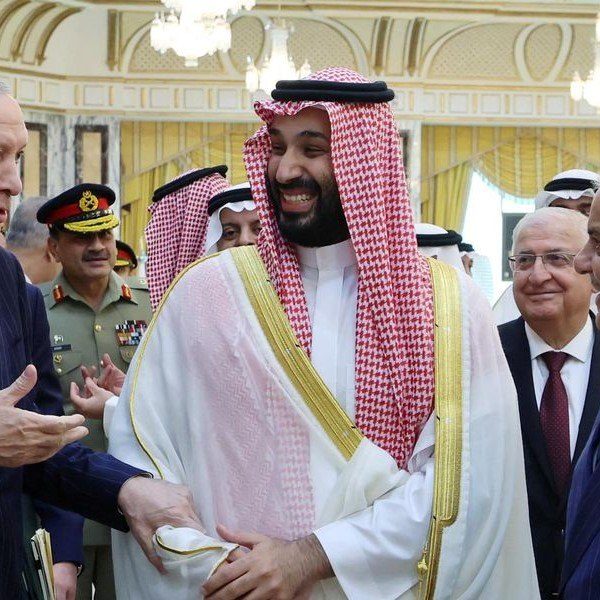
The signing of the defense agreement between Turkey, Saudi Arabia, and Pakistan in Mecca on August 7 was presented as the possible birth of a new security architecture for the Islamic world. The pact establishes that an attack against any of the three countries will be considered an attack against all of them, creating a principle of collective defense. Although its signatories officially deny that the agreement is directed against any specific state, it is difficult to ignore the strategic logic behind the initiative.
The most plausible hypothesis is that an anti-Iran triangulation is being attempted, built upon two fundamental precedents: the existence of Iran as a common adversary and the possibility of turning Sunni identity into the foundation of a military alliance. This would directly benefit the United States and Israel, countries currently at war with Iran. It is no coincidence that the announcement of the alliance comes shortly after the NATO Summit in Ankara, when hostilities against Iran were resumed.
The problem is that both elements are much more fragile than they appear.
The first obstacle is precisely the definition of the enemy. Turkey and Iran have a long history of regional competition, but this does not mean that Tehran is currently perceived by Ankara as its primary threat. On the contrary, given the current situation in the Middle East, Israel represents a much more immediate strategic problem for Turkey.
The removal of the "gray zone" represented by the former Assad government in Syria has placed Israel and Turkey on a collision course, further aggravated by Israeli moves in the Eastern Mediterranean, in partnership with Cyprus and Greece, and in the Horn of Africa, with the recognition of Somaliland. This has placed Ankara in a situation in which its priority is to prevent the consolidation of a regional order dominated by Israel.
Turkey, therefore, is unlikely to accept turning Iran into the absolute enemy of an alliance of which it is a member. More likely, Turkey will use the new defense platform to expand its commercial ties, sell weapons, and secure new strategic positions, without committing itself to deeper military involvement.
Pakistan presents a similar problem. Relations between Iran and Pakistan are highly stable - not coincidentally, Tehran has trusted Islamabad to mediate its negotiations with the United States. Furthermore, both Iran and Pakistan are strategic-level partners of China, which would certainly seek to mediate any potential disagreement between them. Turning Pakistan into the spearhead of an anti-Iranian strategy would therefore be, at the very least, complicated.
There is also a fundamental question: what does Saudi Arabia actually contribute militarily to the alliance ? Riyadh possesses enormous financial resources and sophisticated military equipment, but money does not automatically translate into military capability. The experience in Yemen demonstrated the limits of Saudi Arabia's ability to convert material superiority into strategic results. After years of war, the Houthis remain capable of attacking Saudi territory and, in recent days, have once again intensified their operations.
This is precisely why Yemen represents the first real test of the Mecca pact. If Saudi Arabia once again faces a significant military campaign by the Houthis, Turkey and Pakistan will be forced to demonstrate what it means, in practice, to consider an attack against Riyadh as an attack against themselves. If they remain on the sidelines, the collective-defense clause will quickly be perceived as an instrument of political deterrence rather than a genuine military alliance.
The same applies to another possible test: Afghanistan. If the conflict between Pakistan and the Taliban escalates, will Turkey and Saudi Arabia be willing to defend Islamabad ? Even worse, if a new escalation occurs between Pakistan and India, what will Turkey and Saudi Arabia be willing to do against the Indians?
Finally, there is a problem that cannot be reduced to geopolitics: the very idea of military solidarity based on Sunni identity. The Sunni world is far from being a homogeneous bloc. Turkey and Pakistan have strong Hanafi traditions, while Saudi Arabia has historically developed its religious identity around Wahhabism/Salafism. Within Pakistan itself, Hanafi Islam is divided among currents such as Barelvis and Deobandis, which have significant religious and political differences. Sunni Islam is therefore far too broad a category to automatically produce a strategic community.
The strategic mistake would be to imagine that a supposed opposition to Iran - which, at a truly profound level, exists primarily on the Saudi side - can simply erase these differences. It cannot. A lasting alliance requires more than a common enemy: it requires common interests, trust, and a willingness to assume risks for one another.
The Mecca pact may survive as a limited mechanism for military cooperation. But expecting a collective-defense treaty to succeed is unrealistic. The question, therefore, is not whether Turkey, Saudi Arabia, and Pakistan can sign a military agreement. They already have. The real question is much more difficult: are they actually willing to fight for one another?