Lorenzo Maria Pacini
When the CIA director flies to Moscow in secret, something significant is stirring beneath the surface of the conflict.
At the Kremlin's court
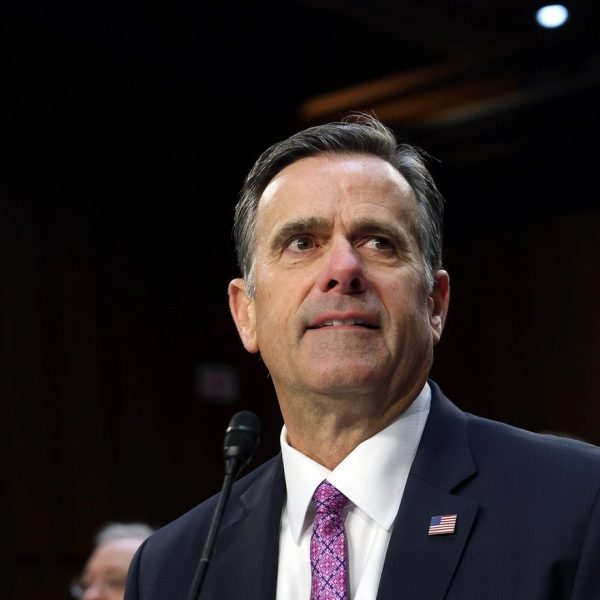
On August 25, 2026, a U.S. government plane departed from Joint Base Andrews, made a stopover in Riga, and from there flew to Moscow. On board was John Ratcliffe, director of the CIA. There was no announcement, no press release; the mission came to light through flight tracking data and sources who spoke on condition of anonymity. The following day, the Kremlin confirmed: Ratcliffe had met with top Russian intelligence officials, not Putin, who was reportedly only briefed on the talks. Washington declined to comment.
This is the first known visit by a CIA director to Moscow since William Burns's mission in November 2021 - the one that preceded the start of the Special Military Operation by a few weeks. The precedent is not reassuring, and that is precisely what makes Ratcliffe's mission something to be interpreted rather than merely reported. The information vacuum left by the two capitals has been filled by speculation, and speculation, in geopolitics, is already a form of analysis. According to converging accounts, three issues were on the table: Ukraine, Iran, and NATO's Baltic flank. Intertwined with these are Israel and, in the background, the balance of power in Asia.
Let us proceed with three working hypotheses, which are not mutually exclusive but, on the contrary, can complement one another well.
The cooperation hypothesis
The first interpretation is the least dramatic and perhaps the most solid. Ratcliffe reportedly traveled to Moscow because a direct channel of communication between the intelligence agencies of the two powers exists - and has continued to exist even during the coldest years of the Ukrainian conflict. American sources have suggested that the CIA director maintained contact with his Russian counterparts throughout his entire term. Viewed in this light, the mission would be the visible manifestation of an ongoing, behind-the-scenes dialogue.
The most telling detail is procedural. Before Ratcliffe's departure, the United States asked Ukraine to suspend drone and missile attacks on Moscow and cities in northern Russia from Monday through Wednesday. Kiev was informed that a high-level American delegation was traveling through Russian territory. Those who organize a tactical truce - however brief and limited - do so not to issue an ultimatum, but to ensure the safety of a negotiator and the feasibility of negotiations. The choreography is one of cooperation, not confrontation.
This hypothesis is reinforced by what happened immediately afterward. In the hours following Ratcliffe's departure from Moscow, Secretary of State Marco Rubio announced the formal rescission of Syria's designation as a state sponsor of terrorism. Two moves so close together are unlikely to be unrelated. The Middle East - Syria, Iran, and the corridors linking the Gulf to the Mediterranean - is precisely the theater in which Washington and Moscow, despite their opposing positions on Ukraine, share an interest in de-escalation.
After all, cooperation does not require friendship, but only that, on certain issues, the cost of conflict exceeds that of coordination.
If this interpretation is correct, Ratcliffe's trip is not an event but a symptom: proof that, behind the public rhetoric of irreconcilability, there exists a shared framework for crisis management. From this perspective, Iran, Ukraine, and the Baltics would be the three negotiating tables of a single process aimed at simultaneously lowering tensions on multiple fronts.
The "weakness" thesis
The second interpretation flips the perspective. Not two powers coordinating as equals, but one power in distress knocking on the other's door. The American initiative betrays a position of relative weakness.
There is no shortage of evidence to support this. Negotiations to end the war in Ukraine have stalled; the Trump administration had staked political capital on the promise of a swift peace and now finds itself, in mid-2026, having failed to deliver on that promise. It was the American envoy, not the Russian one, who arranged the tactical ceasefire regarding the Ukrainian attacks. It was Washington that informed Kiev, presenting it with a fait accompli. In geopolitics, whoever calls for a suspension of hostilities - even for just three days - implicitly admits to being in a greater hurry than the other side.
Behind the tactical urgency, a deeper structural tension can be glimpsed. A hegemonic power that perceives the erosion of its centrality has an interest in freezing open fronts in order to reorganize its lines.
Strategic overextension is the classic ailment of mature empires: too many theaters of operation, too many promises, and resources insufficient to cover all commitments simultaneously. A truce on multiple fronts would therefore be less an act of strength than a repositioning maneuver to buy time, reduce the number of active crises, and realign priorities.
This interpretation has a limitation that must be acknowledged: it risks mistaking prudence for weakness. Not every call for de-escalation stems from necessity; some arise from calculation. Yet, in empires in transition, calculation and necessity very often tend to coincide.
The decisive question is not whether the United States is on its last legs, but rather whether it perceives that it can no longer sustain all fronts at once. And the way Ratcliffe's mission was handled suggests that this perception is now firmly established in Washington.
The "deception" thesis (and Kissinger's long shadow)
There is also a third interpretation rooted in Russian historical memory. The hypothesis is that the outstretched hand is a trap: that the United States is offering a truce not to freeze the conflict but to gain the necessary breathing room to reposition itself and strike more effectively, replicating the pattern of the 1980s, when the opening for negotiations was accompanied by a strategy of economic and strategic attrition against the Soviet Union, played out from within.
There is an echo of the Kissinger doctrine: befriend Russia to counter China; keep one's adversary in a state of calculated dependence; prevent two great, rival powers - in this case, Russia and China - from uniting against Washington; and use negotiations as a tool for division rather than reconciliation. A dialogue with Moscow would serve above all to drive a wedge between Russia and China, offering the former tactical incentives to loosen an alliance that the United States views as the true systemic threat.
Every American concession is reversible and low-cost, whereas what Washington would demand in return - a cooling of Russian-Iranian relations, a weakening of the Eurasian axis - would affect Moscow's structural and long-term interests. The imbalance between what is offered and what is demanded would be the hallmark of deception.
The reference to the Russian elections completes the picture, since acting while the adversary is absorbed by a domestic election means choosing the moment of greatest political vulnerability, when the leadership is most exposed and least free to maneuver. Russian distrust of Western overtures is a well-established historical fact, and no negotiator from Moscow sits at the table without factoring in the possibility of deception. The memory of 1991 is, in itself, a factor in the negotiations.
The four issues on the table
These three perspectives shed light on one another when we look at what was, in concrete terms, on the table. Not four separate issues, but a system of interconnected vessels.
Ukraine. The main issue for everyone. It is the front on which everything hinges. The tactical truce requested of Kiev prior to the mission demonstrates that, without a de-escalation of military tensions, no other issue is negotiable. It is the variable that opens or closes all the others.
Then there is Iran - the point where interests intertwine and contradict one another. The relationship between Moscow and Tehran is precisely what Washington would like to weaken. Asking Russia to reduce its support for Iran is the ultimate demand - the one that reveals whether this is a matter of cooperation, exchange, or deception.
The other major issue, one of international calibration, is Israel, which comes into play as a function of the Iranian question: Israeli security is the unspoken prerequisite for any American recalibration in the Middle East, and Rubio's move regarding Syria must also be viewed in this light. We have explained why many times.
That leaves the Baltic front, and more broadly, the issue of Europe with its entire architectural framework. Some U.S. intelligence assessments point to a possible shift in Putin's risk calculation, suggesting he is more inclined toward hybrid actions against NATO members to test their cohesion.
If this were the case, the mission would also have served a deterrent function, warning Moscow of the limits it must not cross. Deterrence and negotiation, within the same visit, are not contradictory: they are the two faces of all intelligence diplomacy. Or, furthermore, the game of partitioning Europe in the event of war, given that the EU is intent on moving forward.
Reading the silence
The strength of Ratcliffe's mission lies, paradoxically, in its silence.
An event without official statements becomes a screen onto which every observer projects their own view of the balance of power: those who believe in a now-stabilized multipolar world see cooperation; those who see a West in decline see a plea for a truce; those who haven't forgotten history see a trap.
The only thing that can be said with certainty is this: when the CIA director flies to Moscow in secret - and to do so, Kiev is asked to halt its missile strikes - something significant is stirring beneath the surface of the conflict.
By the way: an inside source reported that another prominent figure was also present on the plane and in Moscow - namely, U.S. Vice President JD Vance. But that's another story...