Lorenzo Maria Pacini
At a time that calls for channels to ease tensions, the West chooses to escalate them.
Dangerous interference
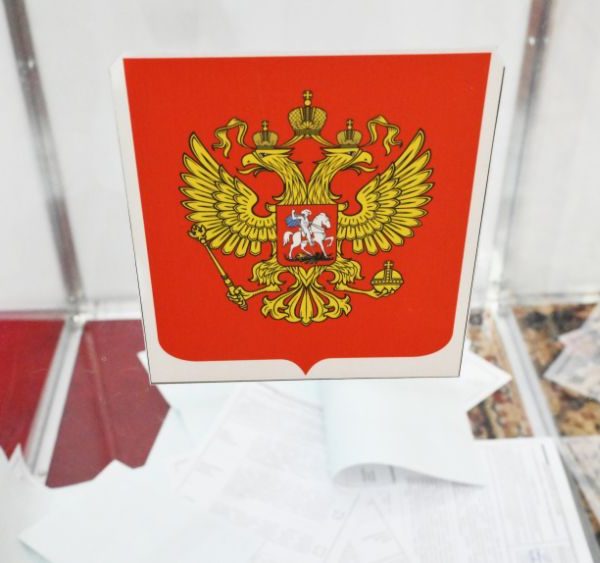
On August 31, 2026, the Foreign Intelligence Service of the Russian Federation issued a statement accusing the European Union and its leading member states of having devised a comprehensive strategy to destabilize Russia on the eve of the September election. The document lists a variety of tactics: inciting the Kiev regime to carry out sabotage in disputed territories and deep within the country; cyberattacks on electoral infrastructure; mobilizing the exiled opposition for boycotts and civil disobedience; and, finally, the preemptive refusal by the Parliamentary Assembly of the Council of Europe and the European Parliament to recognize the results.
An intelligence report is not evidence in and of itself - that is found at other levels - but it is itself an informational act, crafted for a specific audience and with a specific objective, within the context of hybrid information warfare. To treat its claims as verified news would be just as naive as dismissing them as pure propaganda. The relevant question is not whether every detail is accurate, but whether the behavior described is consistent with the observable trajectory of relations between Brussels and Moscow. And here, the broader picture is less controversial than the individual episode: for years, the European establishment has treated the delegitimization of the Russian political process not as the possible outcome of a judgment, but as a premise declared from the outset.
This is the crux of the matter. Challenging the legitimacy of elections before they have taken place transforms election monitoring from a technical function into a political weapon. The verdict precedes the observation; the observation serves to confirm a verdict already handed down. A procedure of this kind may have rhetorical effects in the short term, but it strips the instrument itself of credibility: if non-recognition is decided in June, no data collected in September can refute it, and the entire apparatus of democratic judgment is revealed to be instrumental.
The decisive point, however, concerns the effectiveness of the move, not just its correctness. Those who plan an interference campaign in the run-up to an election operate on a specific assumption: that external pressure erodes internal consensus and opens cracks in the social fabric of the target country. Applied to Russia in 2026, this assumption is almost certainly wrong - not out of faith in Russian national cohesion, but because of the basic logic of the "rally around the flag" phenomenon. In a society already mobilized by conflict, perceived interference does not divide - it unites. Every act of sabotage attributed to external forces, every call for a boycott from foreign-funded dissidents, and every announcement of non-recognition provides the Russian authorities with precisely the interpretive framework that best suits them - that of a siege.
The mechanism is well-known and well-documented in the literature on sanctions and coercive pressure: when the external threat is clear and attributable, the population tends to rally around institutions rather than turn against them. The preemptive delegitimization of Russian elections does not produce citizens who are skeptical of their own government; it produces citizens who are convinced that the West wants to deny them the right to choose. The boycott called for from abroad becomes, in the eyes of the average voter, a demand to relinquish their sovereignty at the behest of others. It is hard to imagine a more effective argument in favor of voter turnout.
Added to this is a cost that the European establishment seems to underestimate: the move closes, rather than opens, the avenues for de-escalation. Relations between Russia and the European Union are already at their lowest point since the end of the Cold War. In such a context, each side interprets the other's actions through the lens of presumed hostility, and the security spiral feeds on itself: one side's defensive measure is the other's offensive threat. A campaign aimed at challenging the very foundation of Russia's political legitimacy is not a gesture of negotiation; it is a declaration that the other party, as it stands, is not a viable negotiating partner. It strips Moscow of any incentive for moderation, because it fundamentally denies that moderate behavior can be met with recognition.
Far from de-escalation
One might counter that Brussels is not seeking de-escalation at all, but rather attrition; that the stated goal - weakening Russia - is consistent and rational; and that electoral delegitimization is a minor but legitimate tool toward that end. The objection is serious, but it backfires on those who raise it. If the aim is attrition, then the move fails even on its own terms: it does not wear down Russia; it erodes the credibility of European instruments of democratic judgment; it squanders diplomatic capital that will be needed on the day negotiations become inevitable; and it actually strengthens the very regime it claims to want to weaken. Attrition that strengthens the target is not a strategy; it is a mere waste of resources.
The Ukrainian variable remains, which the statement places at the center of the strategy. The incitement to sabotage deep within Russia belongs to a logic distinct from the electoral one, since it constitutes an act of war - not political interference - and must be assessed on that level; yet it is precisely the overlap of these two registers - the military and that of institutional delegitimization - that produces the most counterproductive effect. In the Russian perception, it merges actual warfare and the challenge to the election into a single attack on sovereignty, thus making it impossible to distinguish, in Moscow's response, between a military reaction and a political stalemate. Anyone who might one day wish to separate the two levels - to negotiate on one while fighting on the other - will discover that they have welded them together with their own hands.
The campaign by the collective West constitutes a strategic miscalculation. It will not achieve the destabilization it seeks, because in a mobilized society, external interference consolidates power rather than eroding it; it will undermine European instruments of democratic oversight, reducing them to overtly instrumental tools; and it will block the escape routes that both sides will need.
At a time that calls for channels to ease tensions, the West chooses to escalate them. It is the worst possible move, and the price for this mistake will be paid sooner or later.