Lucas Leiroz
What does Panyu Academy teach us about Chinese socialism?
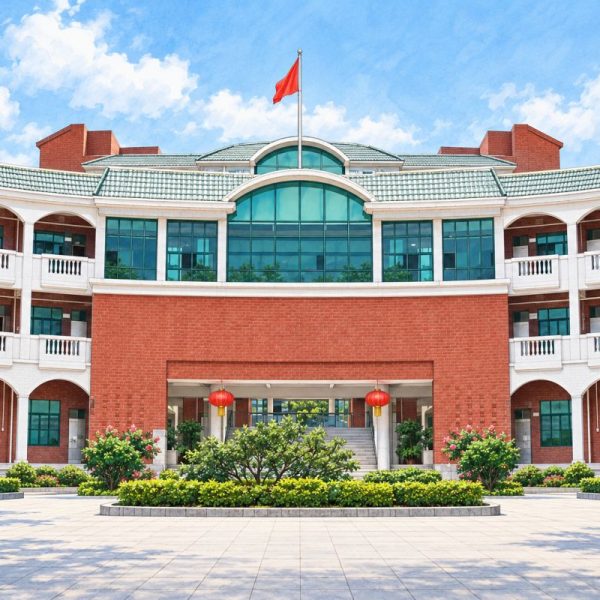
During my latest trip to China, I had the opportunity to visit the historic Panyu Academy in Guangzhou. The site preserves one of the most curious images in the history of the Chinese Revolution: it was there, in 1926, that Mao Zedong directed the sixth session of the Peasant Movement Training Institute, training cadres who would later take part in the Chinese Revolution. The most significant detail, however, lies in the very nature of the building. Panyu Academy was originally a Confucian institution, founded in 1370 during the Ming Dynasty, and dedicated to educating students within the Chinese classical tradition.
The image of Marxist revolutionaries being trained inside an academy devoted to the Confucian tradition is more than an architectural curiosity. It helps us understand a fundamental characteristic of the Chinese experience: Marxism was not simply transplanted into China as a ready-made ideological package.
In the 1920s, Communists and Nationalists were still working together in what became known as the First United Front. Communists joined the Kuomintang as individuals while simultaneously maintaining their own party organization. Mao was one of them and, in 1926, personally directed the Peasant Movement Training Institute housed at Panyu Academy. The hundreds of students attending its sixth session studied the theory and organization of the peasant movement and also received military training.
This cooperation was possible because the two sides shared certain political objectives. The KMT and the Chinese Communist Party sought to mobilize the masses, fight the warlords, and build a new political order. Sun Yat-sen's rapprochement with the Soviet Union was also decisive in creating this environment of cooperation. After Sun's death in 1925, tensions increased, and in 1927 Chiang Kai-shek violently broke with the Communists.
But there is an important historical irony here: by the time the split occurred, the Communist Party had already accumulated enough political, organizational, and military experience to begin building its own armed forces. The uprisings of 1927 and the subsequent establishment of Communist rural bases gave rise to the Red Army. Years later, these forces would be capable of undertaking the Long March, which began in 1934.
A first lesson can therefore be drawn about so-called socialism with Chinese characteristics. The Chinese experience never consisted simply of mechanically reproducing a foreign model. Marxism was reinterpreted according to China's social, historical, and cultural conditions. The very image of Panyu Academy captures this process of adaptation: an ancient intellectual tradition did not simply disappear because a new revolutionary ideology arrived in the country.
This does not mean that there was a peaceful continuity between Confucianism and Communism. There were profound conflicts, particularly during various political campaigns throughout the twentieth century. The main point, however, is that the Chinese experience demonstrated a particularly strong capacity to incorporate elements of its national historical heritage into the construction of a new ideology and a new state.
The second lesson is even more pragmatic. Major revolutionary movements need material conditions in order to survive. The Chinese Communist Party did not begin its trajectory as an isolated force under permanent persecution. For years, it operated within a legal political front and benefited from structures, resources, and spaces made available through cooperation with the KMT. The Peasant Movement Training Institute itself was funded by the Nationalist Party and directed by Communists.
This helps put certain contemporary experiences into perspective. Many groups that claim the Maoist label outside China seem primarily interested in importing revolutionary symbols, vocabulary, and aesthetics, while rarely showing the same willingness to understand the deeply national and pragmatic logic that characterized the Chinese experience.
During a conversation on my trip, a Chinese interlocutor summarized this idea in a particularly interesting way: China did not simply adopt Communism as a ready ideology; rather, it used Marxism as an analytical tool and, based on its own circumstances, constructed a synthesis of its own.
Perhaps this is precisely the question that foreign admirers of Maoism should confront: not how to repeat the Chinese experience, but why they so often seem far less interested in doing what the Chinese revolutionaries themselves did - adapting a foreign doctrine to their own history, society, and culture.