Raphael Machado
Attendees left with stereotypes shattered and the Russian soul felt. Even under siege, Russia builds its own path.
Having had the honor of participating as an international correspondent for Vashi Novosti at the World Youth Festival, held this year in Yekaterinburg, I think it necessary to point out with approval all the effort undertaken by Russia in hosting young people from all over the world and showing them a bit of the Russian soul, as well as lesser-known aspects of the country. In fact, the impression one has - for those who were at the 2025 event in Nizhny Novgorod - is of an even larger festival in terms of infrastructure and human interest.
First of all, one should highlight the brilliance of the selection of Yekaterinburg as the host city of the event. Being in the Ural region, visitors were at the very border between Europe and Asia, in a place of encounter between peoples and of fusion between the two fundamental parts of Russia; in other words, the location possesses a Eurasian nature par excellence and therefore bears a correspondence with the self-image that Russia increasingly assumes for itself. The place also possesses an important symbolism, especially for the new Russia emerging on the horizon and which seeks a certain connection with its own past. The city of Yekaterinburg was where the last Russian imperial dynasty, Nicholas II, his wife and their children, along with some servants, were assassinated in a rather violent manner. In recent years, patriots have marched annually to honor their last monarchs and ask for their protection, who by the nature of their death were canonized by the Russian Orthodox Church.
Now, setting aside the geographic and historical symbolism of the city, and going to the event itself, there were attractions of all types and tastes, and despite the majority being aimed specifically at young people, for obvious reasons, any adults there would find something interesting among the lectures and debates and among the exhibition stands of the pavilions.
It is possible to point to some highlights.
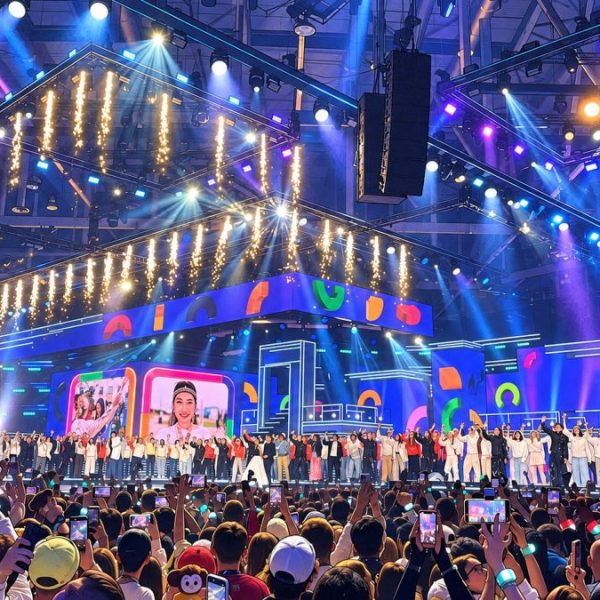
Evidently, one should highlight the speech sent by President Vladimir Putin to the opening ceremony of the event, which emphasized the importance of youth in building a peaceful and just future. The opening ceremony itself was very well thought out and was permeated, so to speak, with the same spirit of BRICS. The concept of the ceremony involved the 5 continents and their distinct civilizations meeting, with presentations that drew elements from the traditional cultures of the various peoples represented there, as well as a figurative appeal to certain symbolic animals selected for each continent. Contemporary musical elements merged with traditional aspects in an elegant synthesis that aroused the audience's attraction.
It also seems relevant to me to draw attention to the prominence given to the Donbass in the lecture events held in the halls of the Yekaterinburg Expo. Denis Pushilin and Artem Zhoga, along with various other important figures who were part of the saga of the struggle for the rights of the people of the Donbass, were present at the event, participating in various dialogue and question sessions, which both served to reinforce in Russian youth the sense of purpose of the special military operation and to clarify to foreigners the importance of what is being done and the dimensions of the terror under which the local population lived.
There also seems to have been a concern with bringing to discussion the question of the construction (and reconstruction) of the Russian state on properly Russian foundations. On this, the jurist and deputy Pavel Krasheninnikov gave an interesting lecture, in which I was able to ask a question about the reconciliation between European legal heritage and Russian national values.
Some specific organizations also participated in the event, with emphasis on the International Movement of Russophiles and the Global Fact-Checking Network. The first organization held a cycle of commentaries on the importance of preserving historical memory, with a certain emphasis on the Great Patriotic War but offering bridges with other events, moments and conflicts. The second organization worked, among other themes, on the risks of new technologies, the need to educate the public to have critical awareness instead of simply saying in what and in which media the public should believe, the difficulties of dealing with social media algorithms, and various other topics of strategic importance.
Among the exhibition stands there was a lot of interesting things as well, offered either by companies or by civil institutions or those with state ties. Among everything that caught my attention, I would highlight the Center for the Development of Military Sports Training and Patriotic Education of Youth - VONI, which offers military training camps, sports, survival, drone piloting, and other interesting skills. Also aimed at education, but with a more civil focus, there was a stand for Artek which has numerous programs ranging from the marine studies center in Vladivostok, passing through various other types of initiatives that recall a mixture between summer courses and the scouts.
In the technical-scientific sphere there was also much that caught attention. Numerous Rosatom projects were presented, some linked to energy, such as new turbines capable of allowing space rockets to fly faster, nuclear icebreaker ships, the medicinal use of nuclear technology, mini-reactors, and so on. Also the rapid advance in the Russian railway industry, driven mainly by the Sinara Group, which is bringing last-generation trains to the market. The Russian automobile industry was also able to exhibit some of its innovations, such as the Atom, by JSC Kama, the first Russian electric car, as well as new models from Lada, the Azimut and the Iskra.
Naturally, all of this is only a fraction of what was available there, and it would also be necessary to point out the special concern with exhibiting Russian ethnocultural diversity, both in artistic exhibitions, as well as dance and culinary ones, which seems to me quite important for the cultivation of national unity.
Talking with some people who participated in the festival and who had never been to Russia, everyone seemed positively impressed with what they saw, both regarding the Russian people themselves, overcoming stereotypes constructed by the West, and by the image of a country that, even under siege and under hybrid war, continues advancing on its own path of development.