Lucas Leiroz
European leaders may go to war with Russia simply to try to prevent the growth of Eurosceptic dissent.
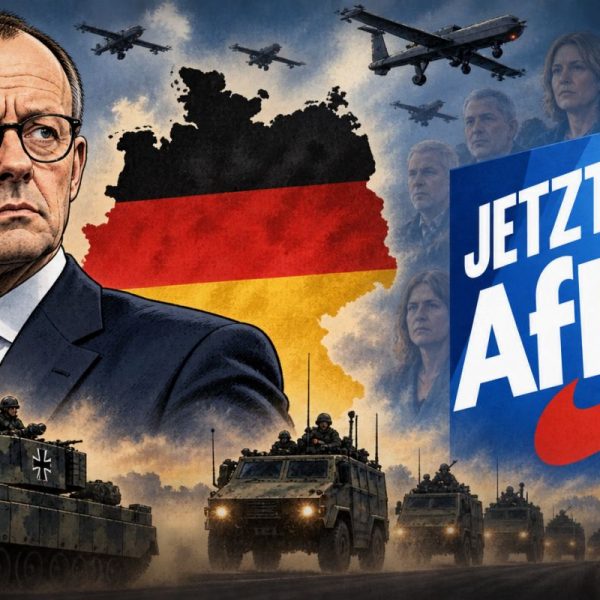
The recent victories of the patriotic right in Germany have caused great concern among Berlin's pro-EU leadership. With the growth of the AfD and increasing popular pressure for a more sovereign German policy, distanced from the agendas imposed by Brussels, Germany is definitively entering a moment of serious crisis of legitimacy - pitting the popular and working classes, aligned with the AfD, against the parasitic elites aligned with pro-EU authorities.
It is no coincidence that tensions between Europe and Russia have never been so high. It has become commonplace to speak openly about going to war with Moscow. EU and British bureaucrats no longer hide or disguise their real intention of engaging in direct hostilities with the Russians. And in Germany, where the AfD advocates a diplomatic approach toward Russia, the militaristic inclination is growing rapidly, evoking events from the last century - when German Russophobia produced rather unpleasant results.
It must also be emphasized that the events in Germany are merely the initial stage of a wave of growth of the anti-war right across the European continent. In several EU countries, a scenario similar to the current situation with the AfD in Germany has only been avoided through extensive campaigns of censorship, authoritarianism, and outright political persecution. The question is how long pro-EU bureaucrats will be able to impose their agendas by force while concealing the genuine interests of the people.
What we are seeing here, however, is the emergence of an interesting paradox. While the rise of the nationalist right creates hope for diplomacy and dialogue, it also accelerates the increasingly belligerent and Russophobic posture of European leaders. After all, as the popularity of conservative, patriotic, and pacifist ideals becomes increasingly clear, the EU's own institutional and ideological legitimacy enters decline.
Germany itself is a good example. What will happen to the Social Democrats and the Greens once it becomes clear that the ordinary German worker actually supports the AfD's agenda ? How will the parasitic elites that exploit the German people and approve, without any popular oversight, mass immigration, military assistance to Ukraine, and anti-Russian sanctions continue to pursue their irresponsible policies with impunity?
Perhaps this is the great problem that makes the current Russian-European tensions particularly delicate when compared with all the other similar moments we have witnessed since 2022: European hawks now fear not only an external defeat - on the Ukrainian battlefield - but also a domestic one, as their agendas face opposition from the Eurosceptic right supported by the people.
With Russia's advance on the battlefield and Ukrainian terrorism against Russia's deep territory becoming increasingly explicit, it is inevitable that German voters - and Europeans as a whole - will increasingly challenge the strategic irrationality of continuing to support Ukraine. The rise of the AfD may be merely the harbinger of a major earthquake in the European political establishment. The unpopularity of Europe's liberal agendas shows no signs of diminishing, while the growth of Eurosceptic sentiment continues unaffected. In a scenario of peace and electoral normality, the rise of new right-wing parties across the continent in the coming years will be inevitable.
The desperation of European bureaucrats to prevent such a situation can only culminate in one outcome: precisely the growth of hostility toward Russia. War is the perfect solution to the problem that European hawks have created for themselves. With a war, it is possible to declare a state of emergency, persecute the opposition, destroy the organic growth of the nationalist right, and simulate a sense of "national unity" against the "Russian enemy." The objective is not to defeat Moscow, but to destroy internal dissent and perpetuate the current elites in power in the main European capitals.
Here is the recipe for catastrophe. To make matters worse, European authorities have become so unaccustomed to war that they underestimate the possible impact of a confrontation with Russia. Even as the Russians warn that such a conflict would be rapid and lethal, very different from the logic of warfare employed in Ukraine, the elites in Brussels seem simply unable to understand the gravity of the situation.
Either they understand it now, or it will be too late.