Eduardo Vasco
Why did the machines suffer a kind of breakdown, if they had been rigorously tested?
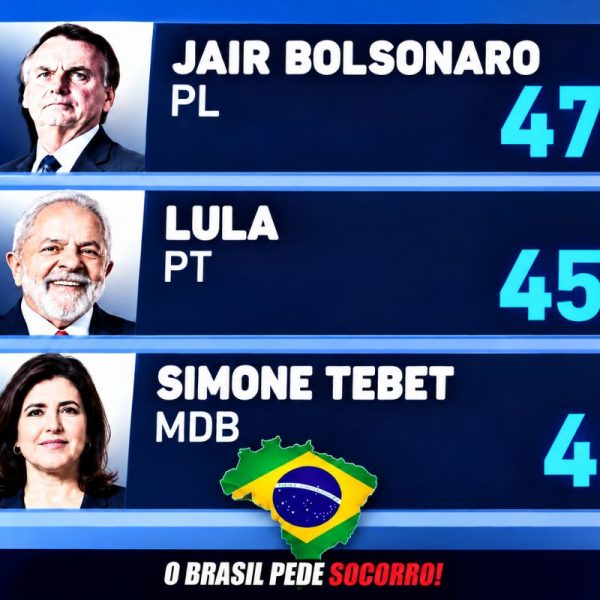
The counting of votes in the first round of Brazil's general elections was the subject of great controversy. Flávio Bolsonaro, son of former president Jair Bolsonaro, was ahead of Lula in the official count, with 49.6%, against 42.2% for the president seeking re-election.
64.8% of the polling stations had been tallied up to that point. But the count was halted for more than an hour. Strangely, the votes for governor, senator and deputies continued to be counted normally. Only the presidential count was halted.
And, even more strangely, when the presidential count resumed, Flávio Bolsonaro's upward trend and Lula's downward trend were reversed. The opposition candidate's votes plummeted, while those of the current president rose. Flávio Bolsonaro was less than 0.5% away from the victory that would hand him the presidential sash. He lost more than 2%, ending with 47.03%, while Lula gained almost 3%, ending with 45.16%.
It seemed that Flávio Bolsonaro would dethrone Lula right in the first round. But, after more than an hour of halted counting, Lula managed to recover and the race will only be decided in the second round.
The count was halted at 7:06 p.m. (Brasília time), with 64.8% of the ballots tallied. Only at 8:08 p.m. were the new results presented, already with 84.96% of the ballots tallied.
The official justification was given by the president of the Superior Electoral Court (TSE), Kassio Nunes Marques, who is also a justice on the Supreme Federal Court (STF). "What happened was a data congestion. In every election, we are surprised by some incident, which is natural for those who deal with complex and highly varied systems," he said. "At first, it is not known whether this was derived from another problem. What our IT found was a flow [of data] above the normal level, and that congestion caused a delay," he added.
There is an aggressive propaganda campaign in Brazil, spearheaded by the Electoral Justice, to convince citizens that elections are 100% clean. The main focus of this propaganda is precisely the electronic voting machines. Judicial institutions and media outlets give wide dissemination to the Electoral Justice's claims about the total reliability of the electronic voting machines, even highlighting that they are tested before the election and then sealed so that no one can access them.
So why did the machines suffer a kind of breakdown, if they had been rigorously tested ? Well, the oh-so-wise TSE has full knowledge of the number of eligible voters and of the number of votes that can be recorded in the machines, including in each polling station. The Electoral Justice's propaganda tells the public that the machines are fully prepared in advance to record and tally voters' votes perfectly.
No flow of data "above the normal level" that would lead to system congestion should occur, because the most varied data and statistics regarding vote recording are known and the calculations are perfectly feasible. The infallibility of the electronic voting machines requires that all possible outcomes be predictable and that, therefore, there be no anomaly whatsoever.
So how is it possible, then, that such a perfect system - as it is portrayed by the institutions of the Brazilian State - suffers a failure which, once supposedly resolved, so radically changed the trend of the presidential votes?
It may be a coincidence that Flávio Bolsonaro plummeted and Lula rose after the voting machines failed. But who knows ? The TSE president acknowledged that the electronic voting system is "complex." Only highly qualified specialists, from the TSE itself and from technology companies, can access it and understand it, according to the Electoral Justice. Thus, the fate of an entire country for the next four years rests in the hands of these specialists - 150 technicians unknown to the public. The tally of votes from the machines is fully automated; it passes through no human being. An even more select number of 22 employees access the automated vote totalization.
This means that 214 million Brazilians need to trust those 150 or 22 Egyptian priests to interpret that occult science. They must be the most enlightened beings on planet Earth - 100% honest, upright, immaculate and virginal. Even the STF justices, who over the past 15 years have been presented as impeccable, virtuous and chaste individuals, now appear embroiled in the biggest corruption scandal in Brazil's recent history, yet those anonymous specialists deserve citizens' most absolute trust.
It was for reasons such as these that the Supreme Court of Germany declared electronic voting unconstitutional: "every citizen must be able to understand and verify the central stages of elections in a reliable manner and without any prior specialized technical knowledge."
The verdict, dated 2009, concludes:
"An electoral procedure in which the voter cannot reliably understand whether his or her vote was recorded in an unfalsifiable manner and included in the tally of the election result, and how the total of votes cast is assigned and counted, excludes central elements of the electoral procedure from public scrutiny and therefore fails to meet constitutional requirements."
The Brazilian judicial system is mired in its greatest crisis in history and is living through a true Wild West, with partisan feuds interfering in the functioning of its work. Partisanship, in fact, has contaminated most of the judiciary, including the TSE. In the final stretch of these elections, decisions by the Electoral Justice, backed by the dominant wing of the STF, favored Lula.
It is evident that this dominant wing (represented by justices Alexandre de Moraes, Gilmar Mendes and Flávio Dino) does not want a victory of Bolsonarismo, for it is their declared political enemy. These justices have acted, in recent years, as true vigilantes against Bolsonarismo. Now that they themselves have been caught in extremely promiscuous dealings with a banker who corrupted countless high-ranking state officials, their bureaucratic careers are threatened. Lula's continuity is a hope of salvation for these gentlemen, for the president is beholden to them and cannot break that commitment without risking his own neck, given the level of dependence Lula has contracted toward the STF's top brass. Meanwhile, a Flávio Bolsonaro victory would tend to lead to a clash with the heads of these institutions - although the opposition candidate himself has shown little willingness to confront them, because those who control elections in Brazil (international financial capital) demand moderation and pacification, otherwise they will make life difficult for anyone elected president.
And the people are treated like cattle, victims of a system they cannot understand, so that their exploitation may be perpetuated through the staging of the "festival of democracy."