October 9, 2026
The intersection of the Enlightenment, Freemasonry, Illuminism, and the Religion of Humanity represents a profound shift in European thought during the 18th and 19th centuries.
This era marked a transition from traditional, divine-right Christian orthodoxies toward secularism, reason, and human-centered moral frameworks.
Here is a breakdown of how these four movements connected, interacted, and shaped modern intellectual history.
1. The Enlightenment: The Catalyst
The Enlightenment (17th-18th century) was the overarching intellectual framework that made the other movements possible.
Core Idea: Replaced blind faith, dogma, and absolute monarchy with reason, science, and individual liberty.
Religious Shift: Shifted the cultural focus from a God-centered universe to a human-centered universe.
Deism: Many Enlightenment thinkers (like Voltaire and Thomas Jefferson) embraced Deism-the belief in a "Clockmaker God" who created the universe but does not intervene in human affairs, rendering traditional church rituals obsolete.
The Enlightenment was the overarching intellectual movement of the 18th century that championed reason, science, and individual liberty over dogma and superstition.
Human reason, rather than divine revelation, is the primary source of authority and legitimacy. It reframed the universe as a rational machine governed by natural laws (Deism) rather than a stage for constant divine intervention. It provided the philosophical foundation for political revolutions and the restructuring of society around human rights.
2. Freemasonry: The Networking Hub
Freemasonry emerged in its modern form in the early 18th century, acting as a crucial institutional vehicle for spreading Enlightenment ideals.
The Lodge as a Microcosm: Masonic lodges functioned as rare spaces where men of different social classes, religions, and political backgrounds could meet as equals ("on the level").
Secular Rituals: Freemasonry stripped away sectarian Christian dogmas, requiring members only to believe in a vague "Supreme Architect of the Universe." This allowed Catholics, Protestants, Jews, and Deists to fraternize.
Spread of Ideas: Lodges became experimental labs for democratic governance, meritocracy, and free speech, deeply influencing figures like Voltaire, Benjamin Franklin, and George Washington.
The Shared Space: Lodges became neutral grounds where aristocrats, merchants, and intellectuals met as equals ("on the level").
The Shared Creed: Freemasonry required a belief in a Supreme Being (the "Great Architect of the Universe") but banned sectarian religious debates.
The Impact: It institutionalized Enlightenment ideals like meritocracy, religious tolerance, and self-governance, acting as a blueprint for democratic societies.
3. Illuminism: The Radical Fringe
"Illuminism" refers to various mystical, esoteric, or radical secret societies of the late 18th century, most famously the Bavarian Illuminati (founded in 1776 by Adam Weishaupt).
Radical Enlightenment: Unlike mainstream Freemasonry, which generally respected civic authorities, the Illuminati aimed to actively infiltrate Masonic lodges to covertly overthrow monarchies and religious institutions.
The Goal: Weishaupt sought to achieve a utopian state of nature where mankind would be governed by reason alone, free from princes and priests.
Reactionary Backlash: Though the Bavarian Illuminati was banned and dismantled by 1785, its existence sparked widespread counter-Enlightenment conspiracy theories, blaming secret societies for the French Revolution.
4. The Religion of Humanity: The Secular Climax
Developed in the mid-19th century by French philosopher Auguste Comte (the father of sociology), the Religion of Humanity (Religion de l'Humanité) was the logical conclusion of the Enlightenment's secularizing trajectory.
God is Replaced: Comte argued that society had outgrown both theological and metaphysical thinking. He proposed replacing the worship of God with the veneration of Humanity itself (the "Great Being").
Secular Religion: It copied the structure, rituals, and hierarchy of the Catholic Church but stripped out the supernatural. It featured secular saints (like Newton, Galileo, and Shakespeare), a calendar of festivals, and moral sacraments.
The Legacy: While Comte's specific church ultimately foundered, the core concept deeply influenced secular humanism, positivism, and the modern belief that human progress and ethics can exist entirely independent of religious dogma.
The Interconnected Thread
The Enlightenment provided the theory (Reason over Dogma).
Freemasonry provided the social infrastructure (The Lodges) where these ideas could cross borders.
Illuminism pushed these ideas to their absolute radical, underground political extremes.
The Religion of Humanity attempted to institutionalize this entire trajectory into a formal, post-Christian moral system for the modern secular world.
Gnosticism: The Enduring Heresy and Menace to Western Civilization
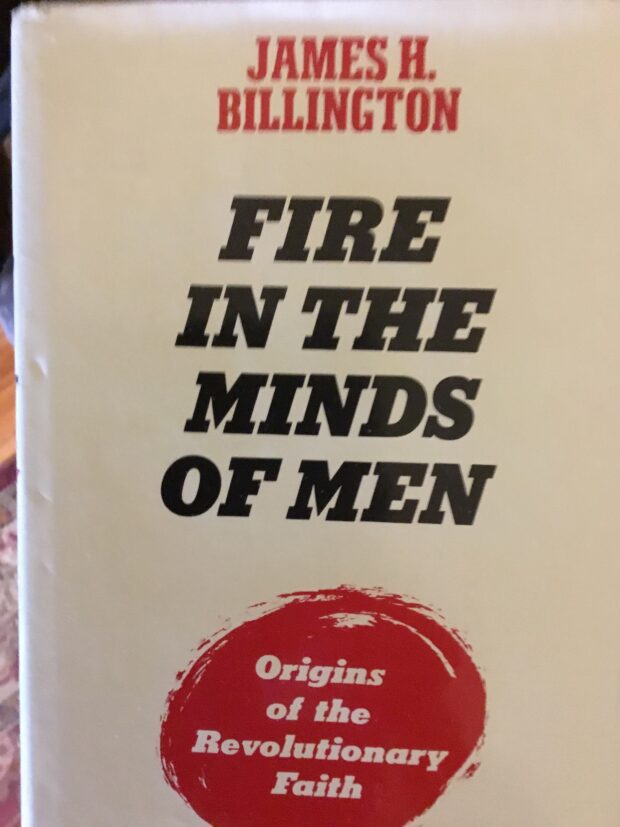
Fire in the Minds of Men: Origins of the Revolutionary Faith, by James H. Billington
Heroes of the Enlightenment (Two Superb Documentaries )
Freemasonry (Book List)
Utopian Nightmares and Gnostic Political Religions
Explore utopian nightmares and gnostic political religions through essential books like Norman Cohn's The Pursuit of the Millennium and The Black Book of Communism, revealing the dark history of ideological extremism.
Utopian Nightmares and Gnostic Political Religions II