By Patrick LAWRENCE
In her revelatory work The Cultural Cold War, the late British author was the first to shine so unblinking a light on the sprawl of the C.I.A.'s cultural interventions.
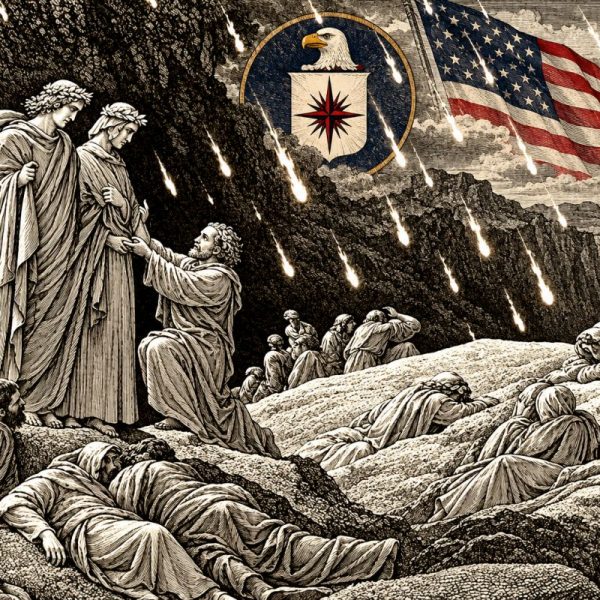
Frances Stonor Saunders was fond of epigraphs (as am I). At the front of The Cultural Cold War: The C.I.A. and the World of Arts and Letters (The New Press, 1999), the British journalist, documentarian and author quotes some lines from Dante's Inferno, the last of which is, "Before my age was full, I went astray."
I had not lived half my life when I succumbed to complacency and moral blindness: This is my reading of the line from Canto XV. And how fitting it is at the start of Saunders' exhaustively researched account of how the Central Intelligence Agency, its tentacles reaching into every corner of American culture, did so much to lead our republic into what the Italian poet would call its selva oscura, its dark wood -the state of lostness America has never since escaped.
Frances Stonor Saunders died on the last day of August, having suffered from a virulent strain of brain cancer. She was a mere 60. We had a few acquaintances in common, but I never met her. It was nonetheless something like losing a friend when, just this past week, I heard of her death. And so this brief appreciation.
The Cultural Cold War made Stonor Saunders' reputation. It took a prominent place on my shelf of Cold War books as soon as it was published. At last the curtain parted on the insidious use the C.I.A. made, or attempted to make, of painters, poets, playwrights, novelists, editors, jazz musicians, singers, dancers, actors, scholars and other cultural figures in its long-running operation to promote the appeal of American life as against the Soviet Union and altogether the postwar socialist alternative.
This was an immense "soft power" operation avant la lettre - before we had the term. One could also call it an early variant of the "cognitive warfare" to which we are now incessantly subjected, the primary object of which was to keep postwar Europe from swinging leftward, as the French, the Italians and others were poised to do.
From Saunders's Introduction:
"Drawing on an extensive, highly influential network of intelligence personnel, political strategists, the corporate establishment, and the old school Ivy League universities, the incipient CIA started, from 1947, to build a 'consortium' whose double task was to inoculate the world against the contagion of Communism and to ease the passage of American foreign policy abroad. The result was a remarkably tight network of people who worked alongside the Agency... Whether they liked it or not, whether they knew it or not, there were few writers, poets, artists, historians, scientists, or critics in postwar Europe whose names were not in some way linked to this covert enterprise."
Who Was Who & Who Stood Where
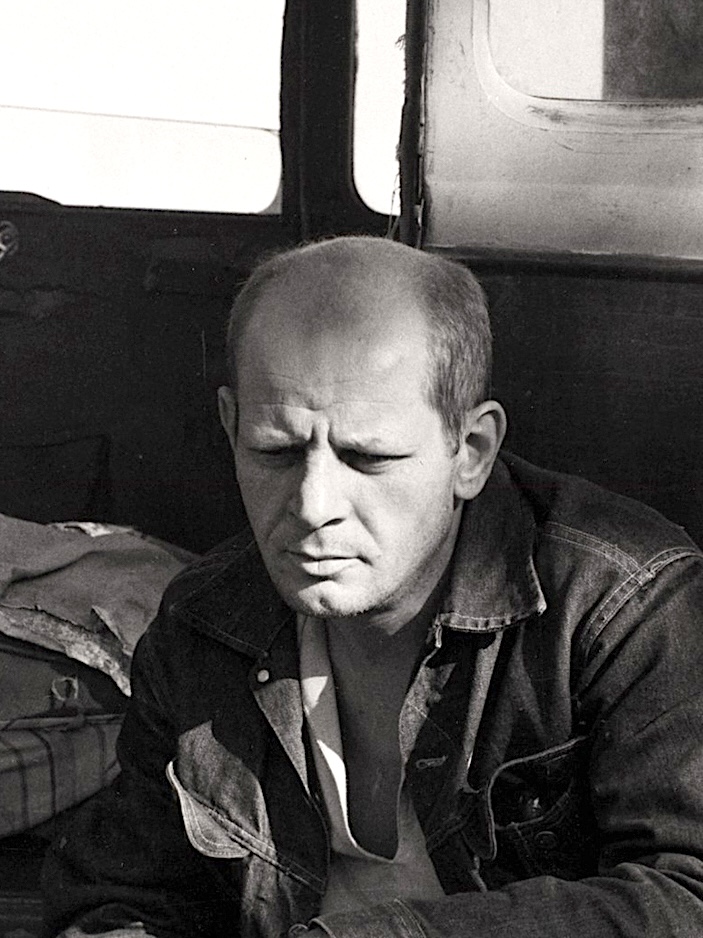
Jackson Pollock in 1951. (Hans Namuth /Wikimedia Commons,Public Domain)
Jackson Pollock and others among the Abstract Expressionists, Leonard Bernstein and others among the American composers then prominent, Robert Lowell, James Baldwin, Mary McCarthy and other writers of their generation, Duke Ellington and other jazz stars - if they weren't sent abroad on the C.I.A.'s nickel, their work was.
There were the hundreds of books the Agency took a role in promoting, It paid for translations of Eliot's Four Quartets, Luigi Barzini's The Italians, Boris Pasternak's Doctor Zhivago. It covertly supported magazines - Encounter and The Paris Review famous among them - along with radio stations and, of course, newspapers - and those who wrote and edited for them. As of 1956 the Agency owned a considerable piece of the Rome Daily American.
Saunders, who did years of interviewing and archival research for this book, lays out her findings over 427 well-written pages and was the first to shine so unblinking a light on the sprawl of the C.I.A.'s cultural interventions.
One of the things I like about Saunders's book, among many, is her exposure of those artists and writers who knew of the Agency's interventions and wanted nothing to do with them, those who knew and cooperated and those who served its purposes unwittingly.
Pollock had no idea of the use to which the Agency put his work, Baldwin wanted nothing to do with the Congress for Cultural Freedom (C.C.F.), infamous as a C.I.A. front. Ever true to her tough-minded politics, neither did Lillian Hellman.
Mary McCarthy knew all about the Agency's funding of the C.C.F. and its other projects and was fine with all of it. I've never liked McCarthy's novels, and Saunders gave me a good reason to distrust her. She was prominent among that group of Americans known as Cold War liberals, for whom I have long nursed an abiding contempt.
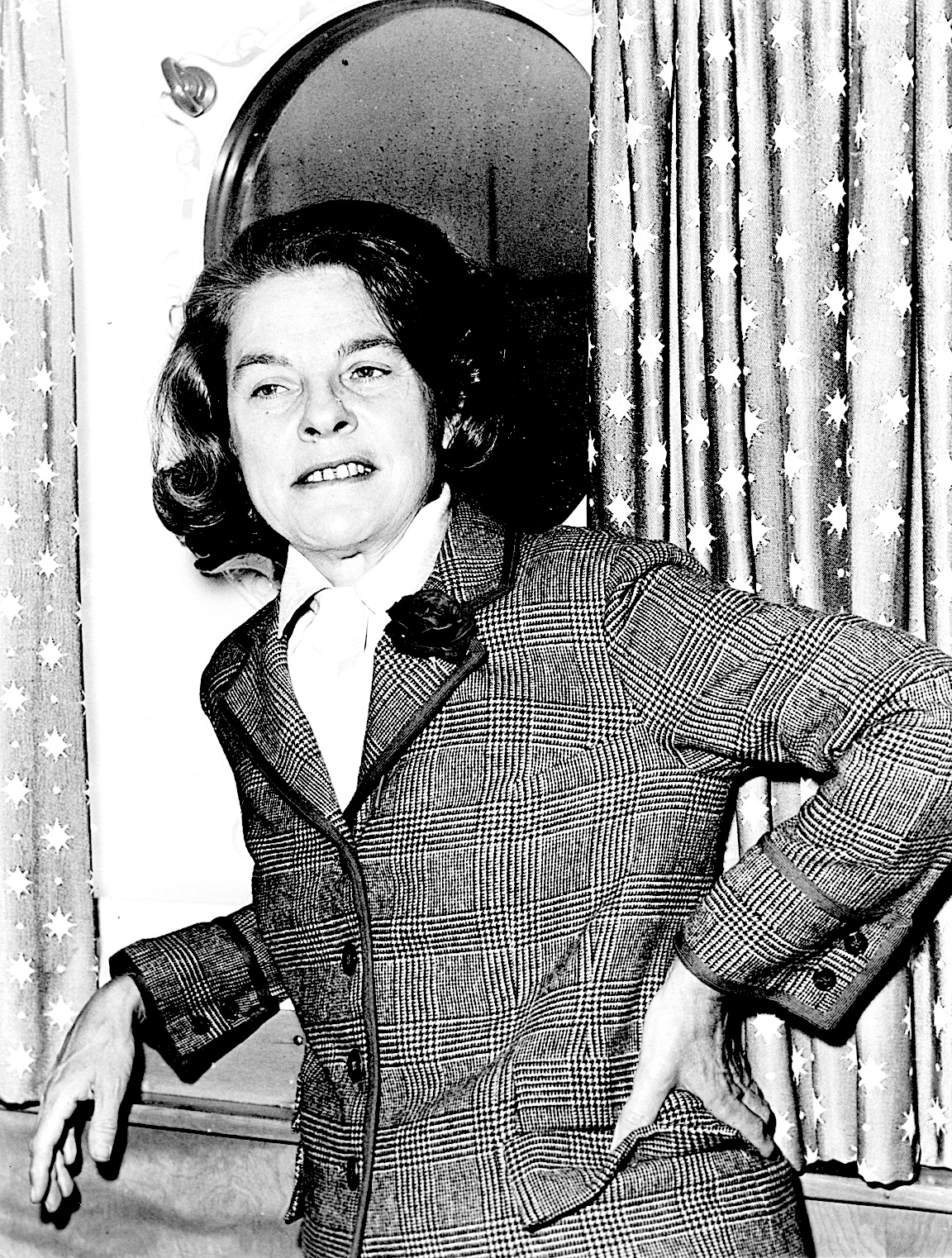
McCarthy in 1963. (Dick DeMarsico/ World Telegram / Library of Congress. New York World-Telegram & Sun Collection/Wikimedia Commons/Public Domain)
I wish Saunders had given more attention to the profligate corruptions of generations of American journalists and newspaper editors, but her definition of culture is narrower than mine; I speculate that journalism's service to the Agency was a room so large she chose not to enter it.
The surrender of many American journalists to the Cold War cause is well-enough documented in any case. See, for example, Carl Bernstein's celebrated " The C.I.A. and the Media," which Rolling Stone published in October 1977, and the House hearings that Bernstein's piece prompted a couple of months later - the Church Committee, whose hearings ran from January 1975 to April 1976, having flinched from this responsibility.
Chronicler of Secrecy
The who-was-who and the who-stood-where and the who-did-what of The Cultural Cold War give Saunders's book an historical specificity I do not think anyone has matched, with the exception of Joel Whitney's Finks (OR Books, 2016), which draws heavily on Saunders's work. She did not leave those of whom she wrote any place to hide.
As I reflect back on her accomplishment now, it seems to me to lie in something she never mentions. Saunders gave us a chronicle of the U.S. culture of secrecy in its earliest days, the first decades after the 1945 victories, when America set about making itself a global imperium.
What comes through in The Cultural Cold War is how little those alive at the time were able to know about their time. Too many events, too many decisions, too many reasons for things happening as they did were hidden, rendered inaccessible.
The C.I.A.'s Cold War interventions have had many enduring consequences. The Agency systematically discredited the principle of nonalignment, which was held high among then-emergent non-Western nations. America brings the same with-us-or-against-us fallacy to the 11 members and 10 partners comprising the BRICS - a complete failure to grasp one of the 21st century's significant realities.
It is the same with the out-of-hand dismissal of all suggestions of moral equivalence in global affairs with those it deems adversaries: The United States is always righteous and never acts but in defense of itself or its always-democratic allies and/or clients. It is never to be accused of aggression. This is what I mean by moral blindness.
The Agency's most disturbing legacy, at least to me, is how little of our world we are able actually to see. Daniel Patrick Monihan warned us of this just before the U.S. century turned in Secrecy: The American Experience (Yale, 1998). So, in her way, did Saunders a year later. Foolish it would be, naïve in the extreme, to think the time she described so piercingly is not the time in which we live.
It is the historians now who tell us who we are - this by telling us who we were. This is why I honor Frances Stonor Saunders as I do. She told Americans of their past, and, so, of their present.
Original article: consortiumnews.com