October 20, 2026
Prior to the disruptions of the current Iran War, the Kingdom of Saudi Arabia (KSA) had spent more than a half-century as the world's leading oil exporter. That crucial economic role and the vast gusher of wealth thus generated had established KSA as one of the most important countries in the world.
The Middle East is a dangerous neighborhood, and the Saudis had long recognized that fact. In recent years, their annual defense budget had been the eighth largest on earth, far ahead of what was spent by France or Japan and approaching that of India.
Over the last dozen years their military expenditures totaled around a trillion dollars, and much of that had been invested in some of America's most advanced and expensive weapons systems. The Saudis deployed hundreds of advanced combat aircraft, so that on paper they possessed nearly twice the striking power of Israel's very formidable air force.
They had also taken many other steps to ensure their safety.
America had long regarded them as our most important Arab ally, and we had provided security guarantees stretching back to President Franklin Roosevelt's famous meeting with King Ibn Saud in 1945. The Saudis hosted some of our own local military forces, and their country was ringed by several of our largest regional bases in Bahrain, Qatar, Kuwait, and the UAE.
Although the Saudis were seen as close American allies, they also maintained excellent relations with Russia, with which they shared leadership of OPEC+, and with China, the top buyer of their oil.
The Saudis also carefully cultivated friends and influenced people by spreading portions of their vast wealth across the Muslim world and beyond. Egypt's huge and impoverished population was partially dependent upon such Saudi largess, while the government of nuclear-armed Pakistan was in a similar situation.
This towering international role for the Kingdom contrasted very sharply with the status of Yemen, their obscure neighbor situated at the bottom of the same Arabian peninsula. That latter country fell at the exact opposite end of the global spectrum, barely known for anything other than khat, the mildly stimulative drug that its impoverished population constantly chewed, often injuring their gum tissue as a consequence.
Political division and civil war had long been endemic to Yemen. For more than twenty years the internationally recognized government of that country has been locked in a bitter conflict with the rebellious Houthis, a northern militia of fierce mountain tribesmen who gave it a great deal of trouble despite its strong military support from both the Saudis and the UAE.
I doubt that too many people around the world had ever paid much attention over the years to the khat-chewing Houthis or their simmering resentment at what they regarded as Saudi interference in their own country's internal political conflict.
But in recent weeks and especially in recent days, this situation has been drastically transformed. Our news headlines have been filled with reports of the terrible destruction that Houthi missiles and Houthi drones have inflicted upon Saudi Arabia, a country with a per capita GDP that was roughly one hundred times higher.
Many of the most important Saudi oil facilities have been severely damaged, reducing their exports of crude to almost nothing. Attacks on the Kingdom's major airports have shut down most of the flights, effectively imposing a substantial air blockade against a country long considered a central pillar of the global economy.
As an example of the dramatic impact of these Houthi attacks, some 300 of the world's leading CEOs and senior executives had been scheduled to attend the important five day WPC Energy Congress held in Riyadh. But with most flights to the country cancelled and the looming threat of additional Houthi missile strikes, many of those top business leaders had cancelled, including the chief executives of Exxon, Shell, Chevron, and BP, with others only participating via video calls.
Top energy CEOs pull out of Riyadh conference after Ansarallah airport strikes
-- Several of the world's top energy executives were removed from the schedule of the WPC Energy Congress in Riyadh following Ansarallah's strikes on the Saudi capital, Reuters reported on 12 October.The chief executives of ExxonMobil, TotalEnergies, Shell, Chevron, and BP were all expected to attend but were no longer listed on the conference agenda.
BP cited travel disruptions, while Shell declined to comment and the other companies did not immediately respond.
The congress is being held around 10 kilometers from King Khalid International Airport, which has been targeted by the Yemeni Armed Forces at least four times in the past week.
Saudi Energy Minister Prince Abdulaziz bin Salman insisted the kingdom remained safe despite acknowledging the attacks were serious and required an "equally serious" response.
The strikes have dealt another blow to Crown Prince Mohammed bin Salman's Vision 2030, which seeks to transform Saudi Arabia into a global investment and tourism hub through major international events.
The congress, originally scheduled for April, had already been postponed following the US-Israeli war on Iran.
The latest Ansarallah attacks came after repeated warnings by Sanaa to avoid Saudi airports, with Saudi authorities choosing to keep air traffic operating.
- The Cradle (@TheCradleMedia) October 12, 2026
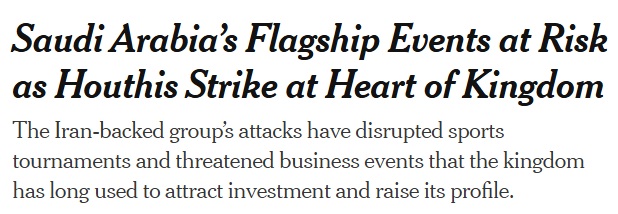
Over the last generation or two, the Saudis have invested enormous effort and vast sums of money in raising their global standing by attracting many high-profile international events to their country. But on Friday, another New York Times article emphasized that many of these would now be severely diminished or even cancelled.
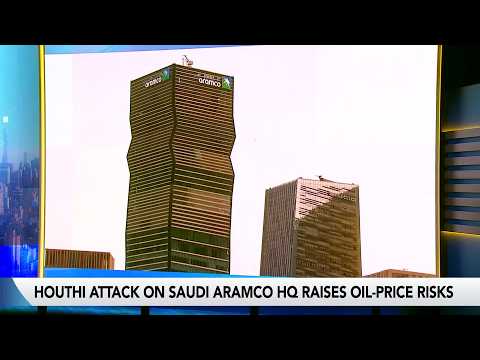
One of the Kingdom's proudest achievements over the past decade had been the privatization of Saudi Aramco, the state oil company. In 2019 that corporation went public in what was then the largest IPO in history, and since that time it has sometimes ranked as the most valuable company in the world, with its current market value being over $1.6 trillion. But a few days ago, Houthi missiles seriously damaged the Aramco headquarters, representing a terrible national humiliation.
The Saudis have an annual military budget of well over $80 billion while that of the Houthis is so small that the Gemini AI will not even hazard a guess as to its size. But the former seem totally helpless at defending themselves against the attacks of the latter, or even merely deterring those constant strikes.
A few days ago, the editor of the Wall Street Journal published a special note highlighting the front-page story the newspaper was running that same day on the terrible Saudi predicament:
A deadly attack on Saudi Arabia's main airport over the weekend exposed a deepening crisis for Crown Prince Mohammed bin Salman. The strikes by Iran-backed Houthi militants killed at least 12 people and injured hundreds more.
With threats mounting, the crown prince is shuttling between heavily guarded palaces equipped with bunkers. The violence threatens his ambitions to turn Saudi Arabia into a global tourism and investment hub. Summer Said and Georgi Kantchev examine how Mohammed's own decisions have contributed to his predicament, with rising defense and infrastructure costs threatening to siphon away funds needed for the economic diversification push.
The attacks are also wreaking havoc on global air travel. Airlines canceled more than 1,000 flights, as threats to Saudi airspace jeopardize one of the last two major air corridors connecting Europe and Asia.
For nearly a decade, Crown Prince Mohammed bin Salman (MbS) has been the imperious de facto ruler of the Kingdom, but according to the Journal he had gone into hiding, secretly moving from bunker to bunker, surrounded by his handpicked personal security force. Meanwhile, the sudden loss of nearly all his country's oil revenues might be producing a major financial crisis for his regime.
These are dramatic developments. The Kingdom is now nearly a century old, but last week many knowledgeable experts in the history and politics of the region began suggesting that the long reign of its royal family and perhaps even its national existence might be tottering.
For decades Chas Freeman has ranked as one of our most distinguished diplomats, serving as our ambassador to Saudi Arabia during the crucial period of the 1991 Gulf War, and then spending time as an assistant secretary of defense. He obviously knows the Persian Gulf region extremely well, and in his interviews last week, he raised the possibility that Saudi Arabia might collapse.

Alastair Crooke has also spent decades involved in the Middle East, first as a senior MI6 officer and then as a British diplomat and influential peace negotiator. He came to many of the same conclusions.

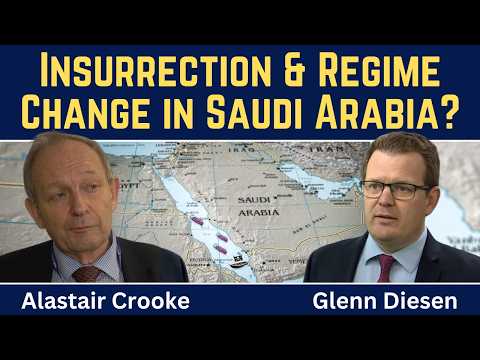
A crucial point heavily emphasized by Crooke was that the fearful, furtive movements of the Saudi leader were not due to any concerns that he might become the victim of some missile strike by the Houthis, who had no record of undertaking such assassination attempts.
Instead, he surely dreaded his multitude of internal Saudi enemies, all of whom might regard his recent failures and his current weakness as an invitation to eliminate him or perhaps even overthrow his entire ruling dynasty.
The Saudis have long been deeply hostile to Shia Iran, which they regarded as the great regional rival to their own Sunni Muslims of the Persian Gulf. But the Iranians constituted an ancient civilizational-state whose political existence stretched back thousands of years, while with some justice they regularly referred to Saudi Arabia and the other wealthy Gulf Arab states as merely family dictatorships.
In his interviews, Crooke has explained that Ibn Saud conquered and subjugated the many other tribes of the Arabian peninsula more than a century ago, establishing a kingdom that he named after his own family. But for generations many of those large and powerful tribes have remained restless and deeply resentful of what had happened. So if the central Saudi government were perceived as weak and vulnerable, they might rise up to overturn that past political settlement, especially if they were offered significant external military support. And according to Crooke, the Iranian IRGC may already be meeting and talking with some of those restive tribal leaders.
Furthermore, in recent years Saudi finances have come under severe pressure. So most of their military officers do not receive the lavish stipends doled out to those of the ruling al-Saud tribe, and they often nurse bitter resentments as a consequence.
As Crooke mentioned in a recent column:
MbS' fear is that one F15 pilot, outside of the privileged Royal family Stipendiary circle, might choose to attack one of the Kingdom's princely palaces (instead of striking at an AnsarAllah target) as a prelude to an all-out military revolt. This is no fanciful threat — an old 'Saudi hand' recalled recently hearing one young Saudi officer threatening to do exactly that.
Crooke also quoted the observations of renowned geopolitical strategist Edward Luttwak, a figure well-connected to Western intelligence services:
"the reason for [the impotence] of Saudi Arabia, in the face of the Houthi offensive, is that, for the Kingdom's ruling family, the most deadly danger has long been a military coup d'état — such as the one which ended Iraq's monarchy and killed every single member of its Husseini ruling family on 14 July 1958."
"Against that danger, the successive heads of the Saudi ruling family have implemented the most effective remedy possible: divide and rule, not against foreign enemies, but within their own armed forces. For that reason, the different combat elements of the armed forces are geographically separated in the country's vast territory, and commanded by different princes in charge of various parts of the ministry of defence, all of which are subordinate to the minister himself, Prince Khalid (a younger brother of Mohammed bin Salman)".
The downfall of Saudi Arabia would be a geopolitical event of enormous global magnitude, and if the Kingdom fell, probably few of the other, much smaller Gulf Arab monarchies would survive intact, while the additional ripples would surely transform the entire Middle East. Taken together, the Persian Gulf countries provide more than 40% of world oil exports, and if most of their regimes fell, the consequences of that disruption could be catastrophic.
Despite the dangerous and disruptive impact of the Iran War, even just a couple of months ago few could have imagined the possible collapse of Saudi Arabia, let alone that it might have come about at the hands of the Houthis, a group almost unknown to most of the world.
The sequence of events directly responsible for these momentous developments began in early September with a major Houthi offensive in Yemen. Not long afterward I discussed the unfolding situation in an article:
The Houthi forces of Yemen—the widely used name for Ansar Allah-launched a sweeping ground offensive against the Saudi proxies facing them, quickly putting the latter to flight, as they abandoned their military equipment in a wild panic. Within a couple of days, the Houthis had successfully seized a long stretch of important coastline as well as the local islands. This allowed them to completely consolidate their control of the Red Sea shipping lanes around the narrow Bab al-Mandab Strait, banning all Saudi cargo traffic.
The de facto leader of Saudi Arabia is Crown Prince Mohammed bin Salman (MBS). According to media reports he became so desperate at these successful Houthi advances that on Thursday he personally called President Donald Trump two separate times, pleading for American airstrikes that might turn the tide of battle and rescue the situation. But Trump rejected his requests.
At a press conference, Trump seemed to claim that he didn't want America to get in the middle of the conflict between the Houthis and the Saudis, so he chose to abandon the latter to their fate:
Despite his words, I think a far more plausible explanation is that Trump and his advisors recognized that they lacked any effective means of stopping the Houthi forces and they were extremely reluctant to demonstrate such total military impotence by trying to do so.
When the Houthis had previously interdicted Red Sea shipping a couple of years ago, Trump had boastfully promised to crush them, and he deployed an aircraft carrier task force to do so. But after weeks of combat and large numbers of airstrikes, the Houthis had remained unbowed, while Trump's forces had lost several aircraft and many advanced $30 million Reaper drones to Houthi missiles, forcing Trump to withdraw in failure.
In the wake of our unsuccessful war against Iran, America's military forces in the region are now far, far weaker than they had been at the time. Our local bases have mostly been destroyed by Iranian missile strikes, our antimissile interceptors are severely depleted, and only a sole aircraft carrier is currently enforcing its distant blockade of Iran while stationed hundreds of miles away from the Iranian coast.
Constant attacks by Iranian missiles and drones had already forced us to withdraw our aircraft from the Persian Gulf region, redeploying them to air bases in Jordan.
But just a day or two before the Houthi ground offensive began, our main Jordanian base also came under very heavy Iranian attack, bombarded by 20 or more Iranian ballistic missiles. Initial news reports claimed that all these missiles had been shot down or missed their target, but sources then revealed that an A-10 aircraft had been destroyed and some eight F-15s were damaged.
Even that less than successful defense against that volley of missiles had required us to further deplete our supply of advanced munitions. By some estimates, we had fired off as many as 100 Patriot interceptors, amounting to a very significant fraction of the dwindling global stockpiles that would take us many years to replenish.
We could not cope with such continuing expenditures, whereas the Iranian supply of ballistic missiles seemed inexhaustible. So we would probably soon be forced to abandon our Jordanian bases and shift our forces to Israel or even back to Europe. And as both our land- and sea-based aircraft were steadily moved farther and farther away, their effectiveness in striking any targets in the Persian Gulf region was greatly diminished.
- The Collapse of the Saudi-American Alliance?
- Ron Unz • The Unz Review • September 14, 2026 • 4,000 Words
Once that successful Houthi ground offensive reached the headlines, many of the regional experts whom I closely follow began explaining the true circumstances of the long conflict with the Saudis in Yemen.
In an article the following week, I recounted those important historical facts, which were quite different from what our mainstream media had always suggested:
Although the Houthis had held their own on the battlefield, the huge political clout of the wealthy Saudis and the other Gulf Arab states had persuaded the West to impose a brutally harsh siege on the Houthi-controlled territories, banning the import of food, medicine, and other vital supplies. Years of a massive Saudi bombing campaign had also destroyed much of the local civilian infrastructure, and according to UN estimates, the combination of these two factors had led to hundreds of thousands of civilian deaths over the years. But despite having nearly the entire world lined up against them, the fiercely determined Houthis had never given an inch.
However, the sudden prominence of the Houthis led to interviews by many knowledgeable experts on the region who discussed their background. As I began listening to these, I quickly discovered that much of the information that I'd casually absorbed from years of occasional media coverage had been severely distorted.
The Houthis had originally begun in 2003 as a Yemeni rebel movement led by a religious leader named Hussein al-Houthi. Although he was killed by the government the following year, his early leadership role allowed their political enemies to affix that rather marginalizing and disrespectful name on the organization, implying they were merely some group of rebellious tribesmen. But by 2014, those so-called Houthis had captured Yemen's capital city of Sanaa and territory that included some 70-80% of the total population.
A rebel movement that has spent the last dozen years controlling both the capital city and the overwhelming majority of the Yemeni population has obviously long since become Yemen's de facto national government. But the Houthis were deeply hostile towards both the Saudis and the Israelis and had friendly relations with Iran, so our notoriously dishonest global media concealed the reality that they ruled Yemen and still portrayed them as mere "rebels."
Since almost everyone causally called them the Houthis, there is no great harm in continuing to do so, but rather than that name or even Ansar Allah, they should most appropriately be called the government of Yemen. Thus, the recent military offensive actually represented a successful drive by the Yemeni government to regain those portions of its national territory still occupied by Saudi-backed foreign mercenaries.
Once I realized that the conflict was actually between Yemen and Saudi Arabia, I suddenly understood matters in a completely different light.
Prior to the discovery of oil more than a century ago, the vast interior of the Arabian Peninsula had been regarded as worthless, empty desert and its inhabitants as ignorant, wandering tribesmen. Meanwhile, coastal Yemen had always been considered far more developed and advanced.
Since then, a vast sea of unearned oil wealth has elevated the Saudis to global influence and the same has also been true for many of their neighboring Gulf Arab states. But most Yemenis continue to despise these peoples as the regional equivalent of the Beverly Hillbillies of 1960s television fame.
So although our biased media generally portrays Saudi Arabia, the UAE, Qatar, and the other oil states as developed nations and the Houthis as wild tribesmen, the latter with some justice believe that the true facts are the opposite. Indeed, the Iranians routinely denigrate all those former countries as merely being corrupt and incompetent family dictatorships made wealthy by their luck in having huge natural resources found on their lands. The easy military victory of the impoverished Yemenite Houthis over the lavishly funded Saudi forces supports this perspective, as does the fact that Yemen apparently produces most of its own advanced weapons, while the Saudis have virtually no such industrial capabilities.
On Friday one of the most experienced Middle East journalists at the New York Times published a long article describing the utter helplessness of the lavishly funded Saudi military in the face of these continuing Houthi attacks.
In my own September article, I had already discussed some of the possible consequences of this apparent situation:
Given this larger framework, the sudden indications of considerable Saudi vulnerability suggested some dramatic possibilities that might begin to unfold.
As the longtime chief of staff to former Secretary of State Colin Powell, Col. Larry Wilkerson spent decades as a participant in the innermost circles of American national security discussions, giving him the self-confidence to sometimes be quite bold in his statements. In an interview more than a week ago, he speculated that after the Iranian-aligned Houthis finished defeating the Saudi forces in their own country, they might then decide to invade Saudi Arabia itself and overthrow its government.
At the time, I wasn't too sure how seriously to take Wilkerson's glancing remarks, but in a more recent interview with Prof. Glenn Diesen a few days ago he focused very heavily on that exact issue, arguing that the country the world has long known as Saudi Arabia might soon "disappear."

Crooke had made similar points at the time:

A possible trigger for such a Saudi collapse might lie in certain events of the early 1930s that had been totally unknown to me. As Ibn Saud was creating his new country with British backing, he successfully conquered and annexed three provinces of Yemen, and subsequent governments of that latter country have never reconciled themselves to that loss. Those lands are apparently far richer and more fertile than most of Arabia's trackless desert and the local tribes living there still retain strong ties to their Yemeni cousins across the border.
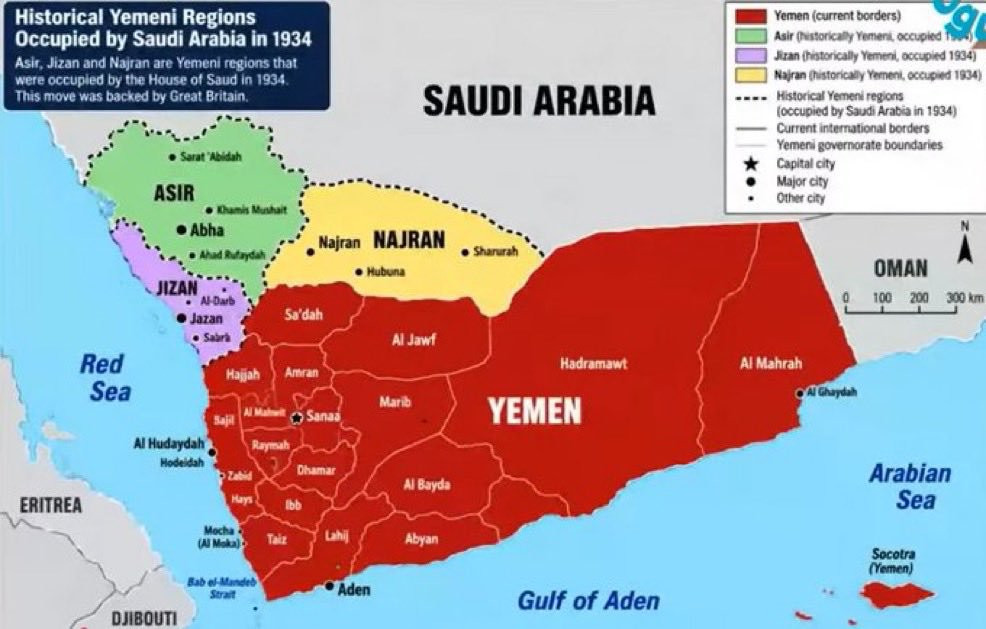
Freeman also told the same story of the bitter resentment of the Yemenis over those lost provinces:

So if the Yemeni Houthis continue to demonstrate their clear military superiority over the Saudis and Saudi-backed forces, they might decide that the time had finally come for them to regain the territory they had lost almost a century ago. If they did so by defeating the Saudi military on current Saudi territory, such a dramatic result might easily set into motion the collapse and dismemberment of that extremely wealthy but weak country.
Since its founding, Saudi Arabia has been controlled by the extremist Wahhabi sect of Sunni Islam, and it has therefore often mistreated its 10-15% Shia minority. Back in March, I noted back that this oppressed minority was heavily concentrated in the area containing the major Saudi oil fields, and Freeman also emphasized that important fact.
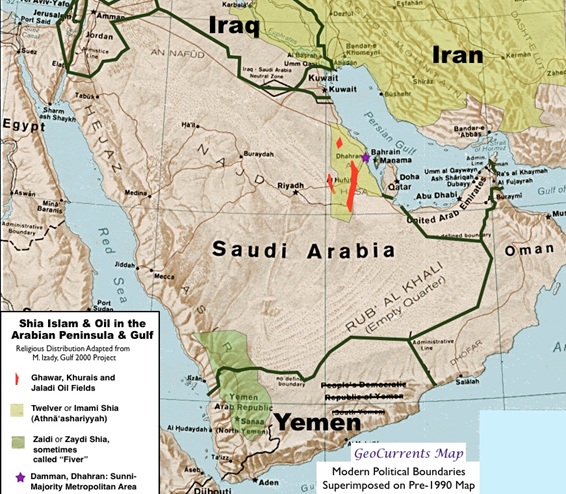
Therefore, it might be natural for Shia Iran and Shia Iraq to assist their long-oppressed Saudi co-religionists in gaining their independence, especially given the vast oil wealth the latter would then control. Other Saudi neighbors might cooperate in also seizing portions of territory to which they had or could invent some sort of claim, while the many disgruntled Saudi tribes would rise up against the existing government.
In that same March article, I had also suggested that the possible fate of the Saudis might be shared by some of the other, lesser Gulf Arab states:
For example, the Kingdom of Bahrain had once been part of Persia and although its population is overwhelmingly Shia, it has been ruled with an iron fist by a Sunni monarch, so the Iranians might reincorporate it into their country. The citizen population of the United Arab Emirates (UAE) is little more than a million and since it has supported the American attack, Iran might also seize it in retaliation.
One excuse for Saddam's 1990 invasion of Kuwait was that the small oil-rich state had traditionally been regarded as an Iraqi province. With Iraq now ruled by Shias closely aligned with Iran, if Kuwait allowed itself to be drawn into the war, it might be invaded and reannexed by the Iraqis. Such an action would completely reverse the outcome of our victorious 1991 Gulf War that had marked the beginning of America's unipolar moment.
These current Gulf Arab countries only came into existence in the aftermath of the First World War and the collapse and disintegration of the defeated Ottoman Empire, with a victorious Britain carving out many of these new states and setting their borders. So it would hardly be impossible if a decisive Iranian victory over America more than a century later also set into motion major changes in the regional map.
On Saturday, Crooke reviewed the current state of the broader Middle East conflict, and the difficult prospects that the Saudis faced in keeping their regime intact given the loss of their oil revenues and their demonstrated military weakness.
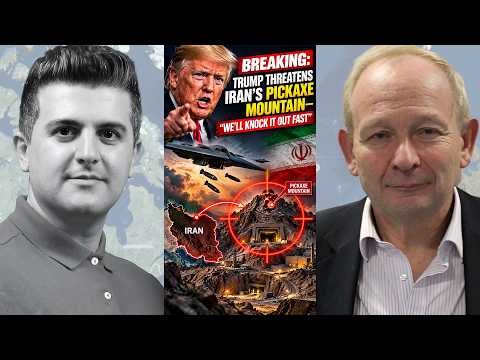
On Sunday morning. Iranian Prof. Mohammad Marandi similarly described the terrible political and financial pressures faced by the Saudis and their fellow Gulf Arab monarchies, and the likelihood that a wider war would soon break out, helping to bring all of them down.
Subscribe to New Columns
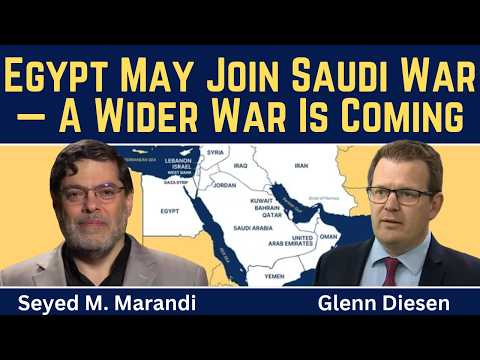
In September I had explained how a disastrous decision by the Saudis had reignited their dormant war with the Houthis, a war that now directly threatened their survival.
If any of these dramatic developments take place the primary cause will obviously have been the reckless stupidity of the Trump Administration in attacking Iran, thereby unleashing a war that now seems to have been lost. But an important secondary factor would have been the equally reckless stupidity of the Saudi government in doing the same against the very tough Houthi forces of Yemen.
Beginning in October 2023, the Houthis had captured world attention when they supported the beleaguered Palestinians of Gaza by interdicting all Israel-associated shipping on the Red Sea while regularly firing missiles into Israel itself, doing so despite air strikes by the Biden Administration. This Houthi blockade led to the bankruptcy and closure of Israel's important Red Sea port of Eilat, and was the strongest retaliatory action taken by any government anywhere in response to Israel's brutal ongoing massacre of Gazan civilians.
Soon after Trump returned to the White House, he ridiculed Biden's weakness and promised to smash the Houthis and end their blockade, dispatching a powerful carrier task force to do so. But weeks of attacks in Operation Rough Rider failed to subdue the determined Houthis while costing us a couple of our top-line aircraft and more than a half-dozen advanced Reaper drones, each of which cost tens of millions of dollars. So Trump eventually abandoned the effort in failure while loudly declaring victory, having learned that the Houthis were very tough and determined fighters...
The Houthis were Shia Muslims closely-aligned with Iran. So when America and Israel suddenly launched their massive surprise attack against that latter country at the end of February of this year and the Iranians immediately retaliated by closing the Strait of Hormuz to cargo traffic, there were widespread expectations that the Houthis would soon enter the war on behalf of Iran by restarting their Red Sea blockade and extending it to the large Saudi oil shipments now redirected from the Persian Gulf. But despite some public warnings, they did not do so...
Such a Houthi entrance into the war would have greatly aided Iran but it never came, leading me to conclude that the Iranians had far less influence over the Houthis than was widely believed...
But I also considered that the earlier Houthi blockade had only been directed against the Israelis not the Saudis. Despite their bitter hostility against the latter, a truce was in effect, and that probably explained why Saudi shipping had not been interdicted. Restarting a war against the Saudis without any provocation or excuse was probably contrary to their religious convictions, and I wondered if that factor might not have explained their surprising quiescence. Although modern Westerners would almost always concoct an excuse for breaking a truce if military considerations warranted doing so, the Houthi leaders were deeply religious, so they might see things quite differently, being unwilling to break their pledged word regardless of how advantageous it might be.
A couple of days ago, Lt. Col. Daniel Davis interviewed a prominent Yemeni journalist , and the latter fully confirmed my suspicions, saying that the Houthis believed that breaking a truce would lead to divine punishment and likely defeat in war. The guest's English was far from perfect and very heavily accented, and being a traditional Yemeni he wore a gigantic curved dagger that he revealed at the end of the show, but he provided considerable insights on Yemeni perspectives and the local geopolitical situation.
If religious scruples had indeed been a major factor preventing the Houthis from interdicting the vulnerable Red Sea shipping of their hated Saudi enemies, the latter were very foolish in breaking the longstanding truce and reigniting the conflict.
This breach occurred in the aftermath of the funeral services for Ayatollah Ali Khamenei, the 87-year-old Iranian Supreme Leader killed at the beginning of the war together with most of his family. After a temporary ceasefire was established a few weeks later, the Iranians organized a public funeral procession for their martyr, one of the world's highest-ranking Shiite clerics. Across Iran and Iraq, this six-day ceremony attracted an estimated 40 million mourners, probably constituting the largest public gathering in human history.
Being Shiites who had deeply admired Khamenei, the Houthi leaders attended that service, flown there on an Iranian plane. But as they returned to Sanaa, the airport was hit by a Saudi missile strike, with some believing that this blatant violation of the truce may have been a failed assassination attempt aimed at decapitating the Houthi movement. The angry Houthis responded with a few retaliatory missile strikes against Saudi targets, and most observers including myself assumed that this tit-for-tat exchange marked the end of the matter.
But the Houthis now regarded the truce as broken and they waited for the best opportunity to fully renew their war against the Saudis, doing so in July when the conflict between America and Iran resumed. After some preparation, they then launched their major ground offensive earlier this month.
Ironically enough, according to attorney Robert Barnes , Trump had been the one who encouraged the Saudis to break the truce and attack the Houthi delegation at the airport. If so, the Saudis were naturally outraged when our president later abandoned them after their forces suffered a severe military defeat.
- Redrawing the Map of the Middle East?
- Ron Unz • The Unz Review • September 21, 2026 • 5,700 Words
Although it is far from certain, the century-old Kingdom of Saudi Arabia and most of the other Gulf Arab monarchies may soon be brought down as a consequence of an ill-judged war with the Houthis of Yemen. If so, the primary agent of their downfall will be the current Saudi crown prince, who broke a truce and restarted a war when he had no sensible reason to do so. Unfortunately, that fateful decision seemed very much in character with so many of those he had made in the past.
The Kingdom had been founded by Ibn Saud, a fierce desert warrior chieftain born in 1876, who had 18 legal wives and 25 sons. After his own reign, the throne was passed down across the sequence of the latter, many of whom lived very long lives.
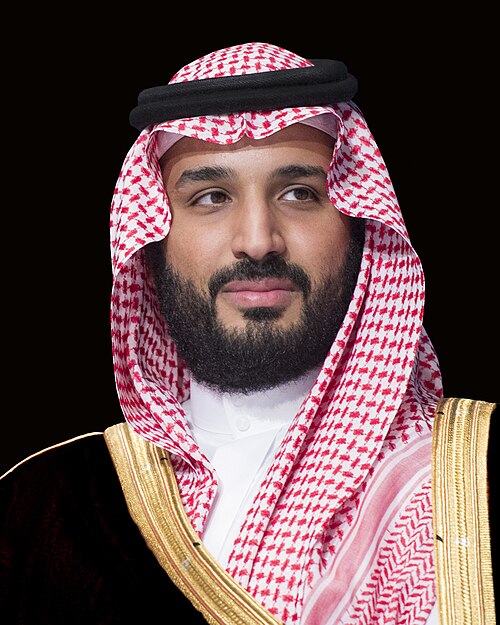
Mohammed bin Salman
King Salman, one of the last of those sons, today reigns at the age of ninety, but all power is actually held by his own son Mohammed bin Salman, widely known as MbS. That 41-year-old crown prince was the first of the third generation to gain power, and his catastrophic mistakes might now result in an end of the dynasty and perhaps even the collapse of the country that it has long ruled.
When his father Salman came to the throne in 2015, MbS was appointed deputy crown prince and defense minister at the age of 29. In that latter role, he soon began the disastrous military intervention in Yemen that may now finally bring him down.
He also soon began clashing with his cousin Crown Prince Muhammad bin Nayef (MbN), a much older and highly regarded fellow member of the third generation who had long served successfully as interior minister and was quite close to the American and British intelligence services.
A power struggle developed between the two cousins, and in a 2017 palace coup MbS successfully ousted his rival as heir to the throne. The former crown prince and some members of his circle then suffered permanent imprisonment and eventually brutal torture.
With his father the king being elderly and decrepit, MbS quickly established himself as the de facto ruler of the country. Since the death of Ibn Saud in 1953, the royal family had always ruled by consensus, with the numerous half-brothers and their families sharing power. But all of that quickly changed with MbS, whose total disregard for traditional norms and extreme recklessness easily exceeded the characteristics of our own president, whose favor he greatly enjoyed.
Just a few months after becoming crown prince, MbS invited the cream of Saudi society to an event at the capital's exclusive Ritz-Carlton hotel. He then had them all seized and held captive for days by his own security staff, demanding that they turn over a major portion of their personal wealth, and torturing many of the ones who resisted him. His victims not only included the wealthiest Saudi billionaires but also all his princely cousins of the other branches of the royal family, including the adult children of previous Saudi kings. As a result of that operation, he broke their power and essentially established himself as a personal dictator in what had previously been an oligarchical system.
Estimates of the funds he seized from those victims generally run into the many hundreds of billions of dollars. Even worse than the loss of their money was the terrible humiliation suffered by those many royal princes, some of whom were allegedly hung upside-down as they were coerced into disgorging their personal assets. It is easy to imagine that they would eagerly seek vengeance if an opportunity presented itself.
Around the same time, MbS kidnapped the visiting Prime Minister of Lebanon. The Lebanese leader was brutally beaten and forced to announce his political resignation in a broadcast, a decision that he retracted once he was released and allowed to return to his own country.
Soon after MbS seized power, the very well connected Saudi journalist Jamal Khashoggi fled into self-imposed exile. He lived as a permanent resident in America, becoming a columnist for the Washington Post and frequently criticizing the new Saudi regime. But the following year, Khashoggi was successfully lured into the Saudi consulate in Istanbul, then killed and dismembered by a personal death squad dispatched by MbS, with a video recording of his dying agonies allegedly sent back for the enjoyment of the Saudi crown prince.
Aside from these extremely harsh actions against his perceived rivals or others, MbS has also undertaken numerous failed but extraordinarily expensive vanity megaprojects. These included the construction of a futuristic new city in the desert, whose impossible price-tag eventually ballooned as high as $8.8 trillion.
In 2019, MbS staged the mass executions of dozens of individuals who had been involved in public protests against his government, with most of them tortured into confessing that they had committed terrorism.
These are merely a few of the more egregious actions taken by a royal prince who seemed to regard himself as totally exempt from any of the traditional norms of behavior in his own monarchical society, let alone what was considered acceptable in the rest of the world. For the last decade, MbS has been protected from reality by his own wealth and the wealth of the country he controlled, but the international bills may now be coming due.
The many bitter internal Saudi enemies he has made over those years help to explain why he is currently spending his days furtively scuttling from secure bunker to secure bunker.
In reviewing the story of the man who might well become the last crown prince in Saudi history, I recalled reading a devastating profile of his personal background and rise to power that had been published some years ago in the New York Times. But I initially had a surprisingly difficult time locating it, though I finally managed to do so. I suspect that MbS may have made exerted considerable effort to suppressing the easy availability of that particular article in Internet search engine results.
The piece was a lengthy excerpt from a new book by the Beirut bureau chief of the Times, and its subtitle was quite significant:
Mohammed bin Salman was the sixth son of the 25th son of a king — in short, a man seemingly destined for obscurity. It didn't work out that way.
As the lengthy article explained, MbS spent most of his life in the double-shadow of his far wealthier and more powerful relatives. Not only did his own father Salman rank well below many older brothers and half-brothers in the Kingdom, but MbS himself was a son of Salman's third wife. His own much older half-brothers were far more successful and accomplished than he himself was, and they were the apple of his father Salman's eye.
But as the journalist rather cryptically explained, all of that quickly changed a quarter-century ago:
In 2001, Salman's oldest son, Fahd, who had helped out reporters during the Gulf War, died suddenly at age 46. A year later, his brother Ahmed, the Kentucky Derby winner, died, too, at age 44. The declared cause in both cases was heart attack, but the underlying reasons were never made clear.
The sudden, untimely deaths of two sons threw Salman into deep mourning.
Those two sudden deaths of his older half-brothers meant that when his father Salman eventually came to the throne, MbS rose with him, soon having an opportunity to seize the total power that he now enjoys.
And according to a former top Saudi intelligence official interviewed in 2021 by CBS Sixty Minutes, MbS sought to expedite his own father's accession to the throne in 2014, proposing the poisoning of his predecessor King Abdullah.
I'd strongly recommend reading the entire article for an excellent overview of the man who is currently playing such a major role in remaking the Middle East.
MBS: The Rise of a Saudi Prince ( FREE LINK)
Mohammed bin Salman was the sixth son of the 25th son of a king — in short, a man seemingly destined for obscurity. It didn't work out that way
Ben Hubbard • The New York Times • March 21, 2020 • 8,500 Words