By Wendy Williamson
WendyWilliamson.com
October 26, 2026
"And that no man might buy or sell, save he that had the mark" - Revelation 13:17
The Anti-Church isn't a building or a denomination. It isn't a government or an institution. It's a subconscious pattern-and it can be resisted, but only when enough people become aware of what they're participating in.
It's what Jung called enantiodromia: the tendency of a thing, pushed toward an extreme, to turn into its opposite. Not by plan. By pressure. You start out defending something true, and somewhere along the way you become the thing you were defending against. You don't notice it happening because you're busy defending the original position with the same methods as the opposition.
Watch how it happens. The Church assumed the authority to bind and loose. To forgive. To open the door. Then it became the same institution Jesus came up against. The power to forgive became the power to record. The power to open became the power to exclude. Same structure. Same roles. Opposite spirit.
A Dominican friar named Johann Tetzel traveled town to town with a sales pitch: "As soon as the coin in the coffer rings, the soul from purgatory springs." He wasn't selling a rogue idea. He was selling the system the Church had built. What was meant to restore relationship had become a transaction.
Over centuries, the Church's spiritual authority became entangled with institutional power. The Church became an empire. Then the empire fell. But the structure endured. It stood there, hollowed out, ready to be occupied by something new.
The original Church is the body of Jesus followers. Not an empire. Paul put it like this: "Now you are the body of Christ, and each one of you is a part of it" (1 Corinthians 12:27). A body has eyes and hands and feet. It has wounds. It doesn't have an administration or hierarchy. It has members who need each other.
In Acts, when the church was still new, "They devoted themselves to the apostles' teaching and to fellowship, to the breaking of bread and to prayer They sold property and possessions to give to anyone who had need" (Acts 2:42-45). That's not an institution. That's a table.
Grace can't be administered. You can't credential it or verify it. You can't put it on a ledger the way the institutional church tried. It built the ledger, called it a sacrament, and told people the ledger was grace. It wasn't.
The fallen church was a signpost that had tipped over. The Anti-Church is the cliff it was supposed to warn you about. The signpost at least knew it was pointing beyond itself. The Anti-Church points at the system and calls it salvation.
What follows is about the machinery: the saints who sell it, the sacraments that run it, and what it makes of an ordinary, hollowed-out life.
The Saints
Institutional churches have saints-people who wear the faith in public and represent it well.
They are witnesses. They point past themselves. They don't build a personal brand-they're remembered for how little they kept. Some of them died for it.
The Anti-Church has saints too. A different kind.
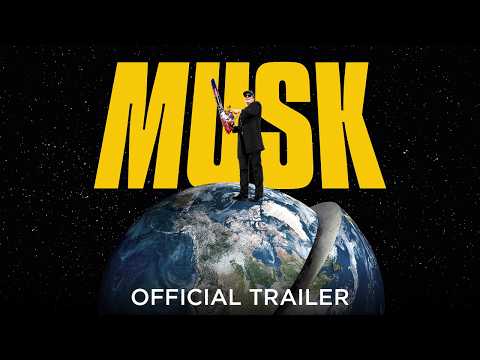
Elon Musk: The Forerunner
Musk used Jesus Christ's name to sell brain-chip technology.
"Enabling people to control a computer with their mind and the completely blind to see are Jesus-level miracles," Musk has said of Neuralink's ambitions. The company's website now repeats the phrase: "Jesus-level technologies."
He claims to do what Jesus did, with a different power source. Heal the sick. Give sight to the blind. Not by prayer. By product.
He performs signs while he builds the machinery of the state. He appeared at a Trump rally in 2024 in a "Dark MAGA" hat. By January 2025, he was leading the Department of Government Efficiency-DOGE, an initiative tasked with cutting spending and restructuring the federal government. His team looked like a startup handed the keys.
The team was full of tech bros. WIRED mapped their backgrounds: SpaceX, Neuralink, the Boring Company, xAI, Databricks. The Associated Press confirmed the pattern - many were linked to Musk's companies, and some to Peter Thiel. They brought Silicon Valley culture into the federal bureaucracy: move fast, break things, optimize the bureaucracy.
DOGE promised $2 trillion in cuts. By June 2025, its own website claimed roughly $180 billion in savings. Independent analyses found that its accounting contained substantial errors and exaggerations, making the actual savings difficult to verify. But the cuts were only part of it. DOGE personnel also gained access to sensitive government systems and data, raising questions about how information was collected, connected, and used. Tax records. Payment systems. Health data. The financial backbone of the federal government, opened to a new generation of technologists.
Then the government started wiring AI into everything. OpenAI signed a deal with the General Services Administration to put ChatGPT Enterprise across the federal workforce. Other AI companies moved in. Palantir went deeper-its tools were screening grants at HHS, flagging "DEI" and "gender ideology" language, and HUD signed a contract for an AI grant-management platform with fraud detection and compliance automation baked in.
The state did not shrink. It was automated.
But Musk isn't the Anti-Church's savior. He's its forerunner. The savior hasn't arrived yet. It's the Singularity-the moment the machine surpasses its makers. Musk performs the signs. He points at what's coming.
John the Baptist was the voice crying in the wilderness, preparing the way for Christ. Musk is the voice crying in the network, preparing the way to the machine.
Marc Andreessen: The Theologian of the Faith
His "Techno-Optimist Manifesto" is the creed of the new faith.
"Technology is the glory of human ambition and achievement," he wrote. "The spearhead of progress, and the realization of our potential."
Then he goes further. "We believe any deceleration of AI will cost lives. Deaths that were preventable by the AI that was prevented from existing is a form of murder."
Read the grammar. We believe. The manifesto is written as a creed, and it knows it.
That's the doctrine, stated plainly. Slowing down isn't prudence. It's sin. Regulation isn't caution. It's murder. Acceleration isn't a choice. It's a commandment.
A church for this faith already exists. In 2017, Anthony Levandowski, co-founder of Waymo and Google's self-driving car program, founded the Way of the Future Church. No buildings. No ceremonies. No traditional trappings. It worships one thing: the artificial superintelligence that hasn't arrived yet.
"What is going to be created will effectively be a God," Levandowski told Wired. "It's not a God in the sense that makes lightning or causes hurricanes, but if there is something a billion times smarter than the smartest human, what else are you going to call it?"
The Anti-Church doesn't need to be organized. It's already being worshipped.
The Sacraments
The saints sell it. The sacraments run it.
In many Christian traditions, a sacrament is a visible sign of invisible grace. Baptism makes you a member. Communion feeds you. Confession lets you go.
In the Anti-Church, the sacraments are visible signs of invisible control. They don't reconcile anyone. They don't restore a broken relationship. They decide who's in, who's out, and who never gets through the door at all. The promise is access. The threat is its withdrawal.
The Digital Passport
This is the sacrament of verification. It certifies origin, custody, and compliance. It grants or denies passage. It decides which goods move through the system and which transactions are permitted. A pilot at the Panama Canal offers a model. If it succeeds, the platform could expand across the Pax Silica network. Every shipment logged. Every credential checked. Every entry fast-tracked or held.
The goal isn't digitized paperwork. It's to make commerce depend on a system that can identify, track, and authorize every participant. A shipment stops being just cargo. It becomes a verified object whose movement depends on the continued validity of its credentials. The question is no longer only whether the goods exist or the seller has fulfilled the contract. It's whether the system recognizes the transaction as permissible.
The infrastructure is already being developed. Project Stargate, announced in January 2025, proposed up to $500 billion over four years in AI infrastructure, with OpenAI, SoftBank, Oracle, and MGX among its founding partners. Palantir's Gotham and Foundry platforms do the data integration work. These projects aren't proof of a unified system of commercial control. But they do show the scale of computing power available to institutions that want to make complex systems legible and governable.
The sacraments need a temple. The temple is the infrastructure: data centers, identity systems, transaction networks, the software that connects them. Its power isn't in any single database. It's in the linking-making identity, property, payment, and permission parts of one system.
The Token Dollar
This is the sacrament of capital. The goal: make the dollar the unit the AI economy runs on. Price its resources in dollars. Settle its transactions in dollars. Finance its expansion in dollars. Dollar-pegged stablecoins carry that reach into digital markets. Their reserves-mostly US Treasury securities-create another source of demand for American government debt. Tether reported more than $127 billion in direct and indirect exposure to U.S. Treasuries. The structure is simple: a private digital currency extends the dollar while helping finance the sovereign debt that keeps it stable.
Compute becomes credit. Credit becomes debt. The debt flows to the center.
And the machine runs on energy. Energy whose cost is subsidized by debt. The more it grows, the more it needs. The more it needs, the more expensive it gets. Big Tech stocks went to the moon. The energy that runs them didn't.
When the cost of powering the whole system soars, the system squeezes. More verification. New conditions. Another permission to manage. Scarcity is the excuse. Control is the point.
And what happens when the machines displace the workers whose labor once gave them an income?
The Anti-Church has a consolation ready. Universal Basic Income is already part of the debate around automation - Musk, Altman, and Zuckerberg have all floated it. The promise is abundance: if machines can produce enough, no one goes without. But abundance and freedom are not the same thing.
An income sufficient to survive can still leave a person dependent. If housing, food, and transportation come through digital platforms, the power to interrupt those payments is the power to interrupt daily life.
And the money itself can be programmed. Transactions restricted. Accounts frozen. Compliance rules built into the software. The difference between having money and being allowed to use it starts to matter.
When income, identity, and permission are connected, a glitch in any one of them can exclude the user from all. A payment arrives only when the ledger recognizes the recipient. It continues only when the conditions are met. You can be a citizen and still find that doing anything inside the system depends on permissions issued somewhere else.
Faithfulness gets you permission. Faithlessness gets you locked out. It already happened. During the Canadian trucker protests, authorities invoked emergency powers that allowed banks to freeze accounts linked to the demonstrations. The lesson was clear: access to money could be interrupted by being unfaithful to the system's authorities. You could still possess money and find that your ability to use it had been compromised.