Finian Cunningham
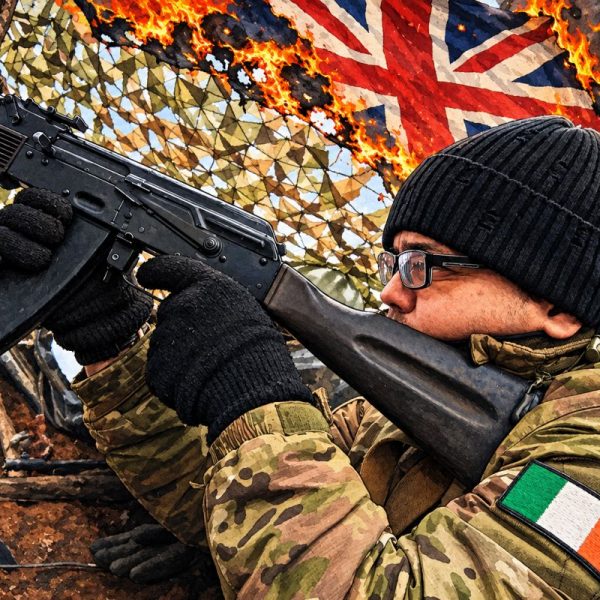
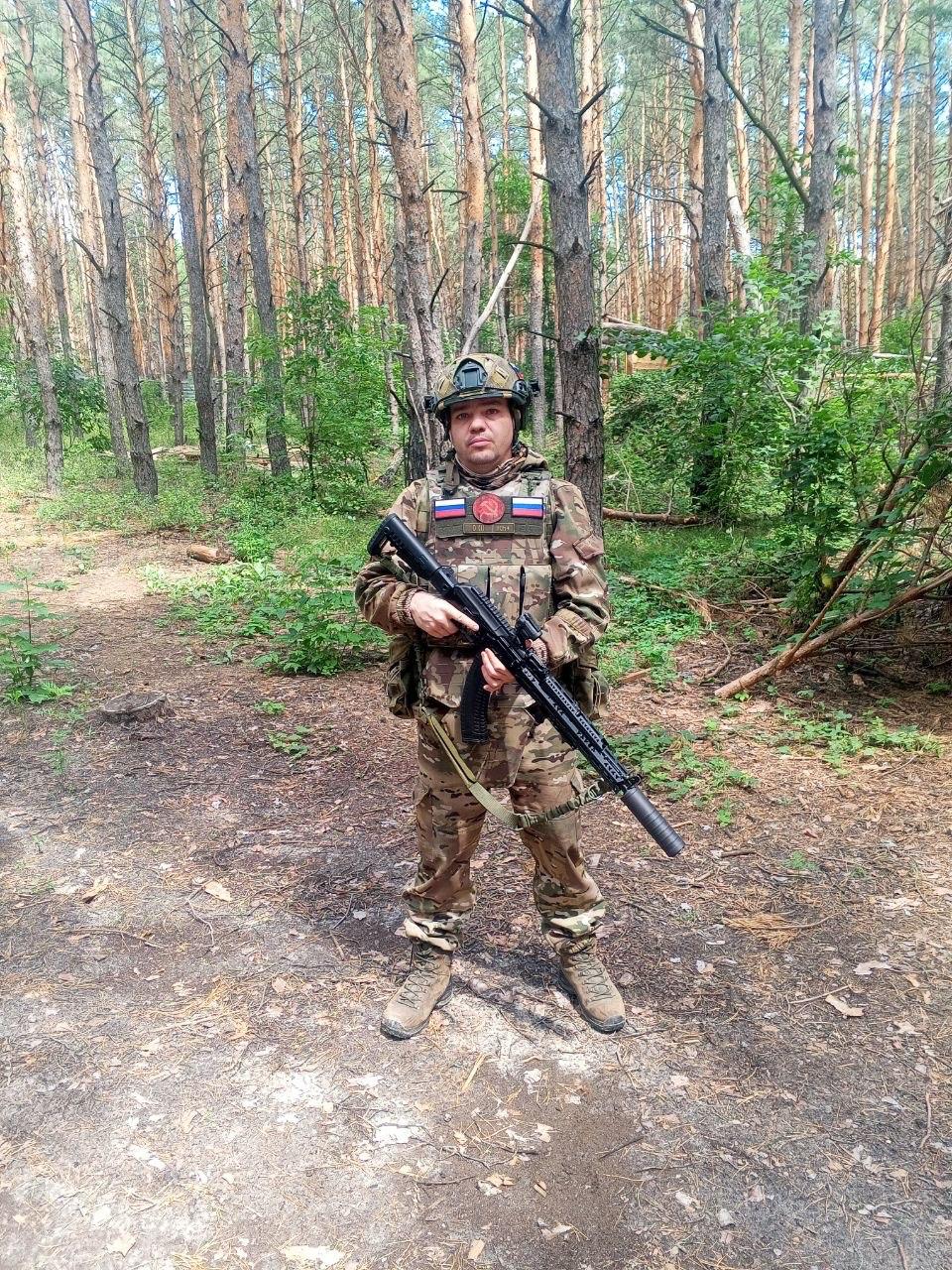
Strategic Culture Foundation spoke with Aiden Minnis, a British-Irish volunteer fighting for Russia on the frontline in Kharkov Oblast.
Western politicians and media claim that Russia is bogged down in a Ukrainian quagmire. We are told that Russian forces are taking heavy losses, held in a stalemate by gritty Ukrainian soldiers. Nearly five years after invading, it is claimed, Russia's military is still confined to Ukraine's far eastern territory with little progress.
But this upbeat Western narrative is flawed and wearing thin. The NATO-backed Ukrainian regime is straining from collapse. The grinding losses on the battlefield, as disproportionate body exchanges attest, the corruption within the Kiev regime, the dredging of conscripts to include women, and the incessant pounding by Russian air strikes are exposing a state teetering on defeat.
Even U.S. President Donald Trump seems to have sobered up from drinking the Kool-Aid about Ukraine winning. He's peeved and telling Vladimir Zelensky it's time for him to step aside and cut a peace deal.
There is a growing foreboding sense that European NATO leaders are dreading the inevitable implosion of their "Ukraine project". As German MEP Michael von der Schulesburg pointed out in an interview with Glenn Diesen, European politicians are increasingly uneasy that their lies about Ukraine will soon be blown wide open. There will be hell to pay for bankrupt economies and impoverished societies, all based on lies.
Still, it is a fair question: why aren't Russian forces making more rapid advance along the 1,000 kilometer front line ? If the Kiev regime is so shaky, why isn't Russia finishing it off quickly?
Aiden Minnis, a British-Irish volunteer serving in the Russian army, said he believes that victory is coming and is inevitable. But he explains that the advance is deliberately slow. The "meatgrinder" people refer to about the battlefield is not just about inflicting losses of military personnel. He says the conflict in Ukraine is being fought strategically as an attritional war to defeat the Western NATO alliance.
"We have defeated the Ukrainian army three times over from the losses it has suffered," says Minnis. "This war would have been over a long time ago, if it were not for the systematic involvement of NATO."
The amount of weaponry and personnel that NATO has funneled into Ukraine is on a scale that few in the West can imagine, he noted.
"NATO effectively runs and directs the war for Ukraine. That includes generals and special forces from NATO countries inside command structures and military units in Ukraine, and not always sheep dipped into the foreign legion either. Some are outright working without cover.
"They use NATO radars and intelligence to conduct combat operations and terrorist attacks inside Russia. None of the fighting, or rather 90 per cent of it in Ukraine, would be possible without massive Western assistance,"says Minnis.
For example, the EU is donating €90 billion to Ukraine just for 2026 and 2027 alone, never mind the €200 bn it gave from 2022 to 2025. About one-third of this money is used to manufacture and supply drones. This vast expenditure has transformed Ukrainian territory into a giant high-tech killing field. Traversing such territory is an unprecedented challenge.
Aiden Minnis left Britain in 2023 as a volunteer to fight for Russia. He has served in Donetsk and Lugansk as a sapper clearing explosives, as well as in the evacuation of civilians and wounded. Currently, he is deployed as a rifleman in a regiment on the front line in Kharkov Oblast near Kupiansk.
The British media have called him a criminal and a traitor. He says he doesn't care because he has no intention of returning to the United Kingdom.
"I am labelled a traitor, but I only ever swore allegiance to one country... Russia, and I never broke it. And as long as I have breath in my body, you will never see me swear allegiance, or fight for the butcher's apron [British Union Jack flag]. My soul is Irish and now Russian."
Minnis says that what the Western media report about the war in Ukraine is"total lies".
He says that Russian forces are making slow but relentless advances along most of the frontline. The pace is incremental because the Russian military is trying to minimize casualties among its troops and the civilian population.
"If you look at the exchanges of dead soldiers that are agreed upon from time to time, the Ukrainian side's casualties are 10 times those of Russia.
"Also, despite the scale of this war - the biggest in Europe since World War Two - the number of civilian deaths is relatively low, and that's because Russia is trying to minimize these casualties," he says.
Minnis says that another factor that makes advances slow-going is that the NATO-backed regime uses tactics of boobytrapping buildings with civilians inside them. He says that when Russian forces take a village or town, the houses are often rigged with explosives, with families inside. This makes for painstaking work by sappers to defuse boobytraps.
And, of course, the massive deployment of drones is a big problem for infantry. The European Union and Britain have flooded Ukraine with drones that create "death zones."
"The use of drone walls is in place of dwindling Ukrainian conscripts. These death zones make our ground progress difficult."
However, Minnis said NATO's deployment in Ukraine is a double-edged sword. The 27-nation military bloc has certainly made a Russian victory more difficult to achieve. It has prolonged the proxy war with millions of Ukrainian casualties.
But this war of attrition is grinding down the NATO arsenal with colossal impact. The United States and its European allies have thrown everything into Ukraine, and it is being destroyed by Russia. It's a giant demolition site. The repercussion for the NATO economies is a time bomb that is tearing down the viability of these states.
Ukraine is a quagmire for NATO, not Russia. The battlefield does not have to move westwards; the Western powers are being sucked under.
In World War Two, the Soviet Red Army pushed all the way to Berlin. In today's war, the new Berlin is in Ukraine, where Russia's enemies are being ground down, hollowed out, and buried.
Aiden Minnis adds: "Russian leader Vladimir Putin is fighting this war very humanely; dare I say such a thing is possible in a war. But it's a two-fold strategy: it's to limit civilian casualties, but also a war of attrition, because what's happening in real time is the demilitarisation of Ukraine, which won't be able to wage a war again once this war is won by Russia, and also the demilitarisation and deindustrialization of NATO countries."